Our Vision
Small Business: Why It’s There
We advocate for zoning reform and for commercial spaces along our corridor.
Keeping development in line with the Islandview-Greater Villages neighborhood framework. We reflect the values of the community to developers and the city, and communicate opportunities for development back to the community members.
Our Advocacy
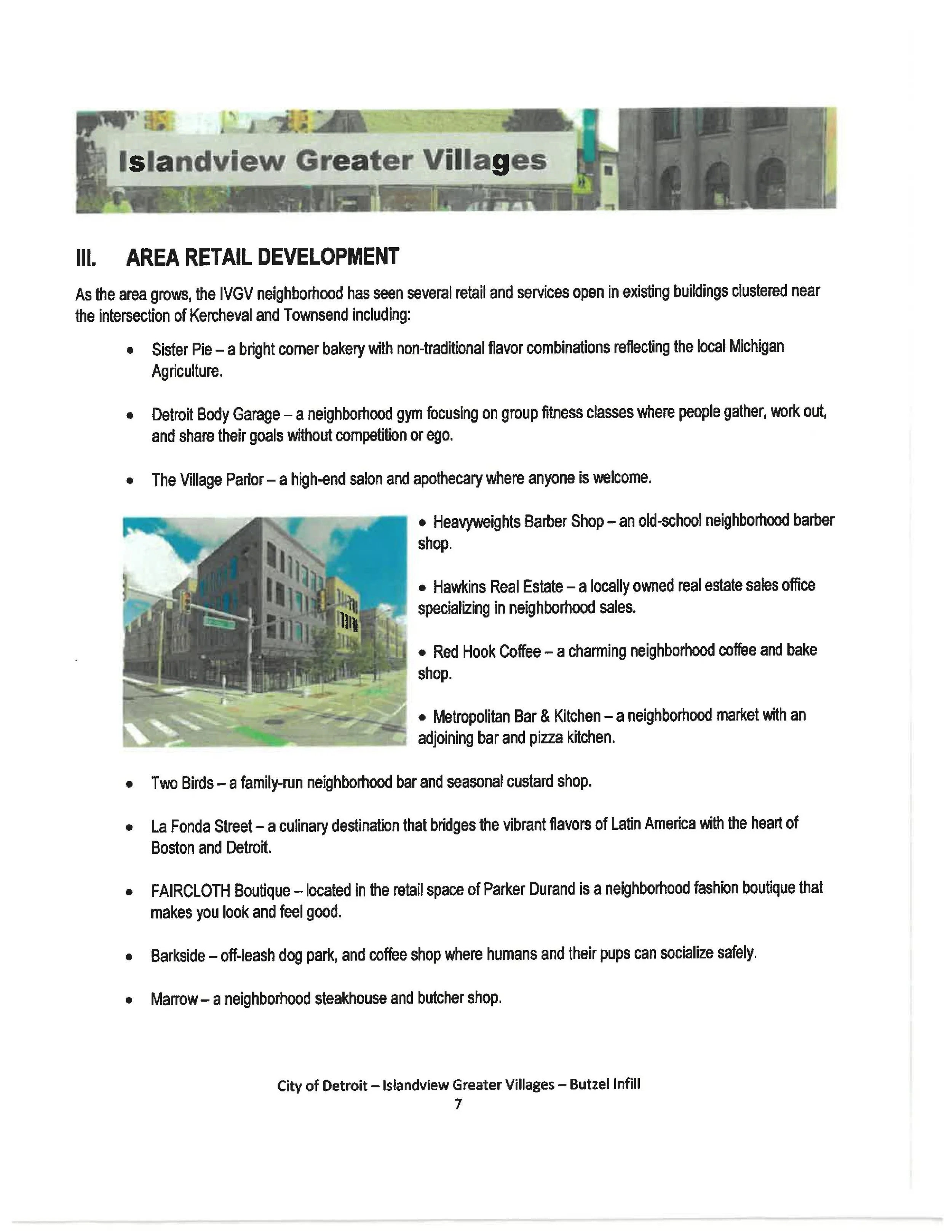
Kercheval Small Businesses
Supporting our business community
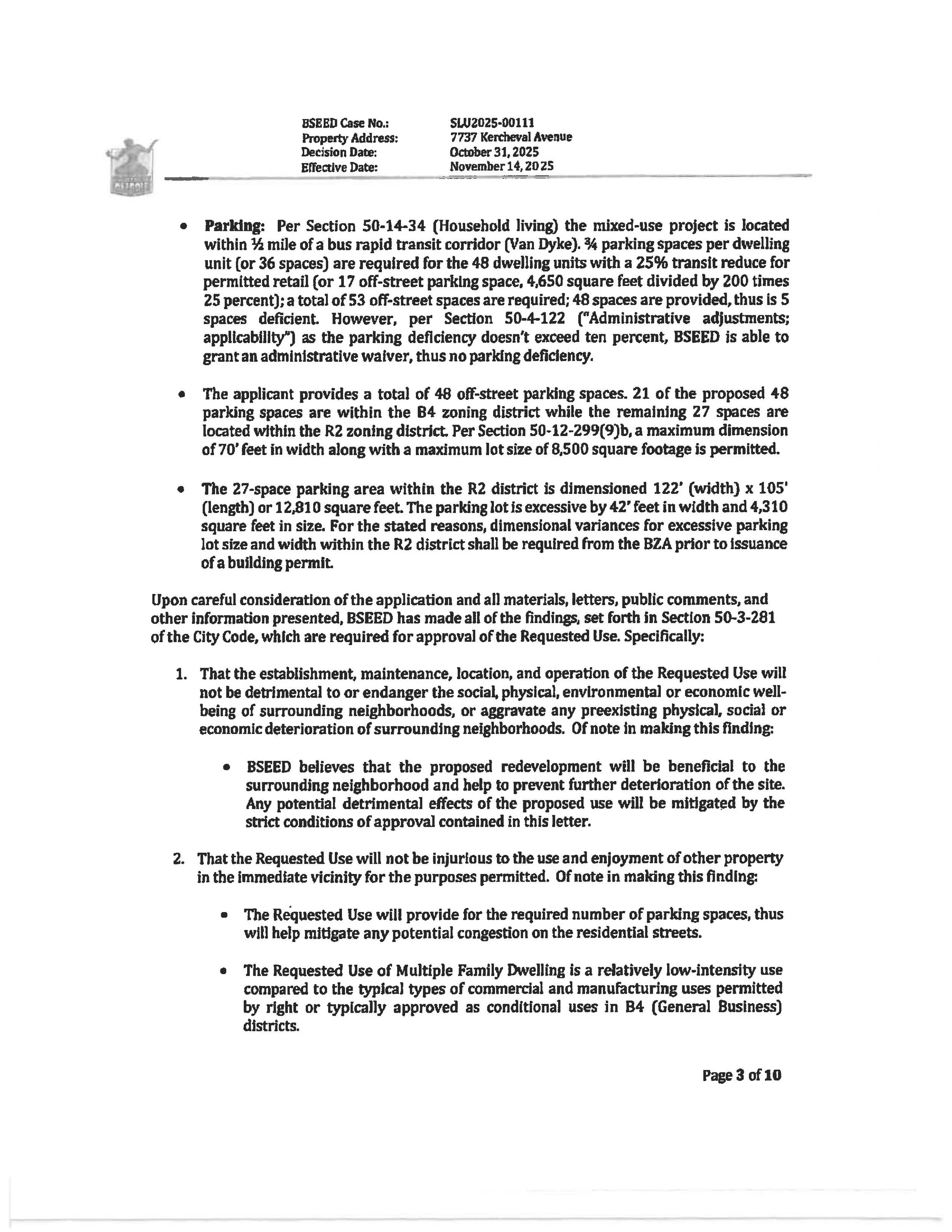
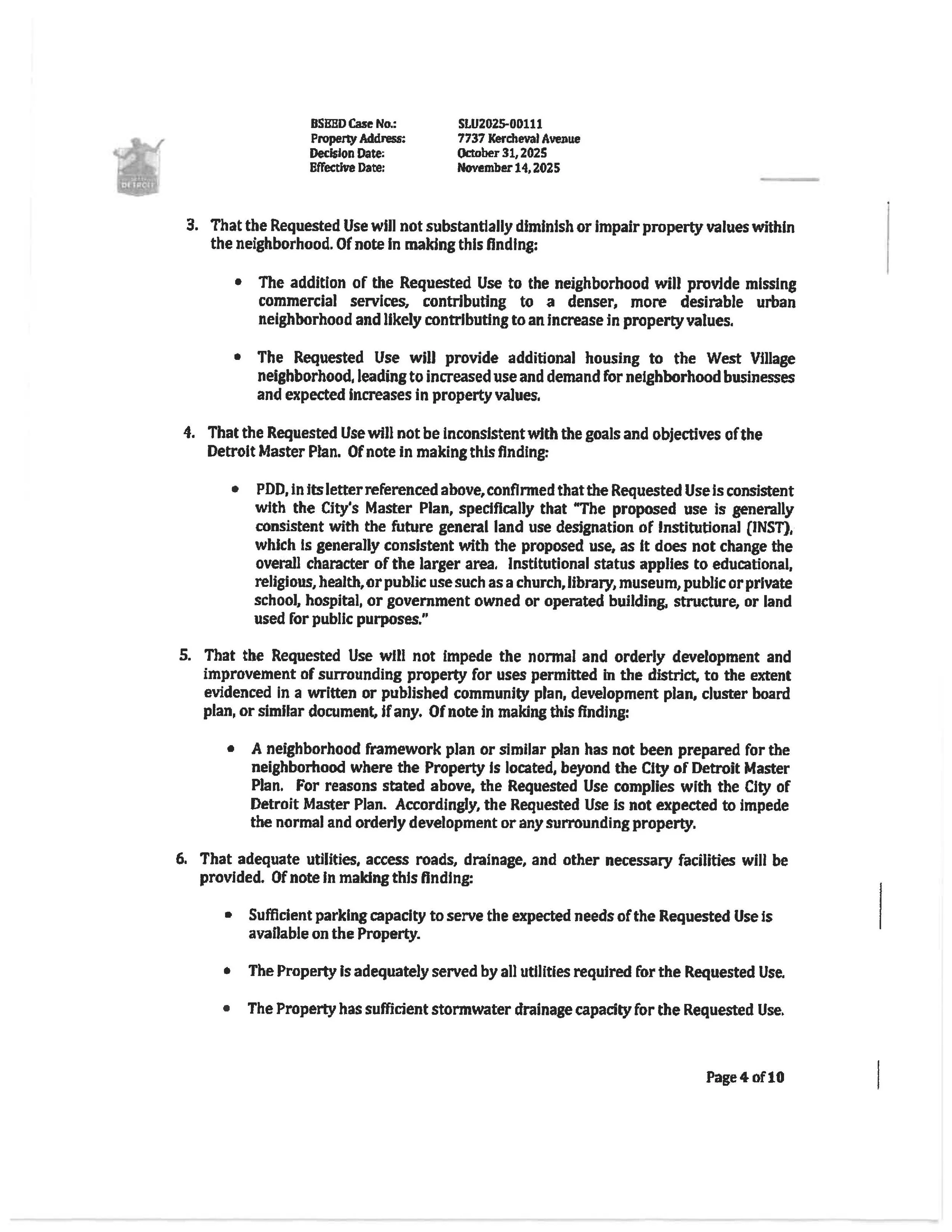
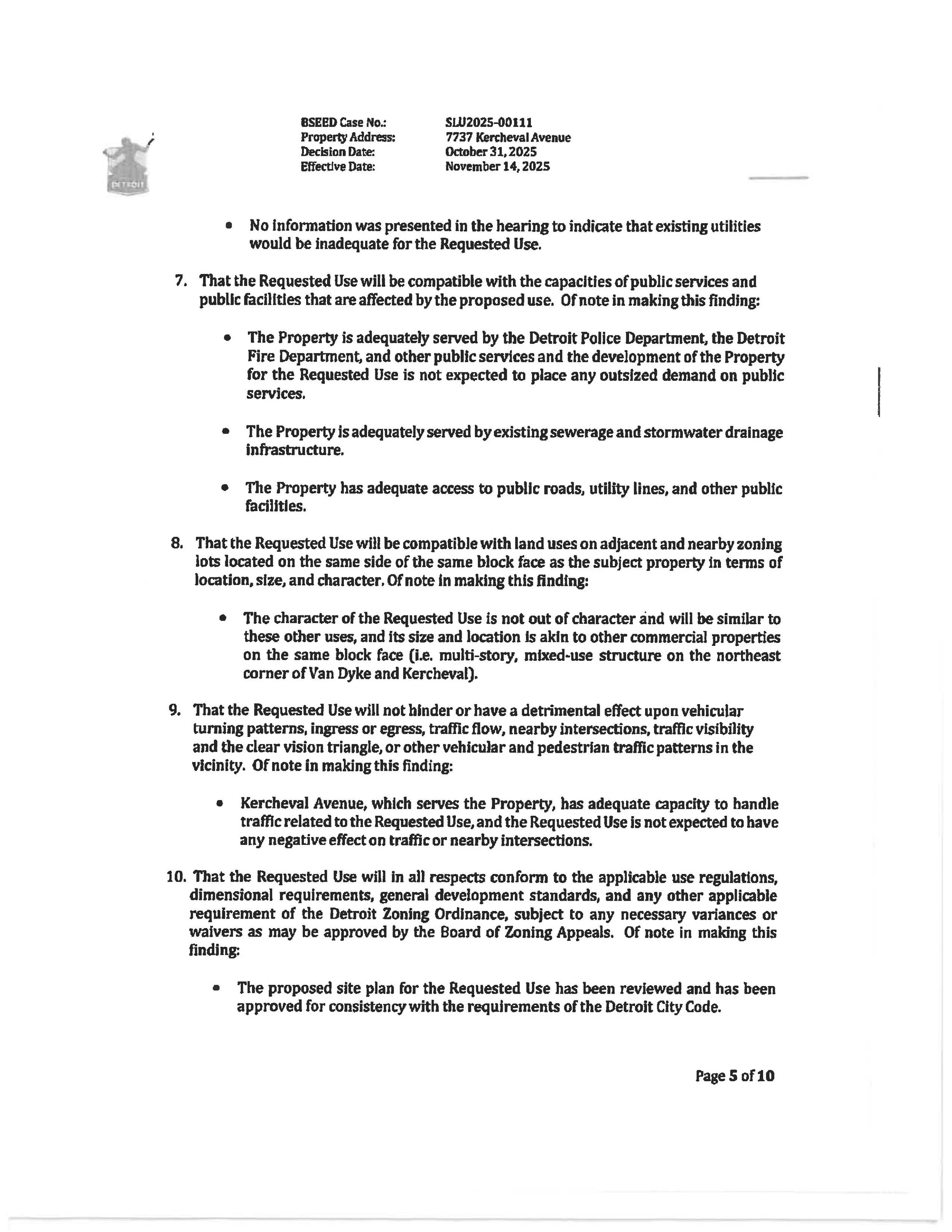
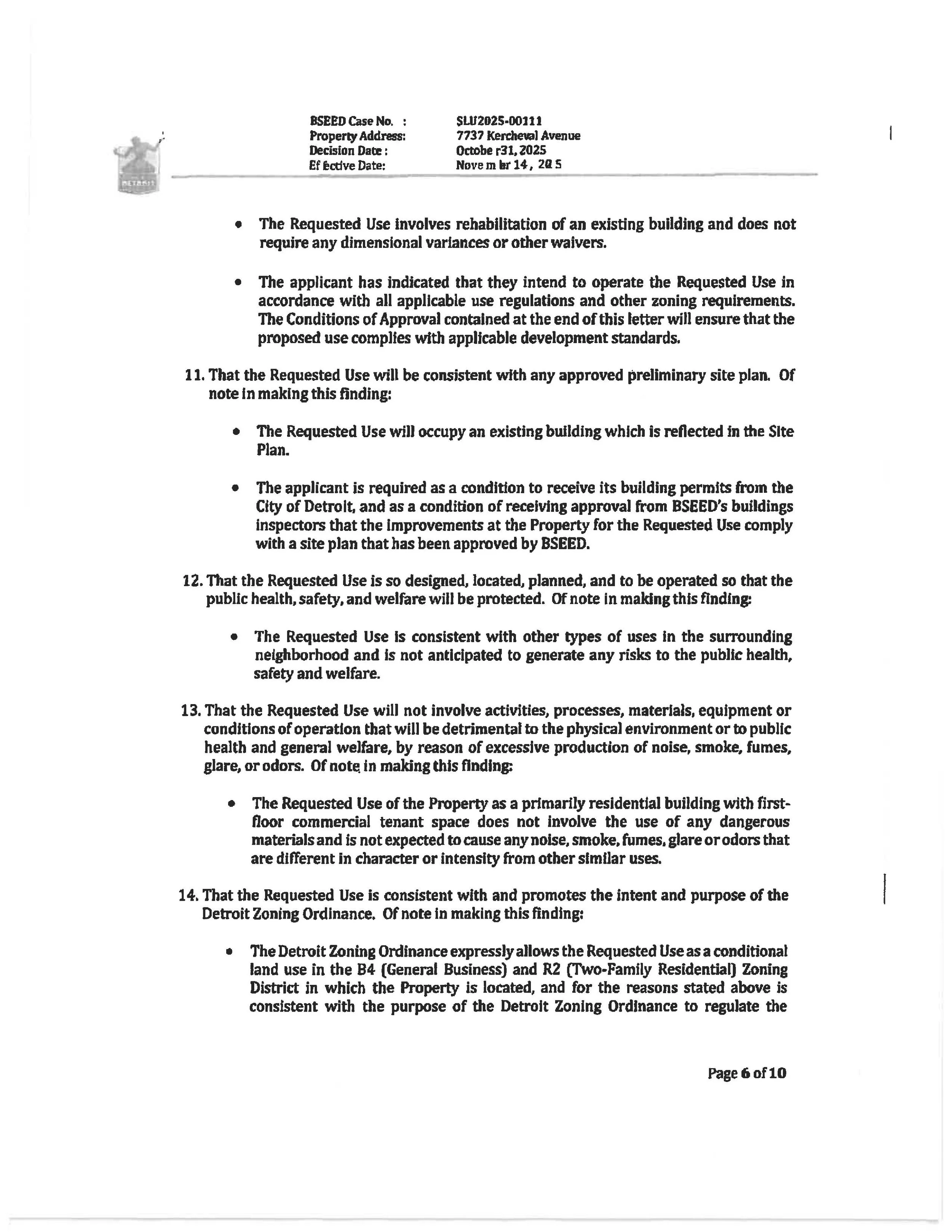
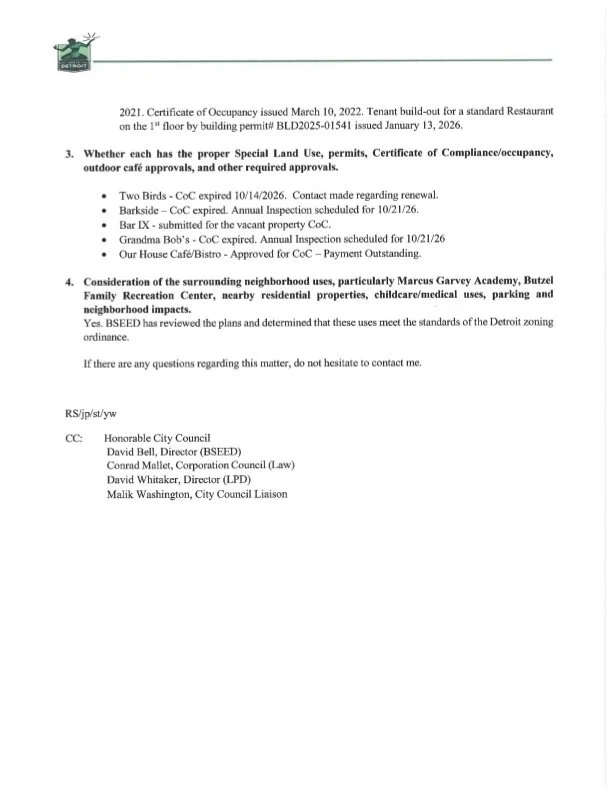
We believe supporting our businesses takes on many forms. From social media advertising, assistance with city permitting, Clean & Safe program, and advocating for our business community in times of need. Recently, you may have seen some memos from our local council member Renata Miller, questioning the right for several of our food and beverages establishments’ right to exist. In turn, we mobilized support, developed a “Kercheval Together” social media campaign, and interfaced directly with the business owners to advise on next steps and how to handle the influx of media requests. You can see the memos below, as well as the responses from BSEED.




Kercheval Together
Our business owners are working together to build amazing spaces for the community on the Kercheval corridor. To highlight this work, we filmed a series of videos titled “Kercheval Together”. You can see a short clip below, be sure to visit our social media channels to view the 6 part video series
Kercheval Specifc Information about Zoning, Restaurants and Alcohol
USE CATEGORIES
Zoning includes a few distinct land use categories for food and beverage service, including:
Standard Restaurant, defined in Section 50-16-362 as an establishment for the sale of foods, frozen desserts, or beverages to the customer in a ready-to-consume state, and whose design or principal method of operation includes one or both of the following characteristics: (1) Customers are normally provided with an individual menu, are served foods, frozen desserts, or beverages by a restaurant employee at the same table or counter at which said items are consumed; (2) A cafeteria-type operation where foods, frozen desserts, or beverages generally are consumed within the restaurant building.
Fast-Food Restaurant, defined in Section 50-16-362 as an establishment for the sale of foods, frozen desserts, or beverages to the customer in a ready-to-consume state for consumption either within the restaurant building or for carryout with consumption off the premises, whose delivery of food to the customer may include service via a drive-up or outdoor walk-up pass-through window, and whose design or principal method of operation includes both of the following characteristics: (1) Foods, frozen desserts, or beverages are usually served in edible or disposable containers; (2) The consumption of foods, frozen desserts, or beverages within a motor vehicle parked upon the premises, or at other facilities on the premises outside the restaurant building other than designated and approved outdoor eating areas, is posted as being prohibited, and such prohibition is strictly enforced by the restaurateur.
Carry-Out Restaurant, defined in Section 50-16-362 as an establishment for the sale of foods, frozen desserts, or beverages to the customer in a ready-to-consume state, and whose design or method of operation includes both of the following characteristics: (1) Foods, frozen desserts, or beverages are usually served in edible or disposable containers; (2) The consumption of foods, frozen desserts, or beverages within the restaurant building, within a motor vehicle parked upon the premises, or at other facilities on the premises outside the restaurant building, is posted as being prohibited, and such prohibition is strictly enforced by the restaurateur.
Establishment for the sale of beer or alcoholic liquor for consumption on the premises, which is not defined but generally includes bars, lounges, etc. where alcohol is served for on premises consumption.
Brewpub or micro-brewery or small distillery or small winery, which is defined in part in Section 50-16-132 as a facility licensed as such by the Michigan Liquor Control Commission, in conjunction with a Class "C" tavern, Class "A" hotel, or Class "B" hotel, that annually manufactures and sells therein in total not more than 18,000 barrels of beer only for consumption therein.
Cabaret, which is defined in Section 50-16-151 as an establishment open to the public which sells or serves alcoholic beverages for consumption on the premises with or without food and also provides entertainment. Establishments commonly referred to as "nightclubs" shall be considered "cabarets" for zoning purposes, except for those nightclubs, bars, juice bars, restaurants, bottle clubs, or similar commercial establishment, which regularly feature live conduct characterized by semi-nudity, which are classified as "adult cabarets." Further, cabarets are classified as Group "A" Cabaret, Group "B" Cabaret, or Group "C" Cabaret.
USE PERMISSIONS, USE REGULATIONS, AND SPACING REQUIREMENTS
Use Permissions (whether a given use is permissible by-right, permissible conditionally, or prohibited in a given zoning district) are set forth in Section 50-12-62.
Each of these uses is subject to its own set of use-specific regulations, which are too voluminous to copy here, but are available at:
Standard Restaurants: Section 50-12-311
Carry-Out and Fast-Food Restaurants: Section 50-12-310
Brewpubs, etc.: Section 50-12-217
Establishments for on-premises consumption: Section 50-12-220
Cabarets: Section 50-12-218
According to Section 50-12-131, Restaurants of all types must be at least 500 feet from a school (generally, any elementary, middle, high school in the K-12 range, but not colleges/universities). According to Section 50-12-136, BSEED can grant a variance to the spacing requirement if the distance is 450-500 feet and BZA can grant a variance to the spacing requirement if the distance is less than 450 feet.
REGULATED USES (AND MORE SPACING REQUIREMENTS)
Certain of these uses are further categorized as Regulated Uses, which by Section 50-3-323 includes, as relevant here:
Brewpub, microbrewery, or small distillery or small winery that serves alcohol for consumption on the premises and that is located outside the Central Business District, the MKT District, and the SD2 District, except if operating in conjunction with and located on the same zoning lot as a standard restaurant defined in Section 50-16-362 of this Code;
Cabaret, outside the Central Business District and SD5 District;
Establishment for the sale of beer or alcoholic liquor for consumption on the premises, outside the Central Business District and outside the MKT, SD1 SD2, and SD5 Districts; however, such establishments that operate in conjunction with and are located on the same zoning lot as a standard restaurant as defined in Section 50-16-362 of this Code shall not be considered regulated uses;
According to Section 50-3-322 and Section 50-12-134, spacing requirements from Regulated Uses include:

ALONG THE KERCHEVAL CORRIDOR
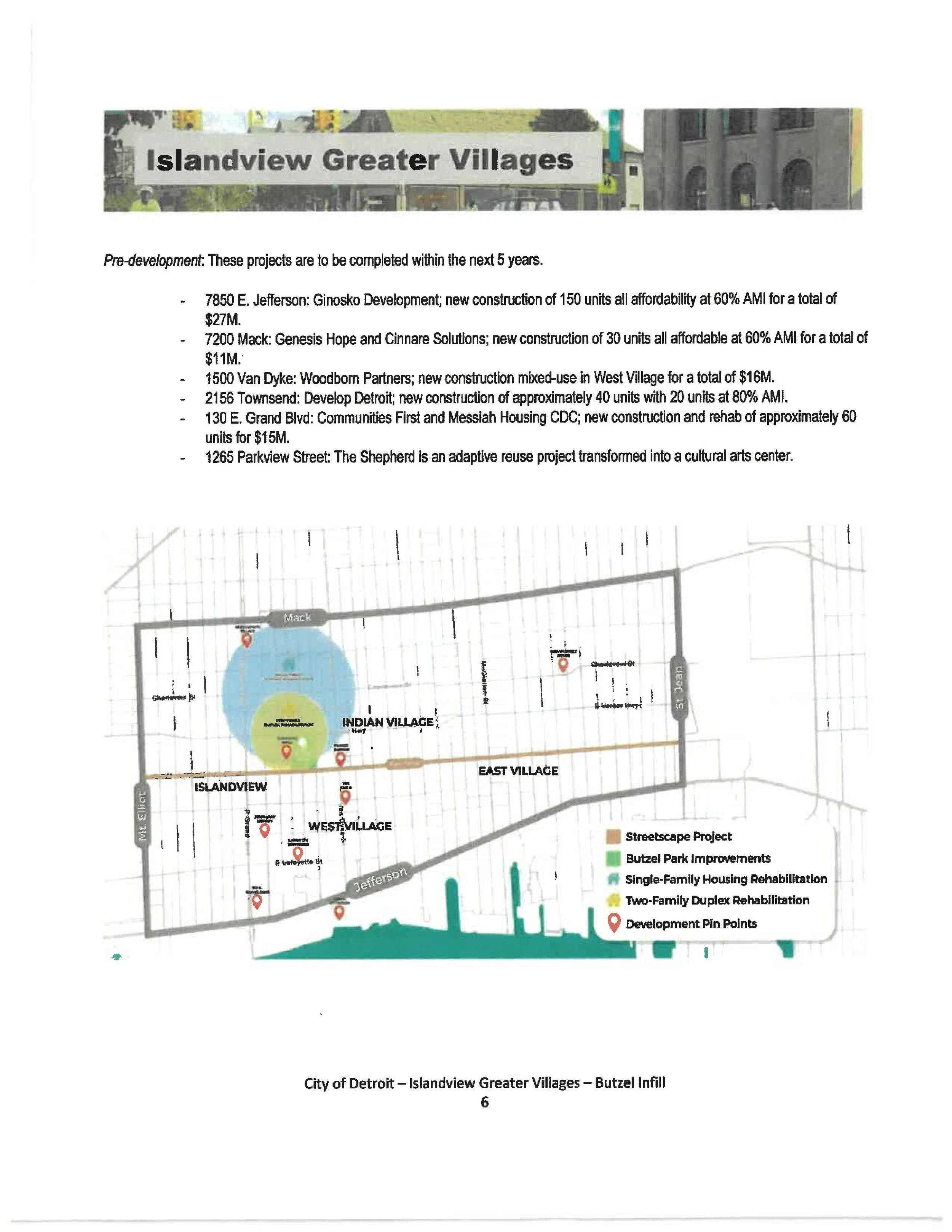
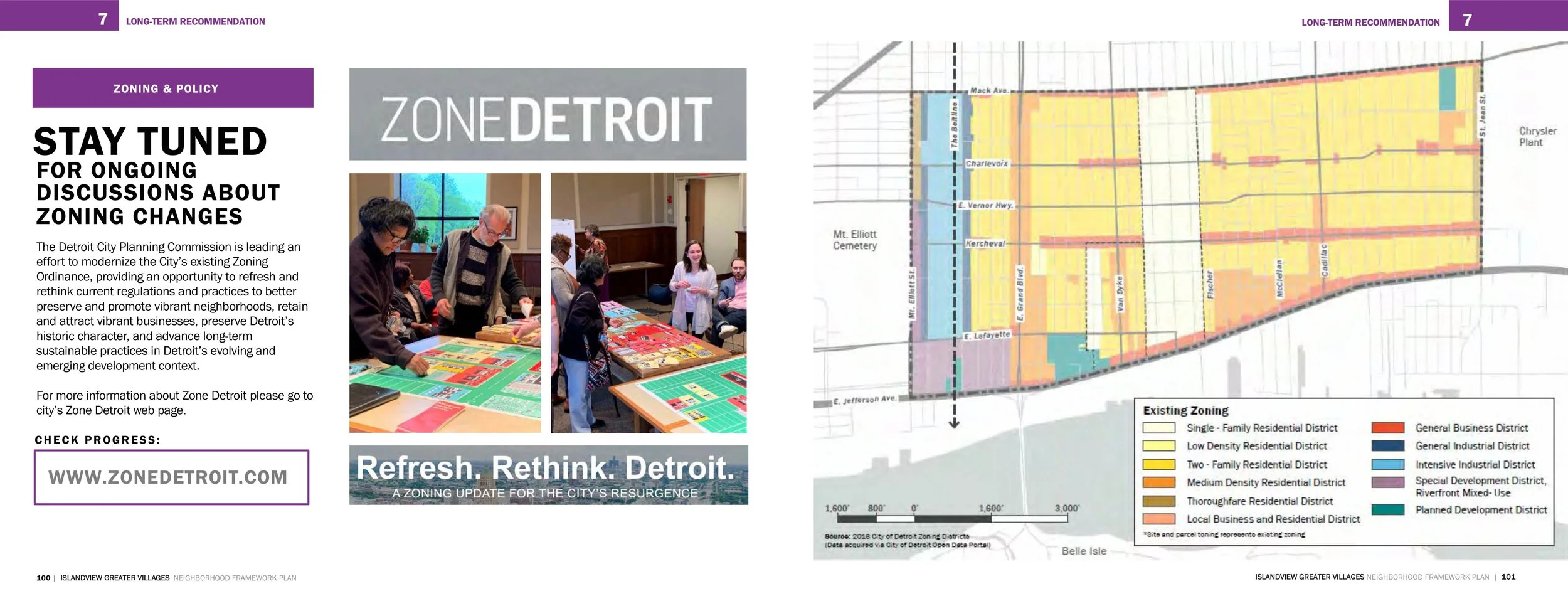
As depicted in Zoning Map 29, Section 50-17-31, almost the entire portion of Kercheval in the West Village, roughly East Grand Boulevard to Seminole, is zoned B4 General Business District. The block between East Grand and Field Street is zoned residential (R2, R3, R5, etc) and the north side of Kercheval between Van Dyke and Parker is SD1, but otherwise, it's all B4.
In the B4 district, all restaurant types are permissible by-right if they don't have a drive-through and are conditional if they do (Section 50-9-106 and Section 50-12-62). Brewpubs and Establishment for on-premises consumption are permissible conditionally (Section 50-9-112 and Section 50-12-62).
Restaurants of any type would be subject to a 500-foot spacing requirement from Marcus Garvey Academy. Any restaurant within 500 feet of the parcel containing the school would need a spacing variance.
Establishments for on-premises consumption located in a B4 district would be subject to the spacing requirements set forth in Section 50-3-322 and Section 50-12-134, including 1,000 feet from any two other Regulated Uses and 1,000 feet from any Adult Use/Regulated Use combo. HOWEVER, even though these sections omit this, note that according to Section 50-3-323, an Establishment for on-premises consumption "operating in conjunction with and located on the same zoning lot as a standard restaurant" does not constitute a regulated use ... and therefore (so says I) is not subject to these spacing requirements.
It is possible that certain establishments may be operating a combination of restaurant types, for example a restaurant with indoor seating and a pick-up window might be considered both a standard and carry-out restaurant. If such an establishment is permitted for only one type of restaurant, the City could say that they are operating the other type illegally. The counterargument to that is that the second restaurant type is "accessory" to the first, and is therefore automatically permissible.
It is also possible that multiple establishments may be serving alcohol for on-premises consumption and the City could label them Regulated Uses and say that not more than two such establishments can be located within 1,000 feet of each other. The counterargument to that is that any such establishments operating in Standard Restaurants are not Regulated Uses and therefore are not subject to these spacing requirements (nor do they impose 1000-foot buffers on Regulated uses nearby).
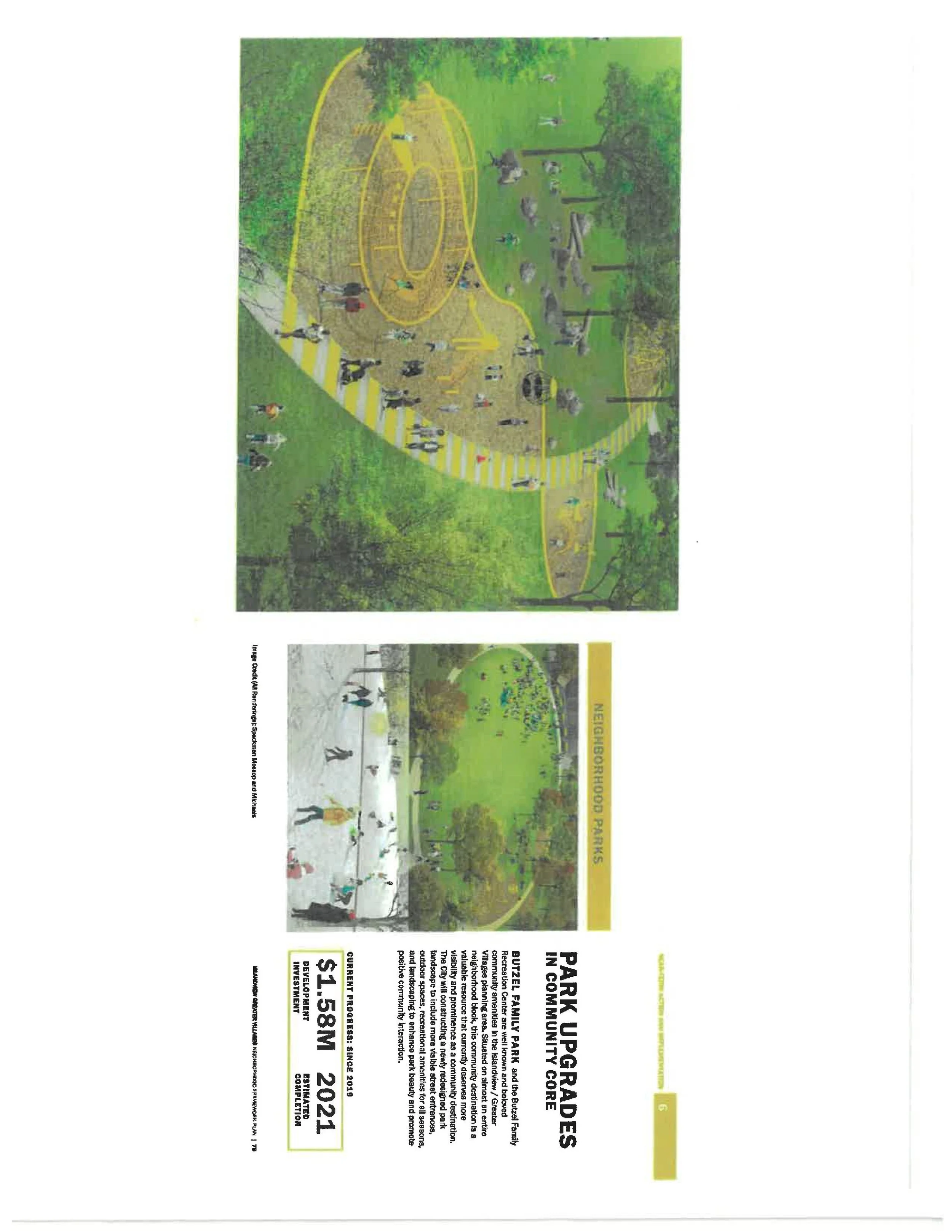
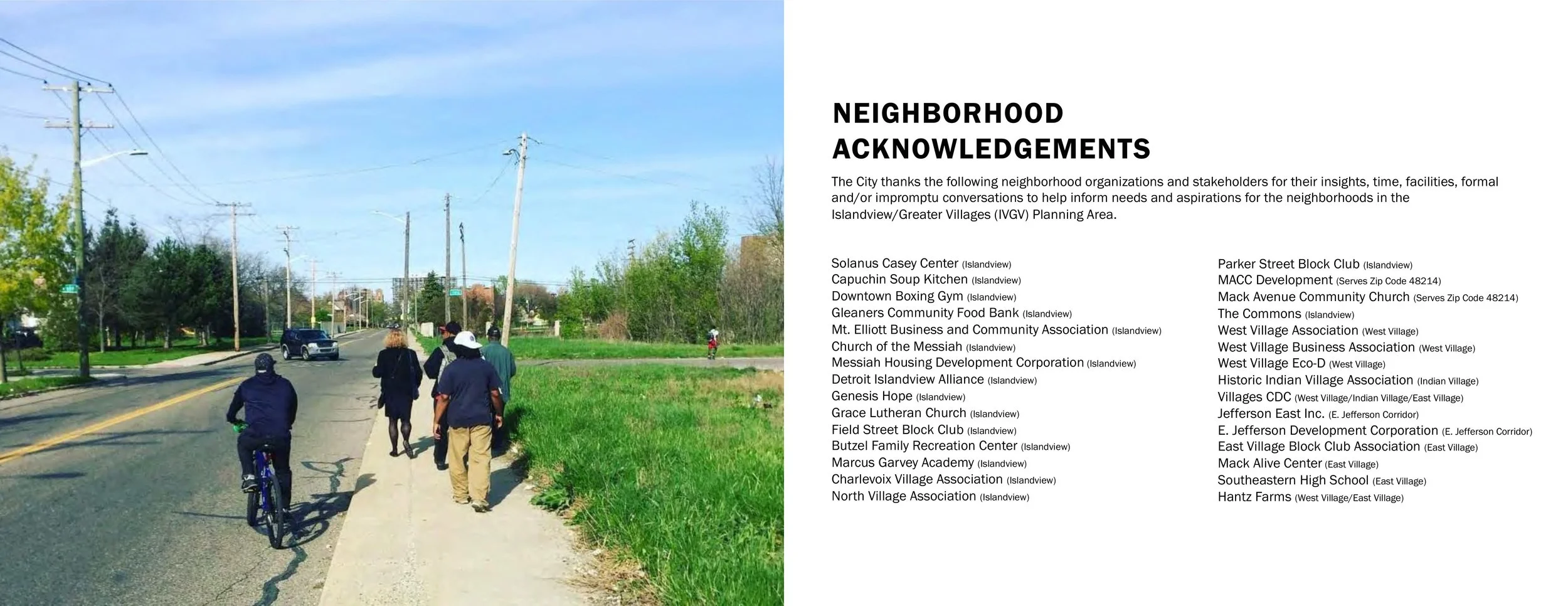
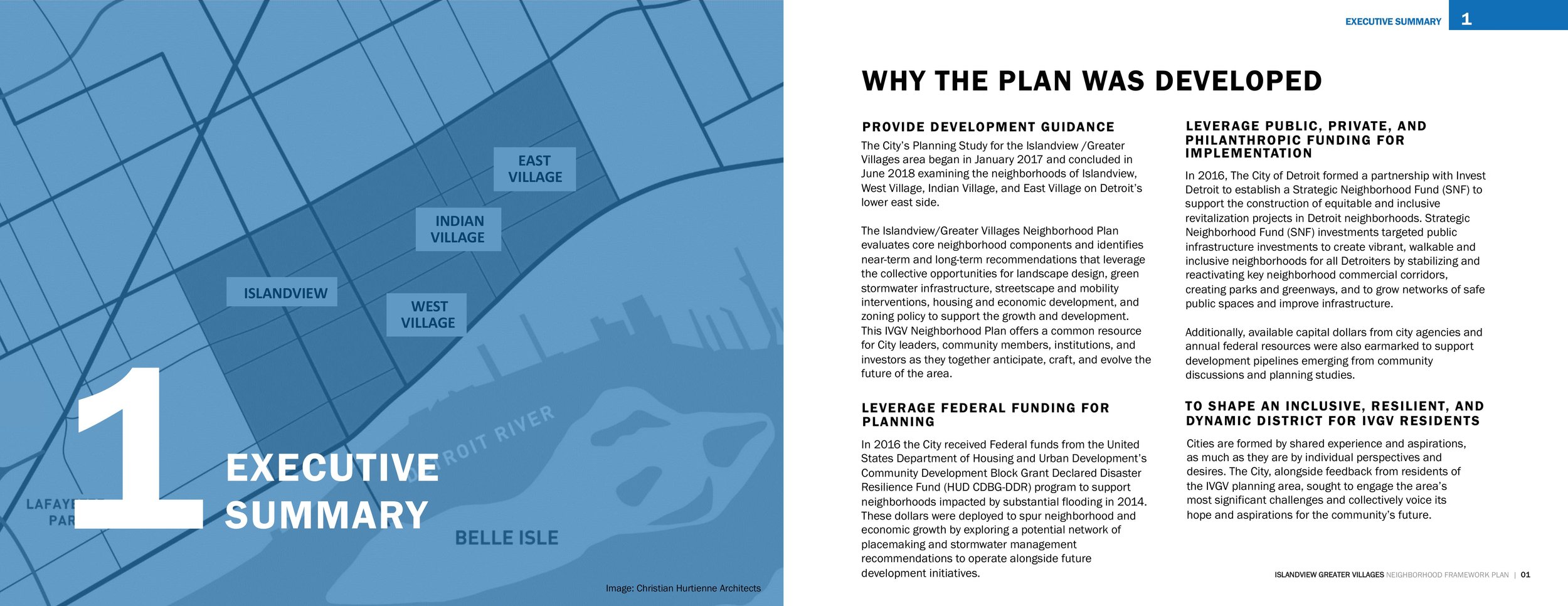
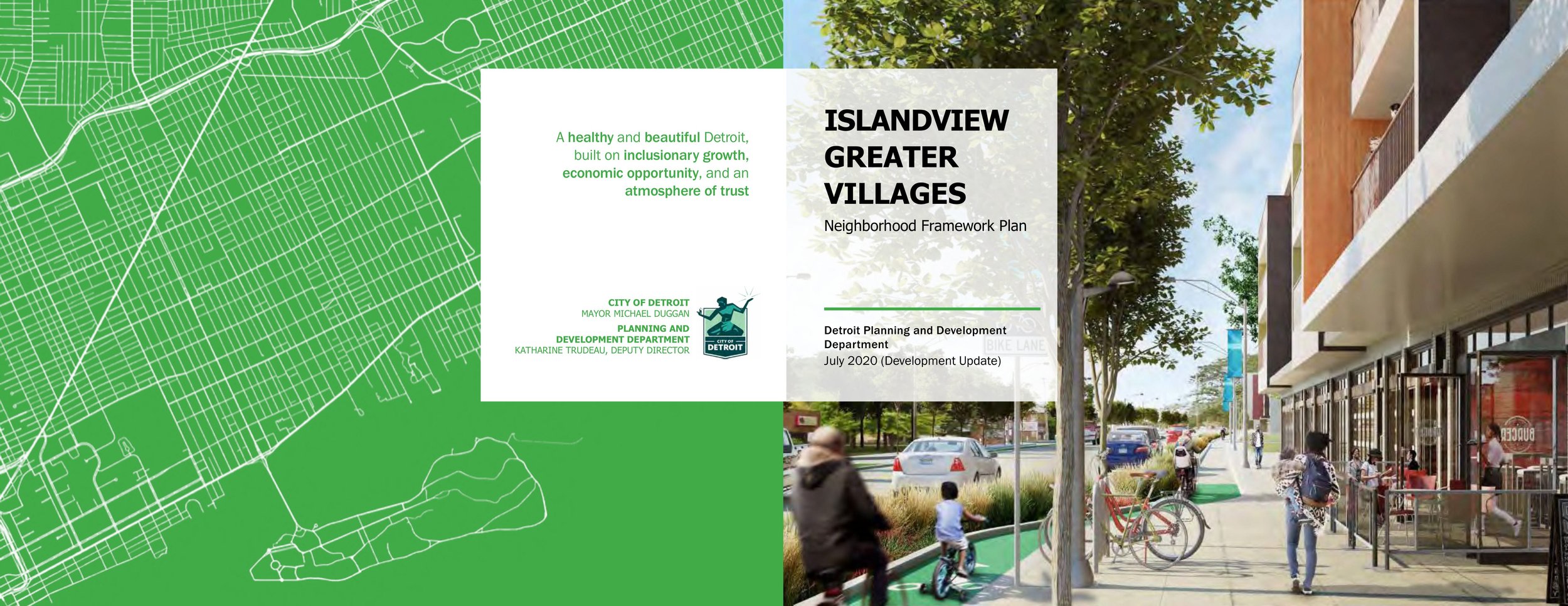
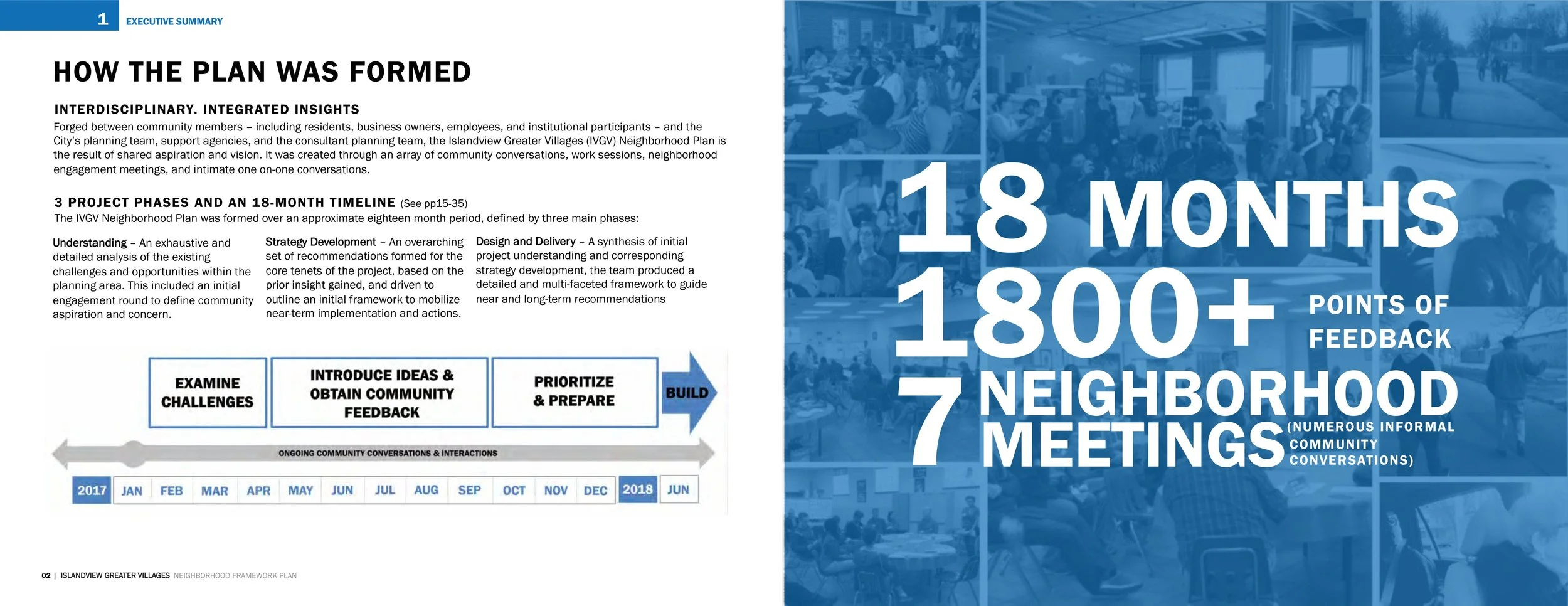
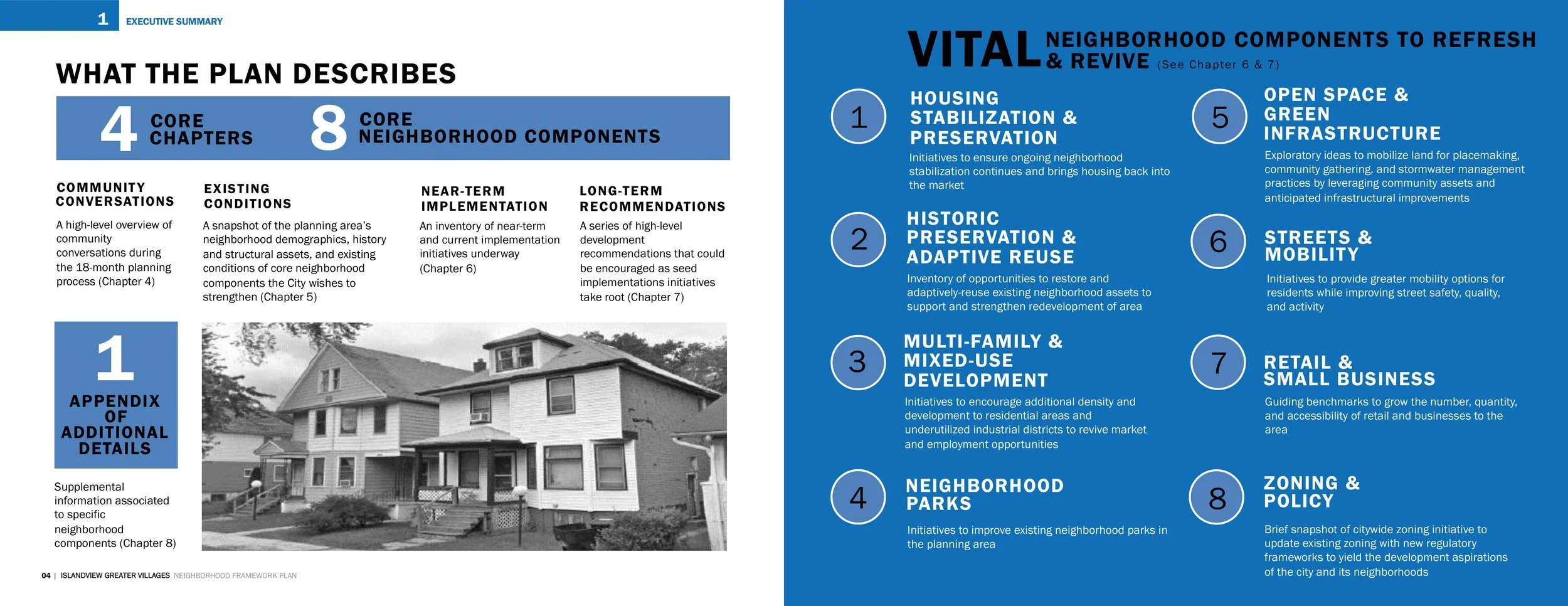
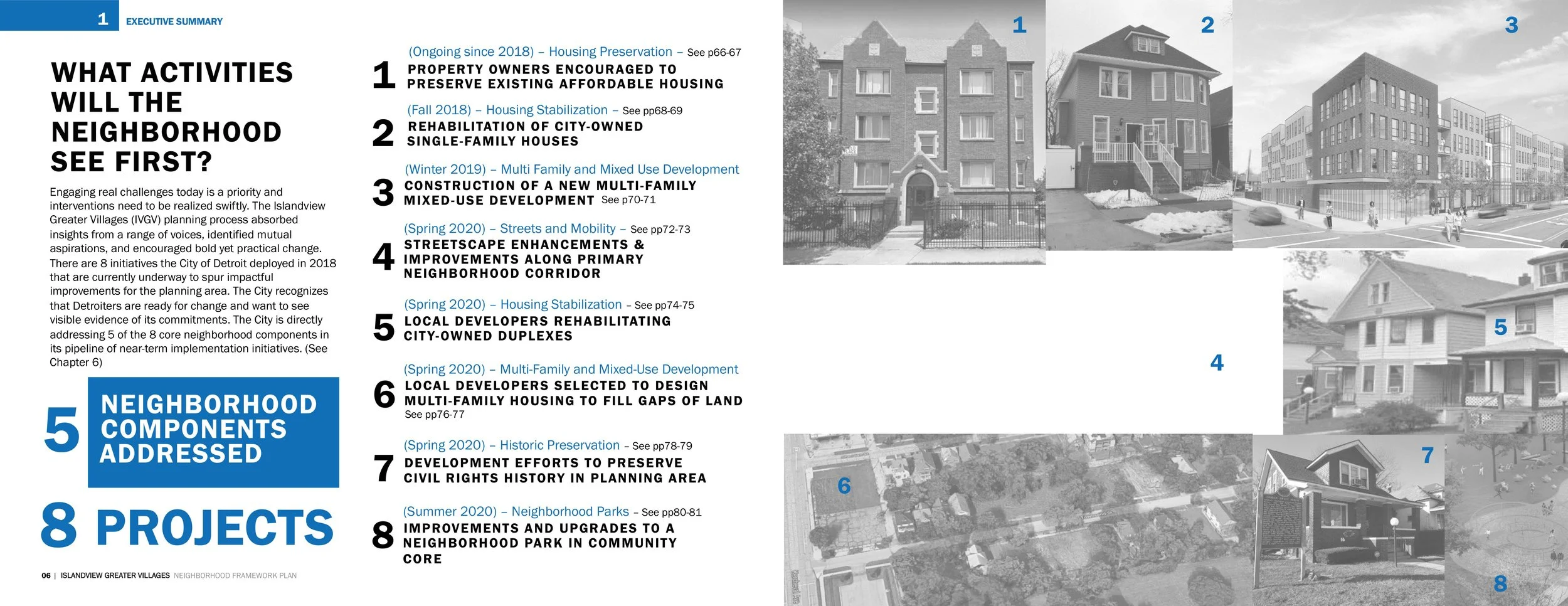
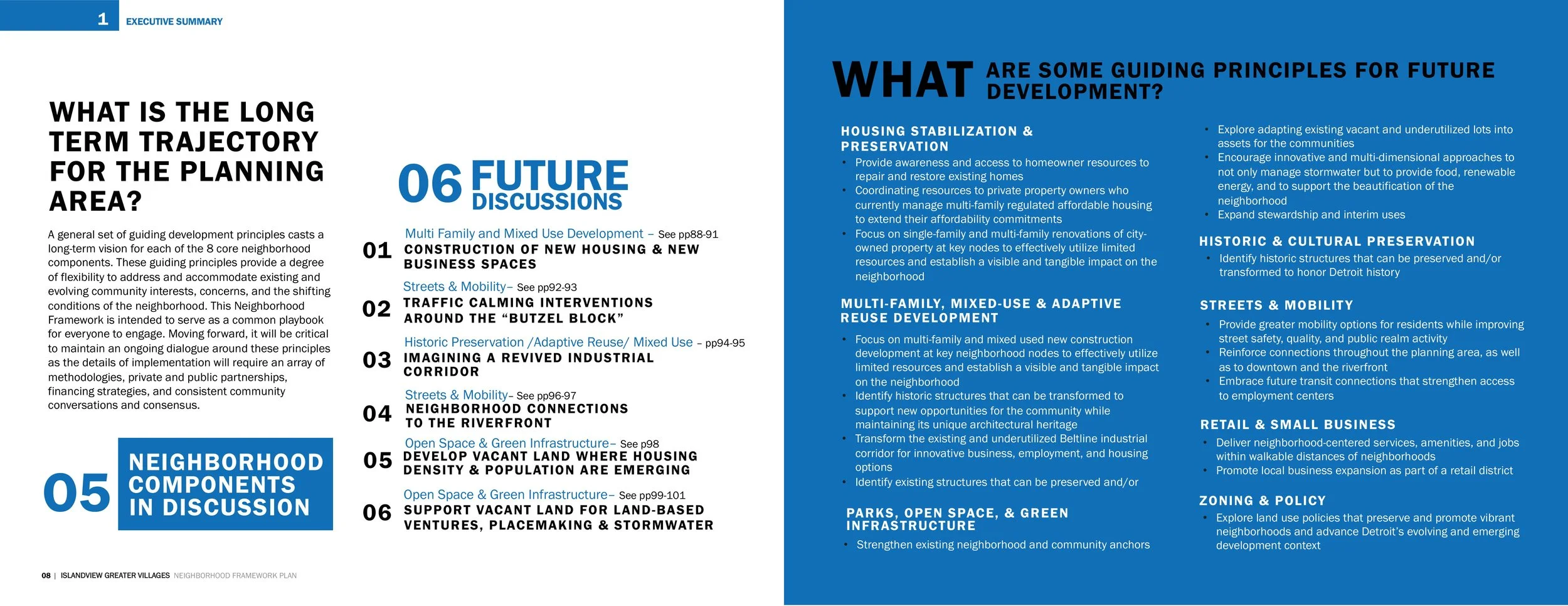
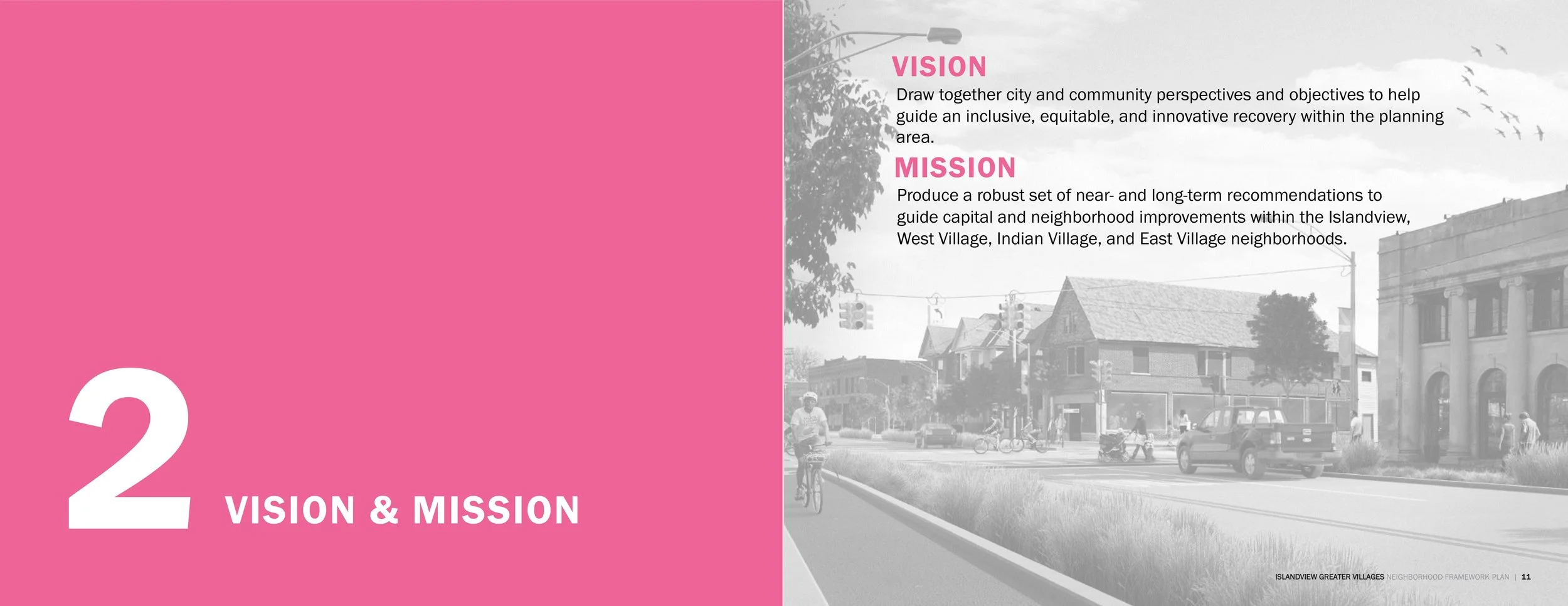
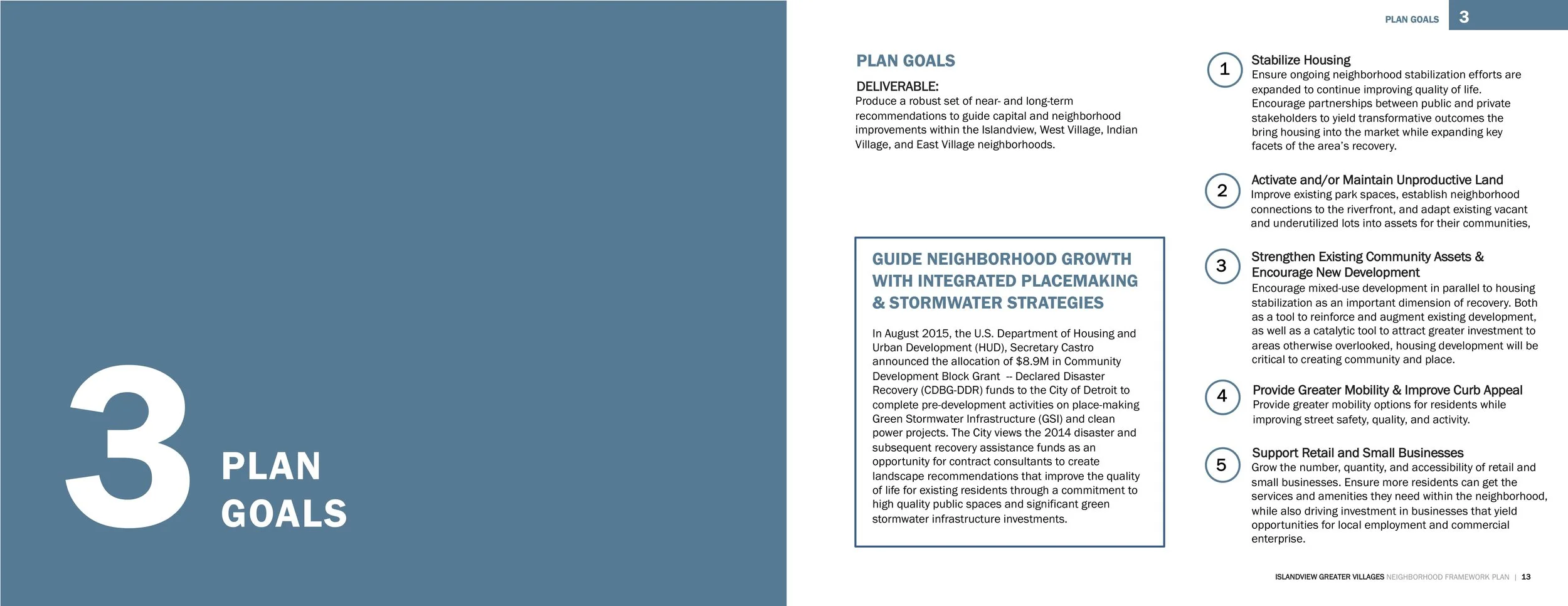
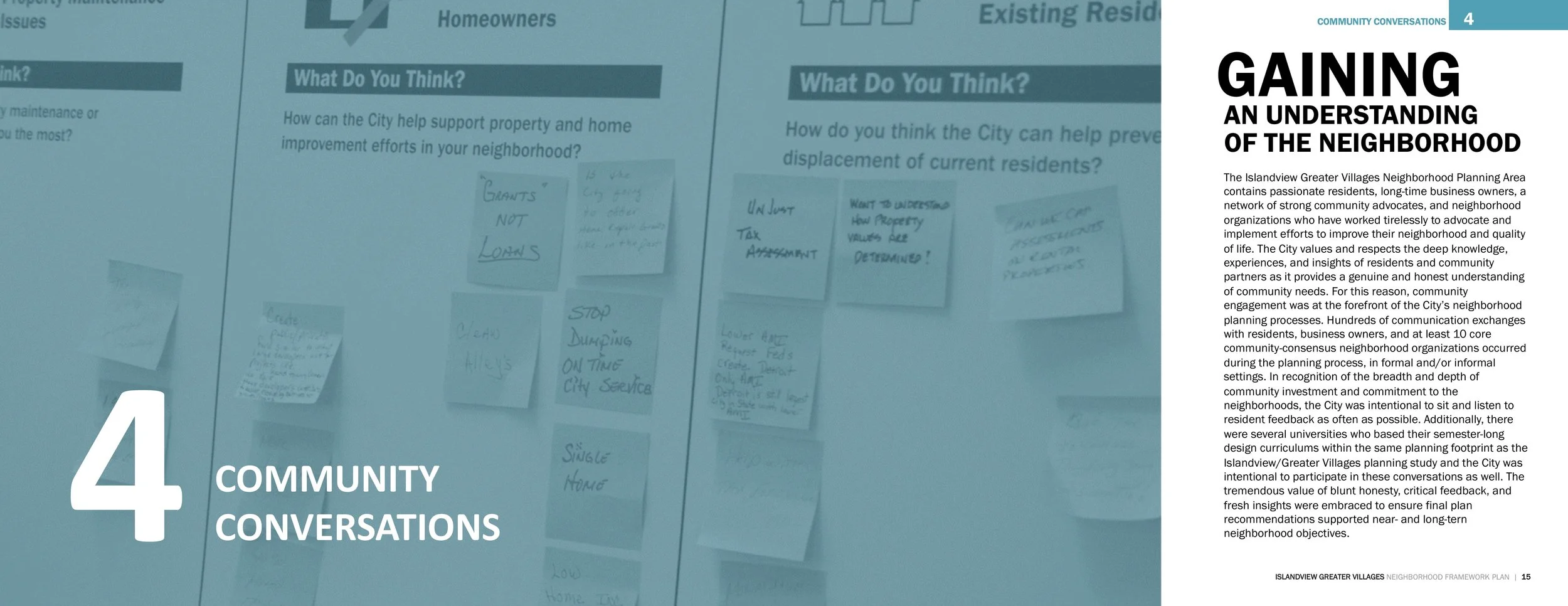
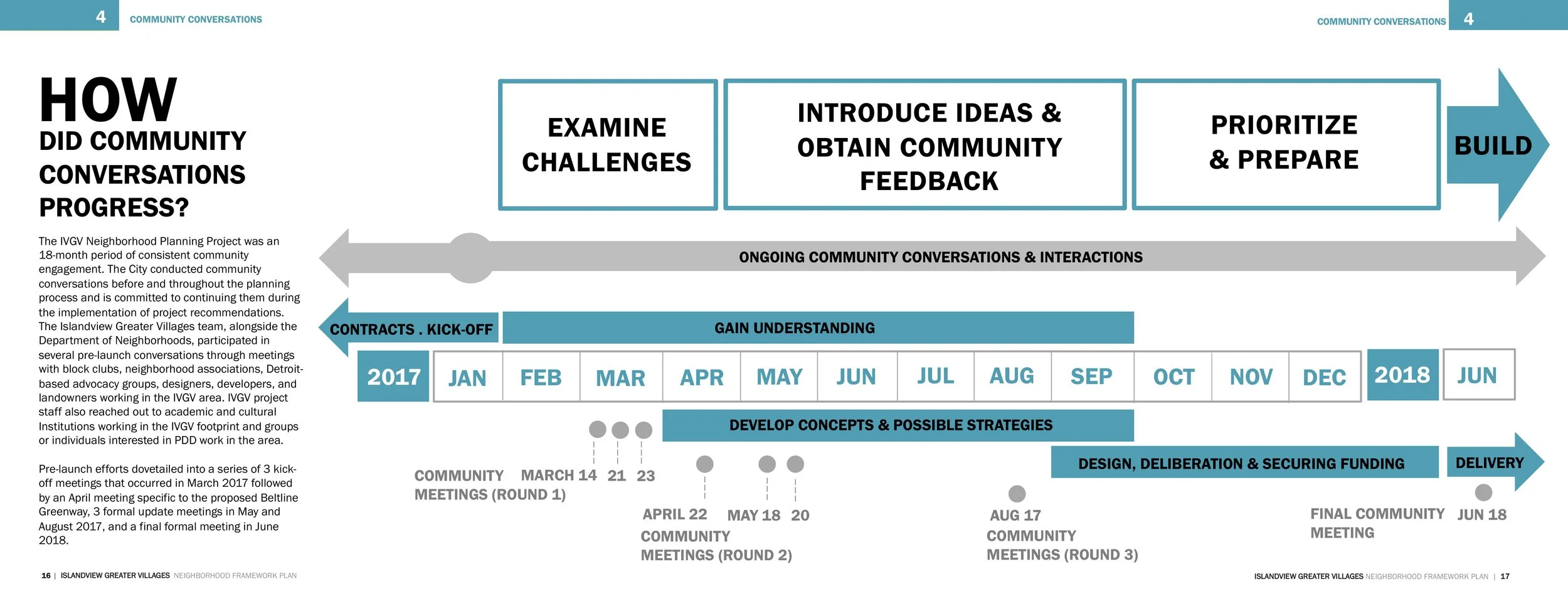
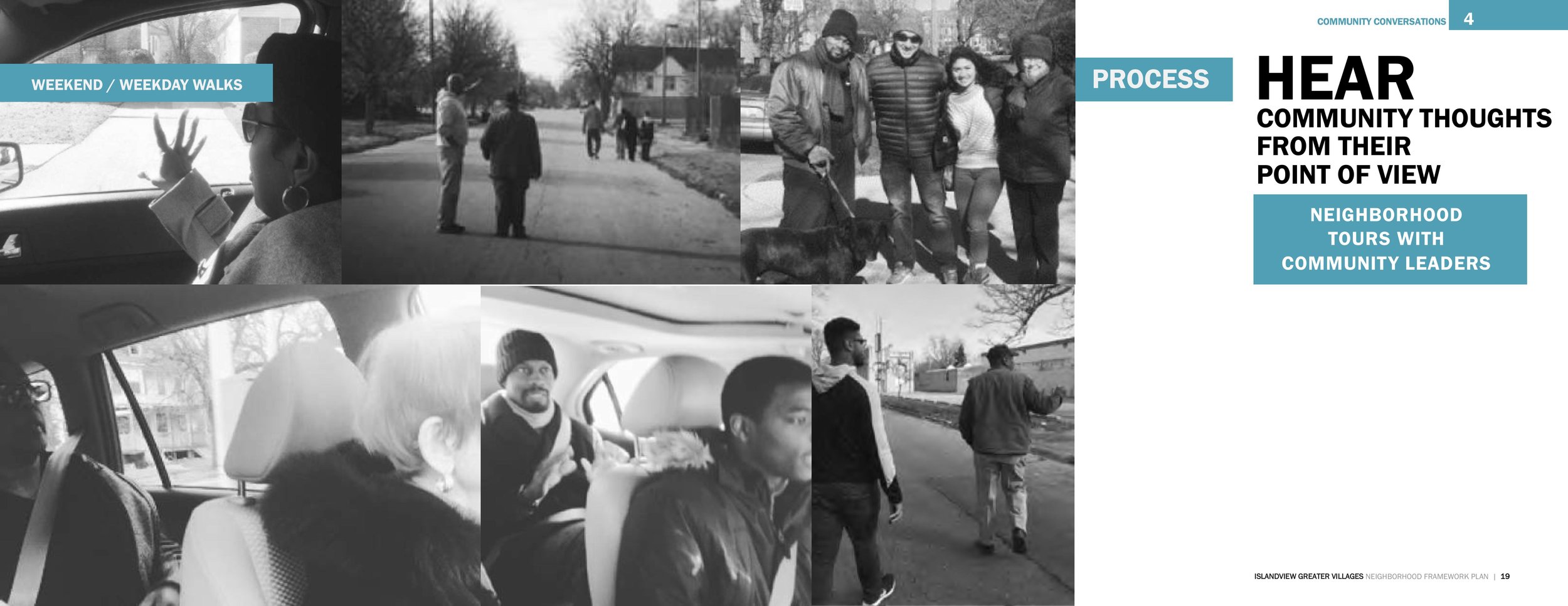
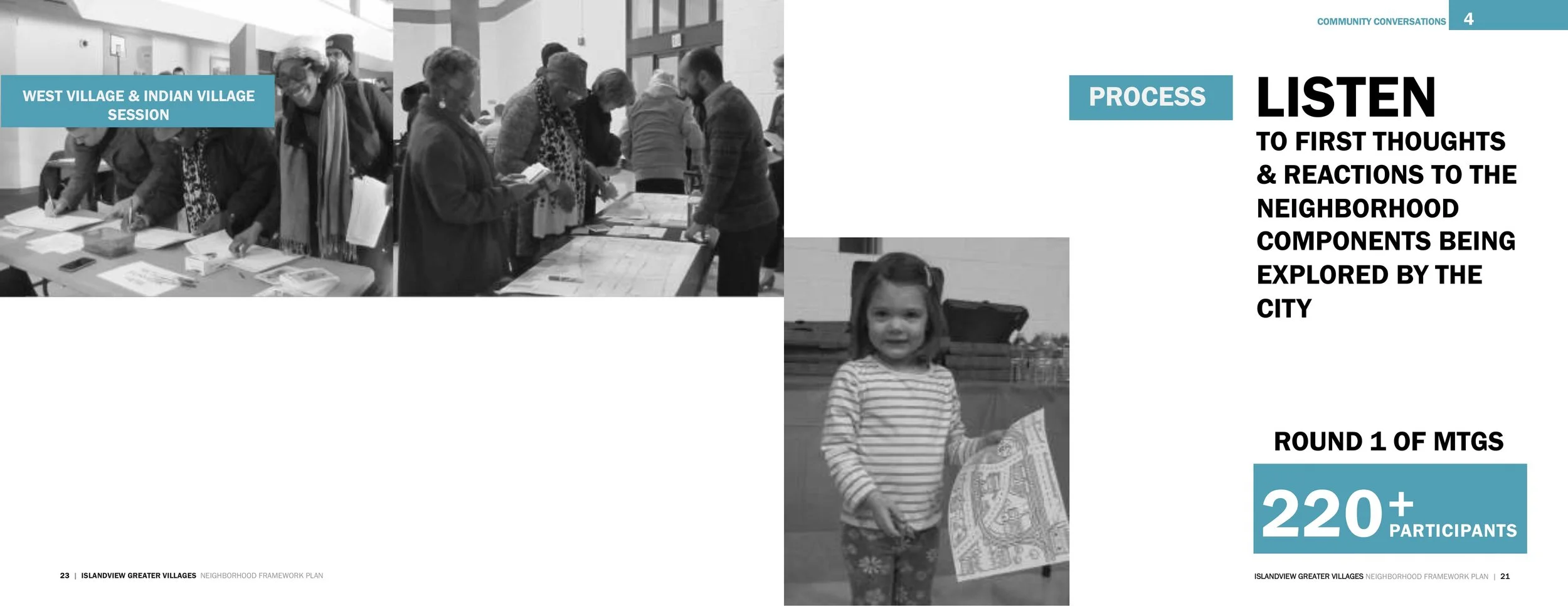
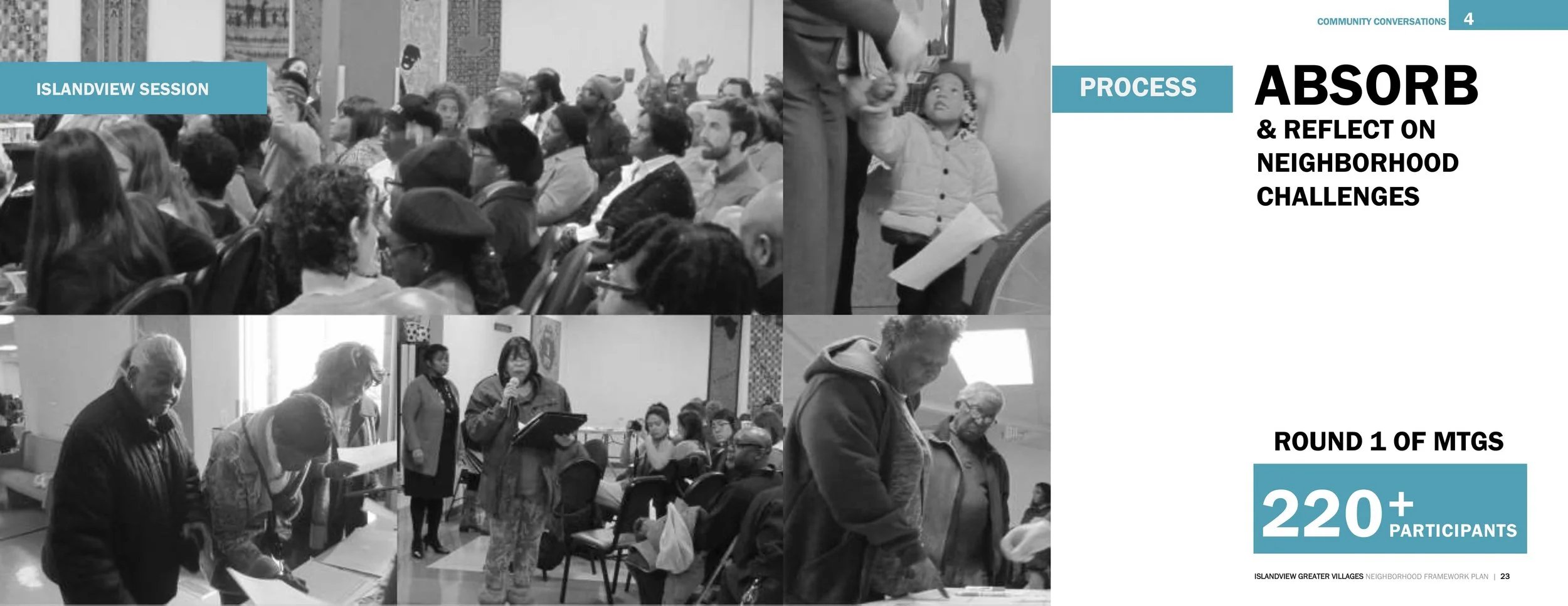
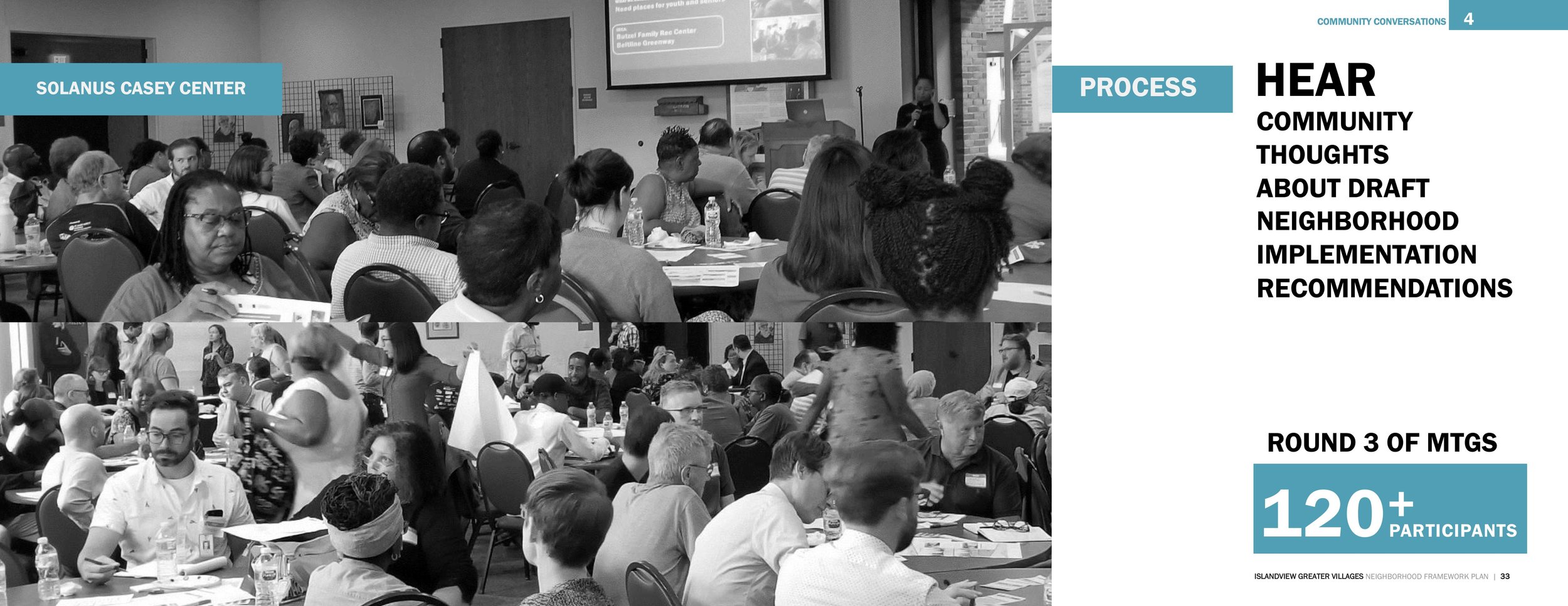
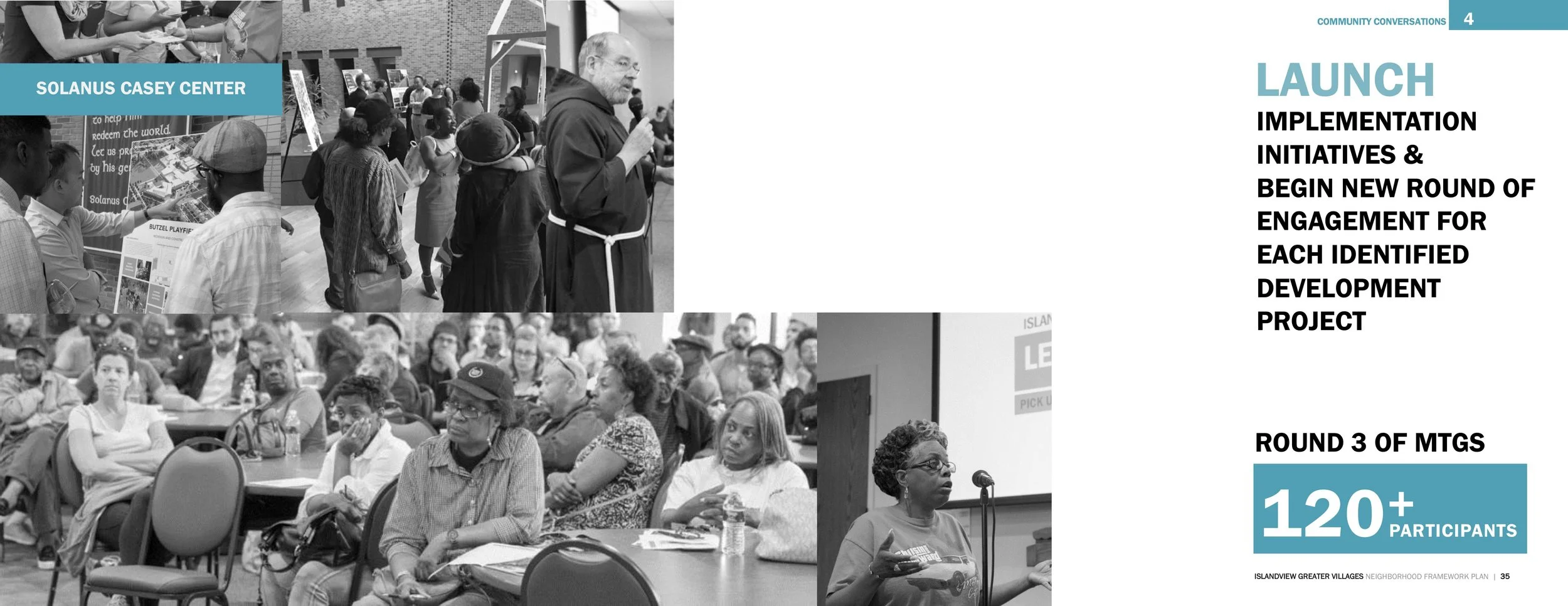
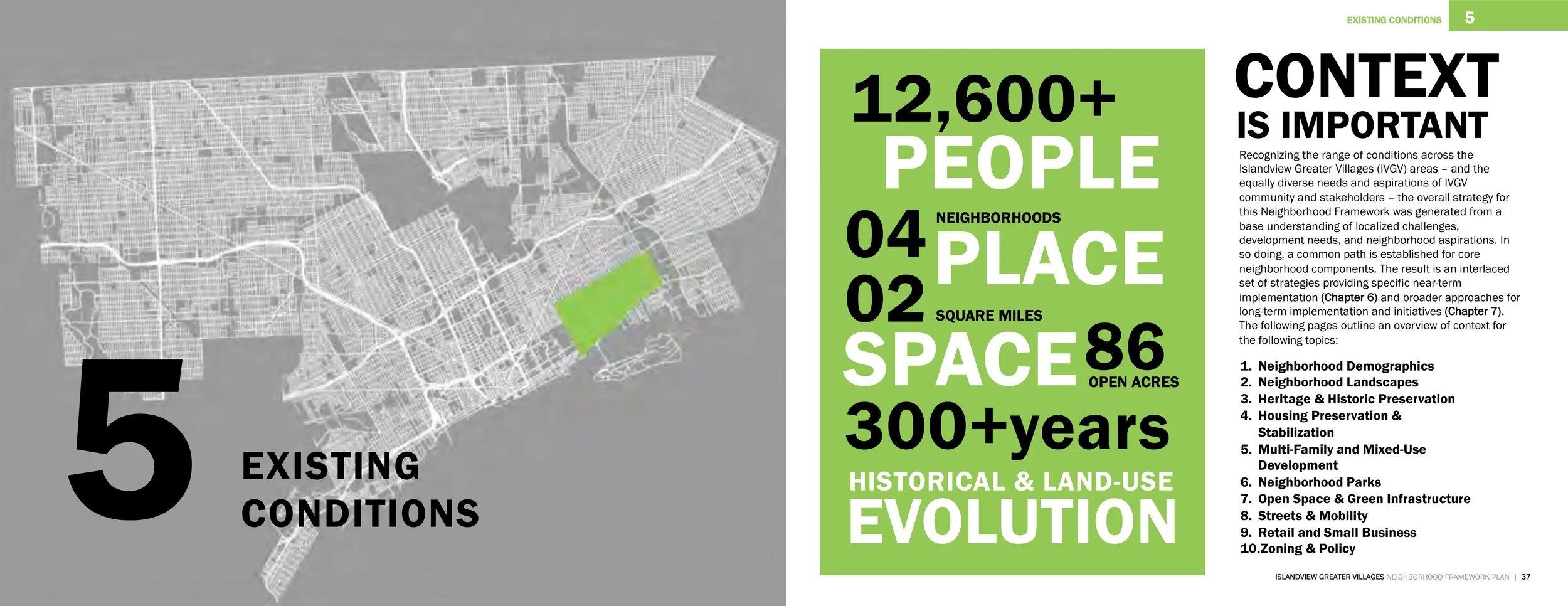
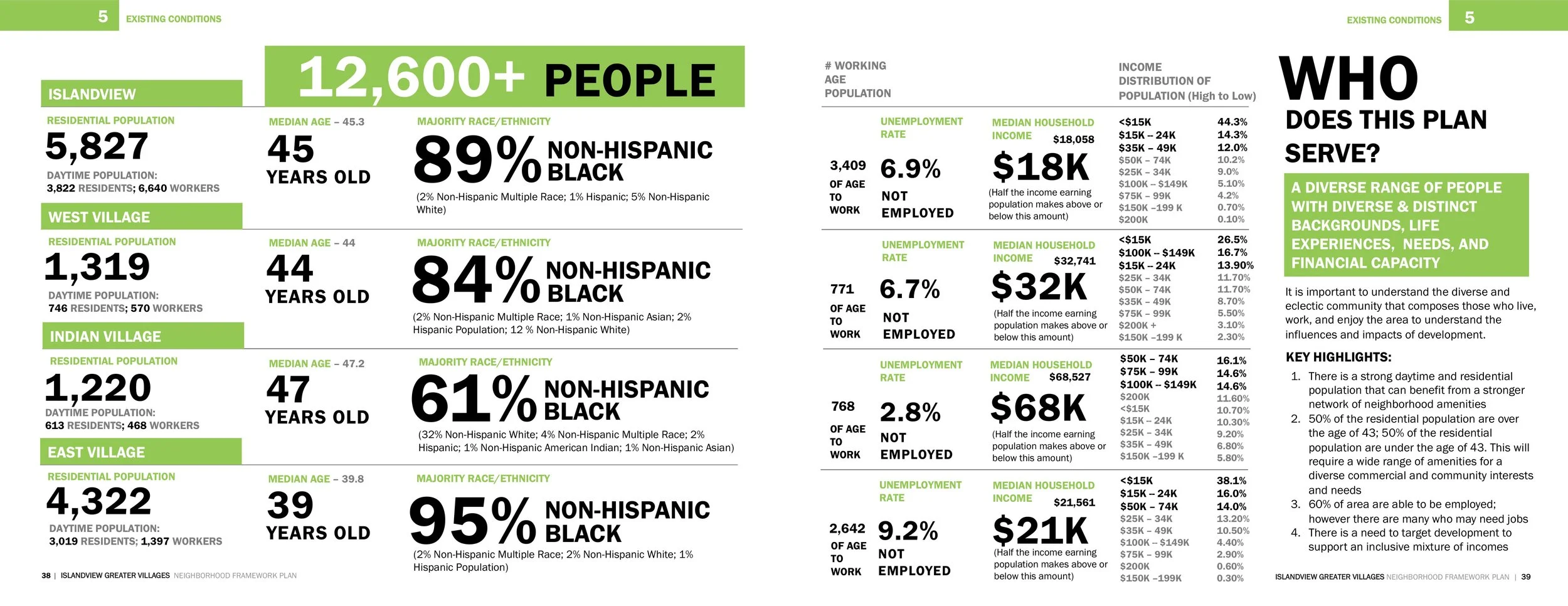
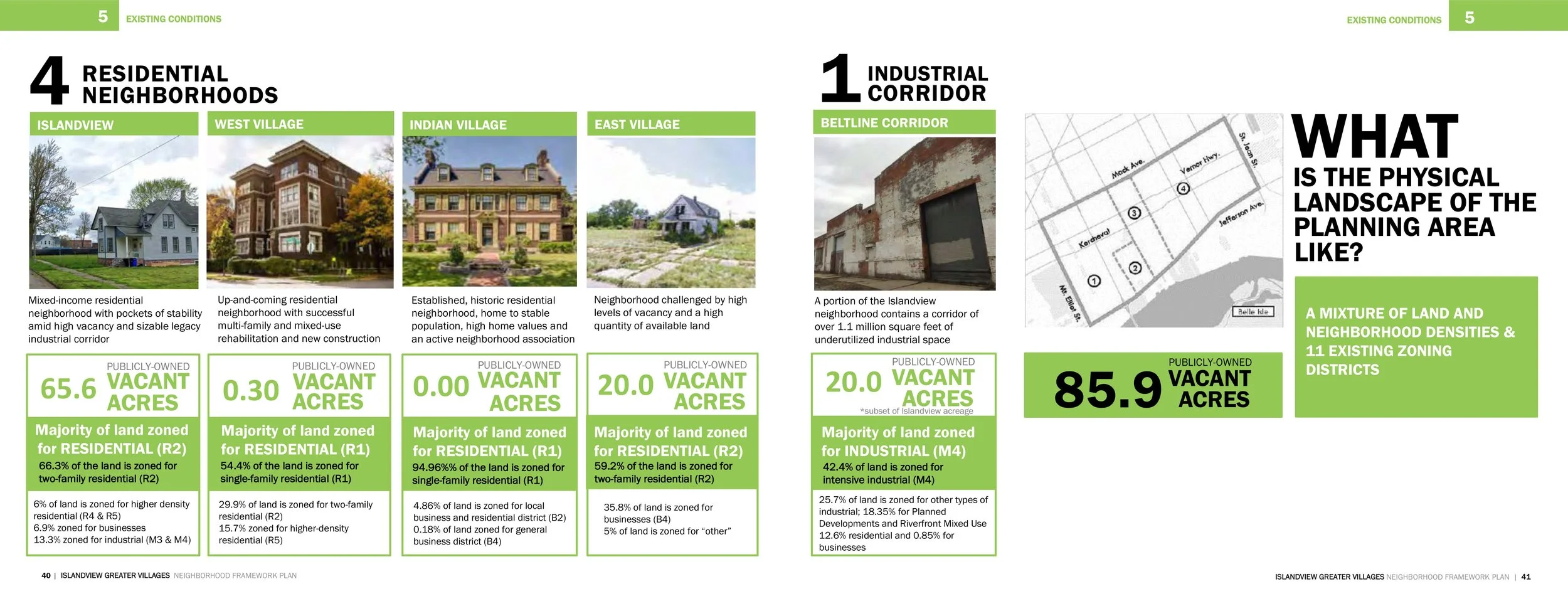
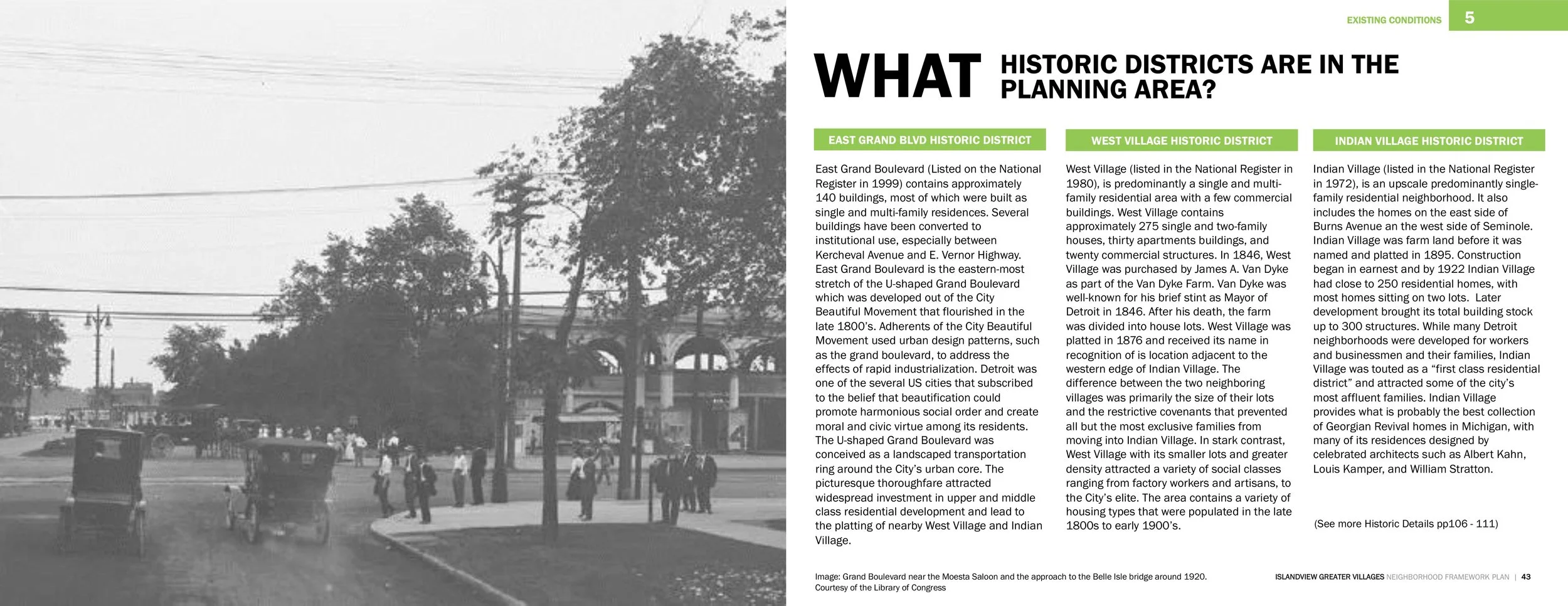
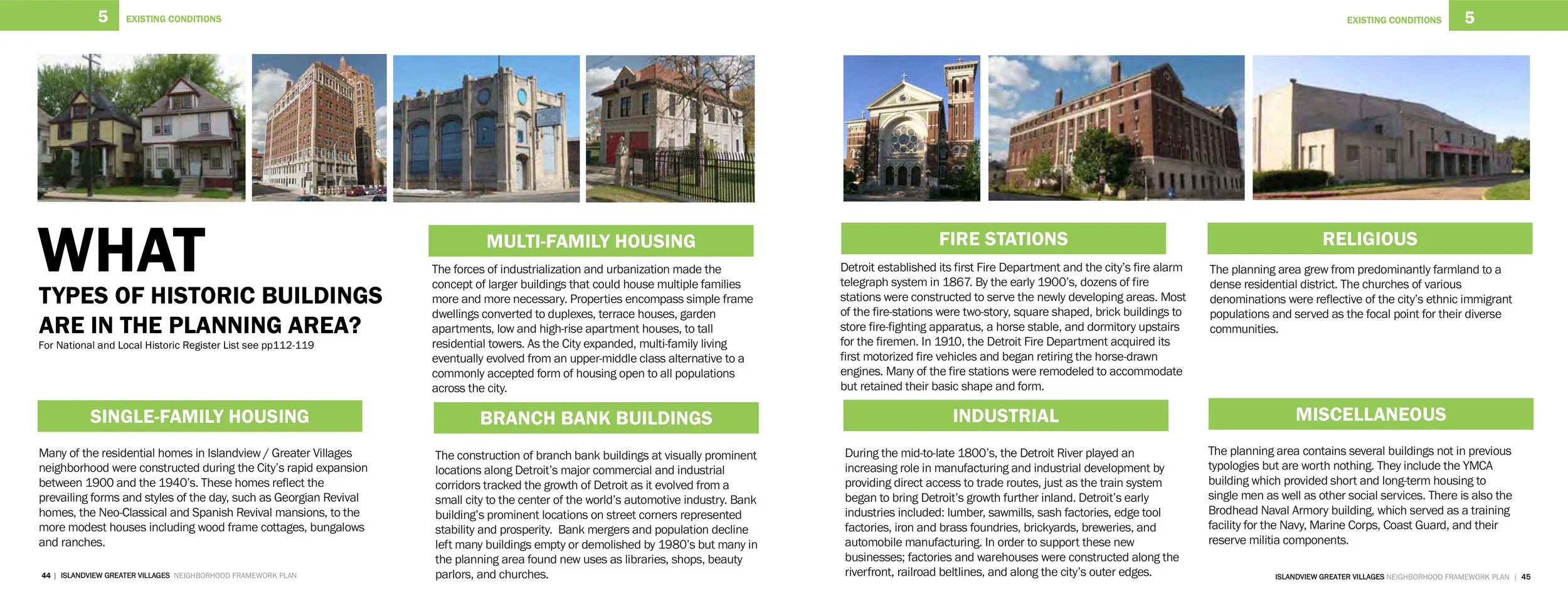
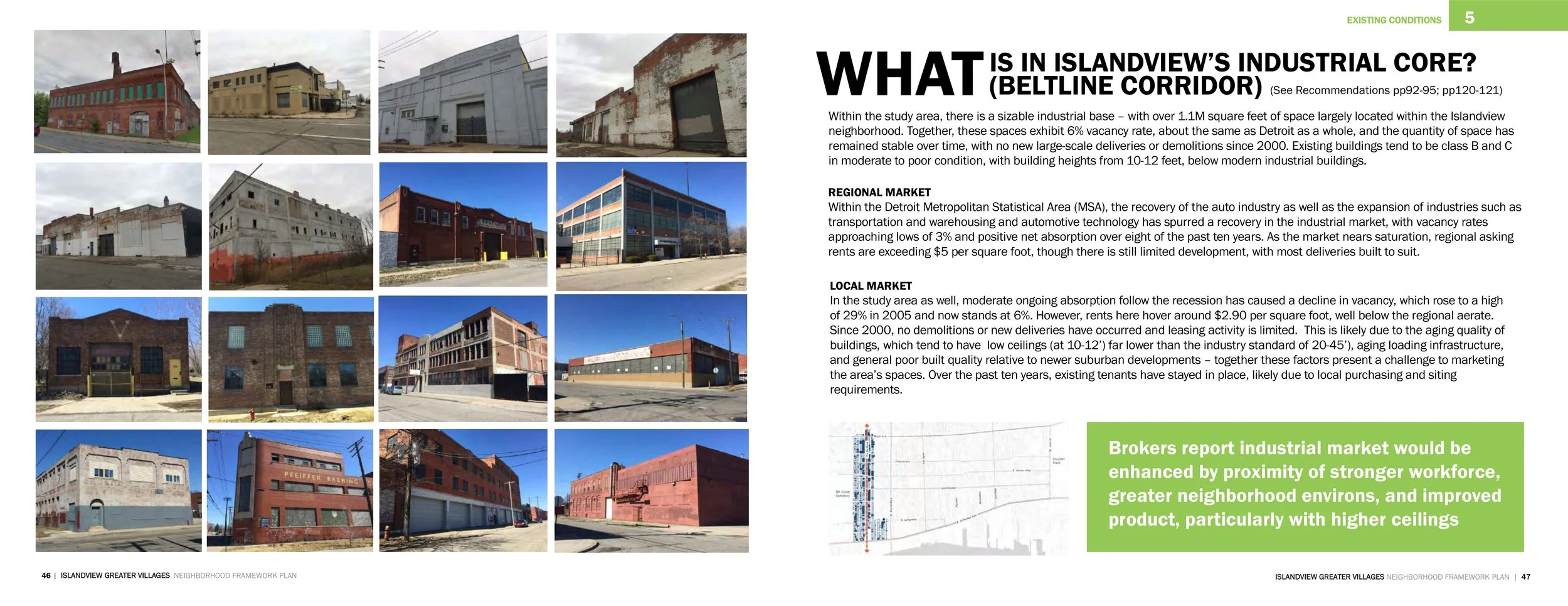
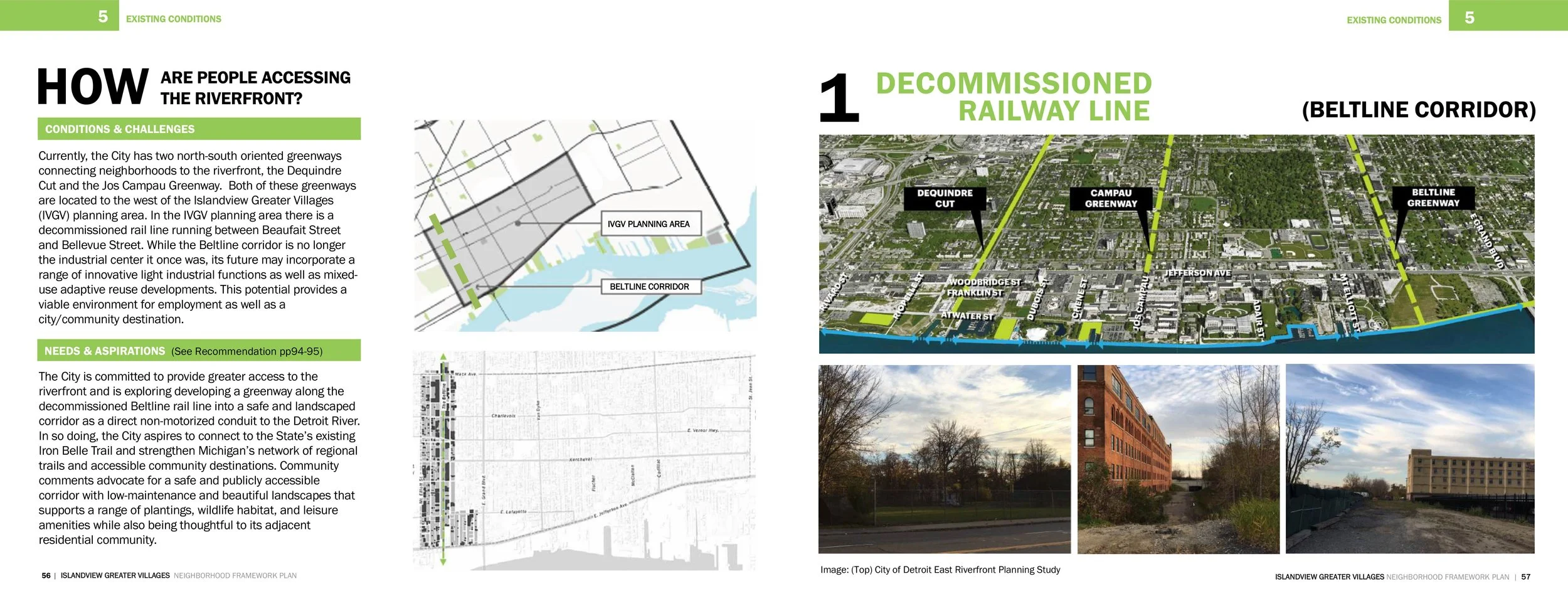
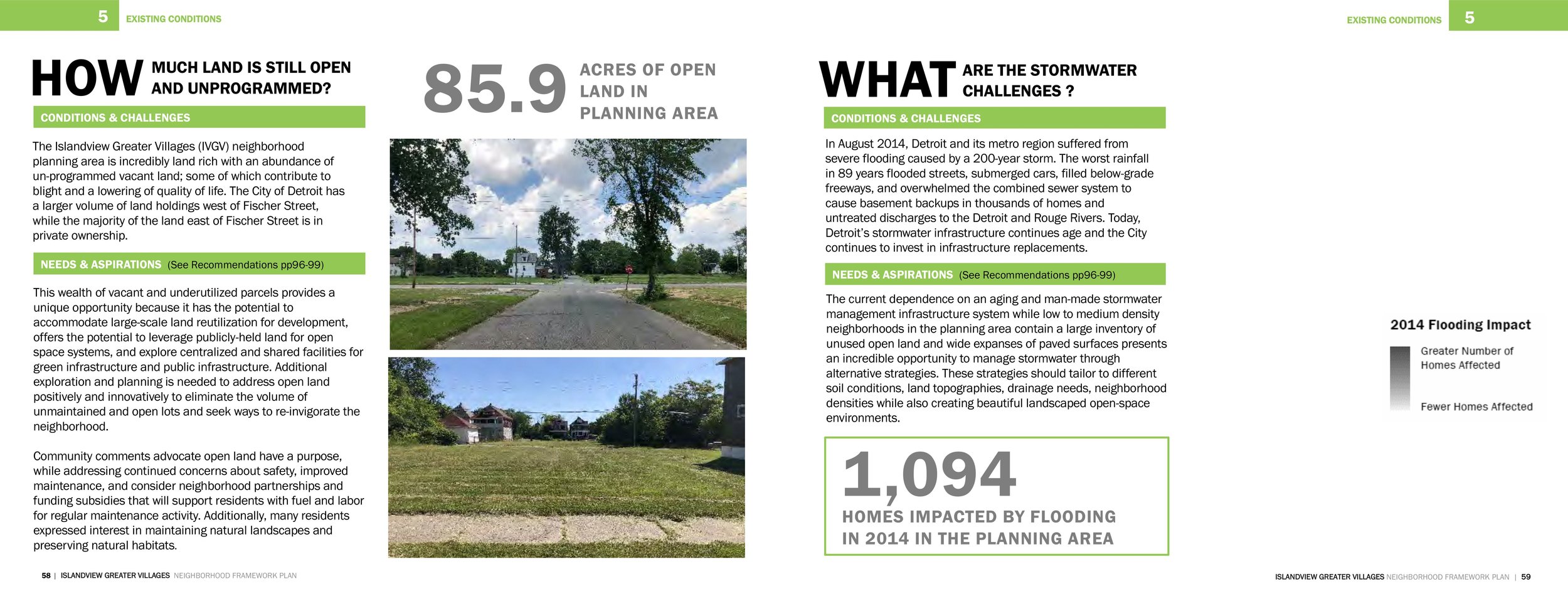
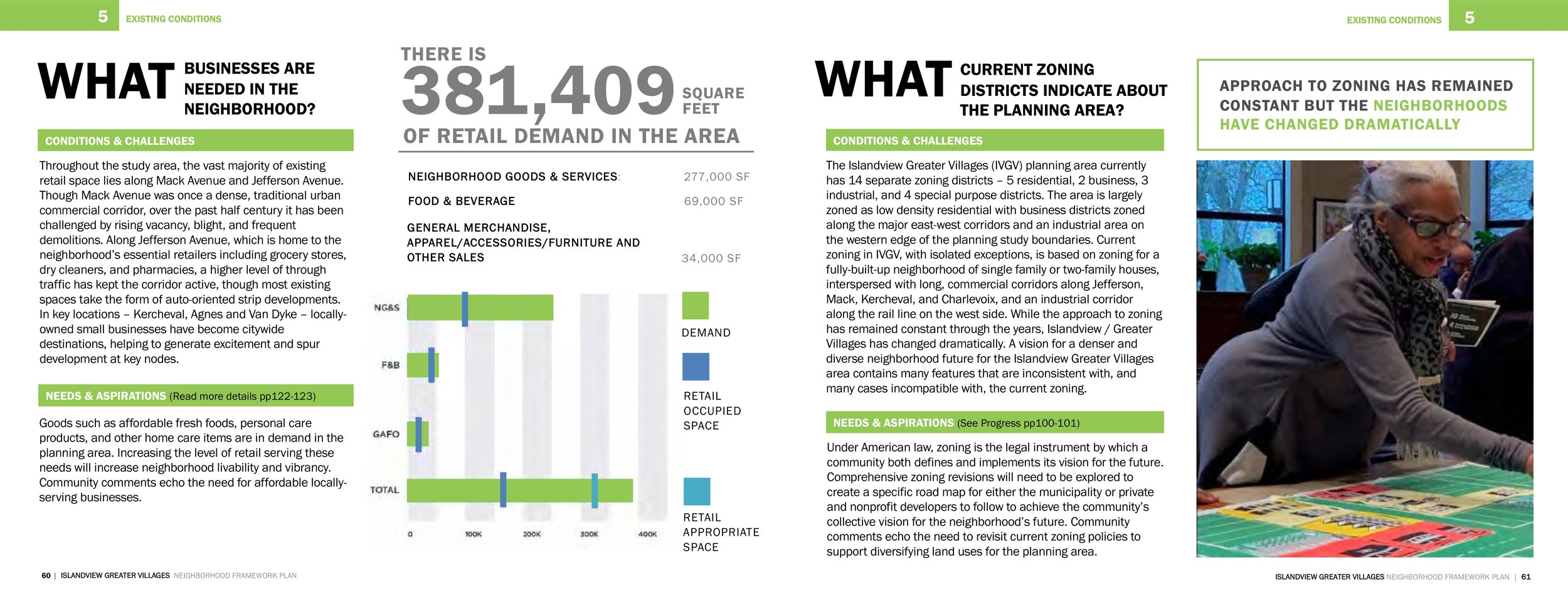
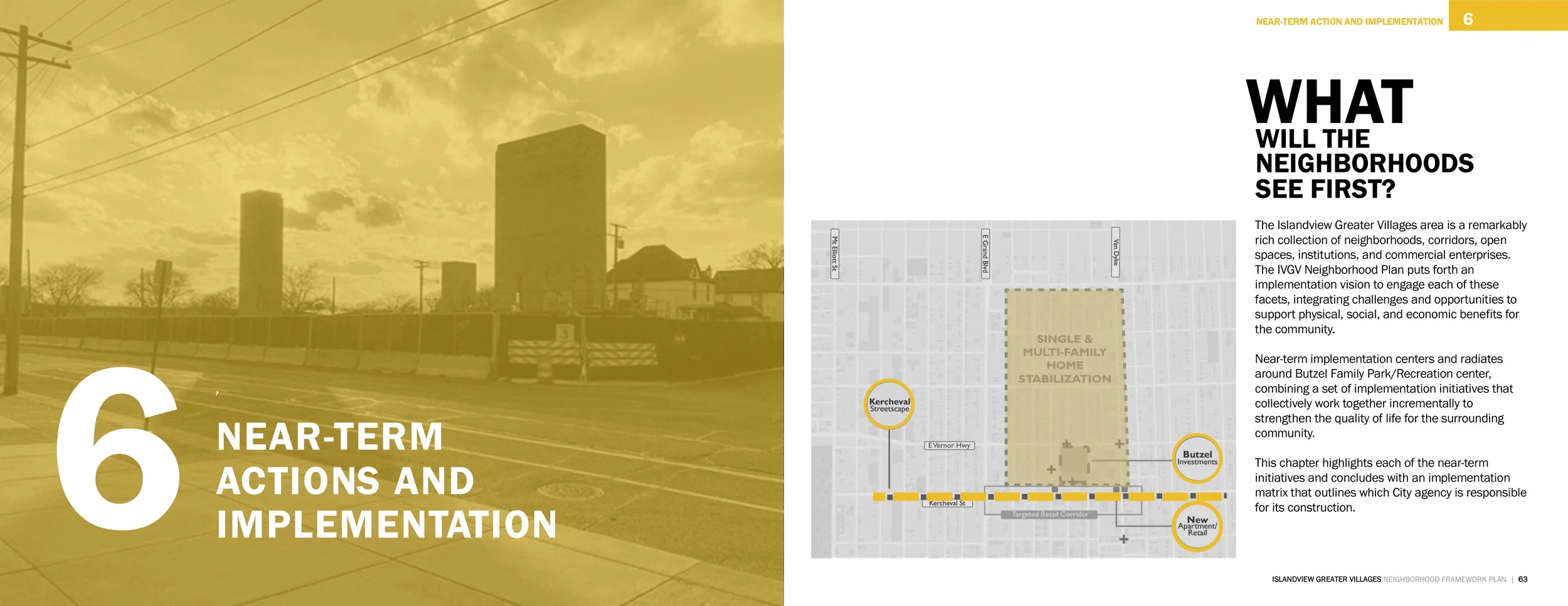
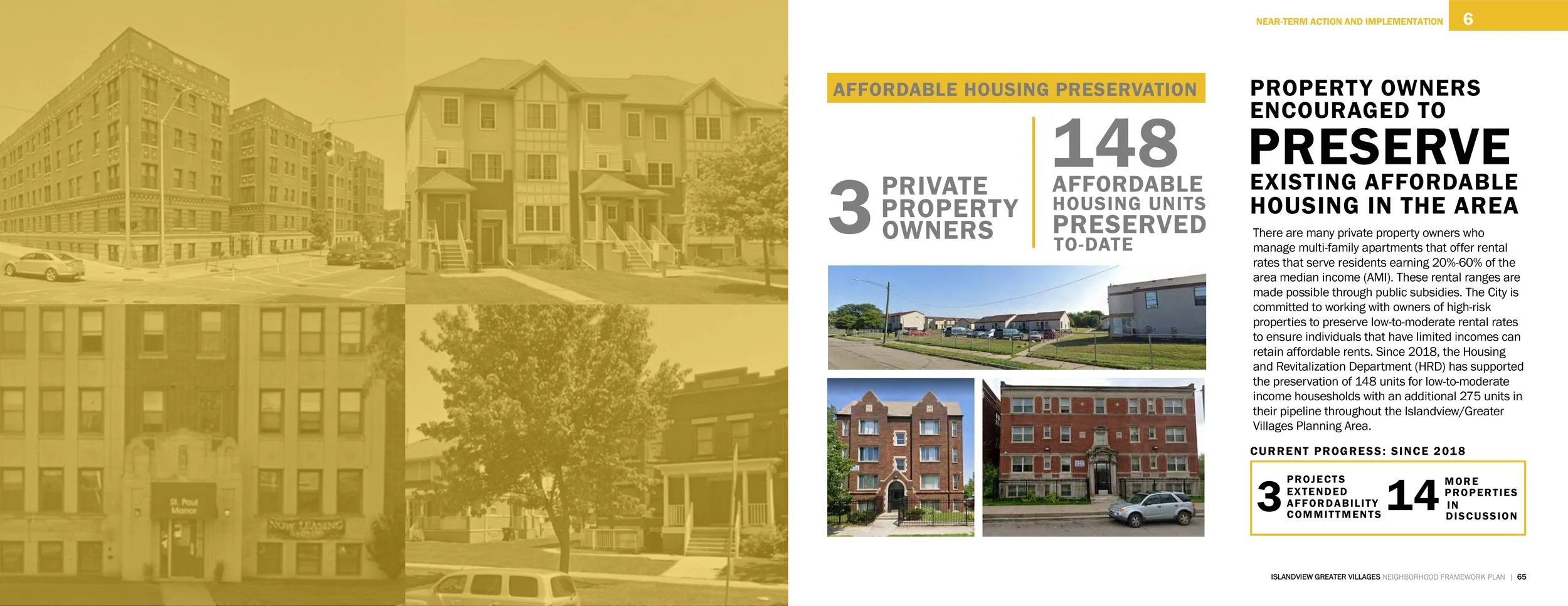
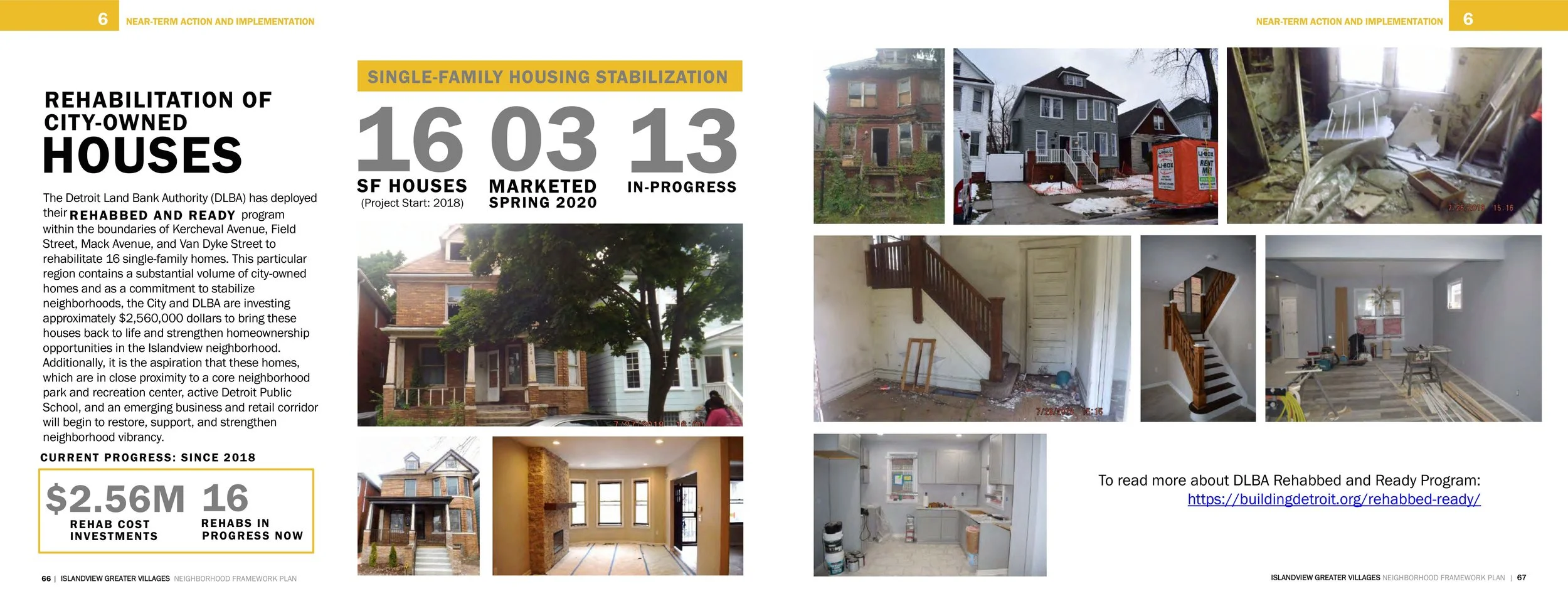
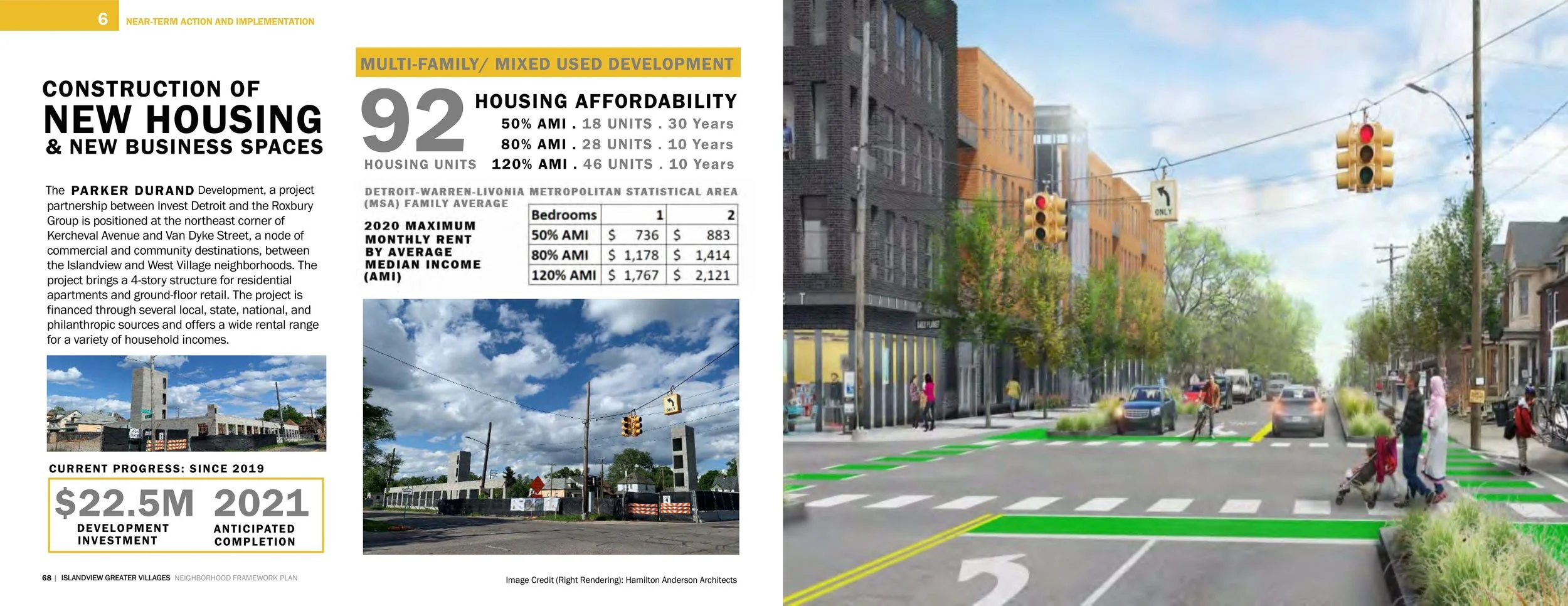
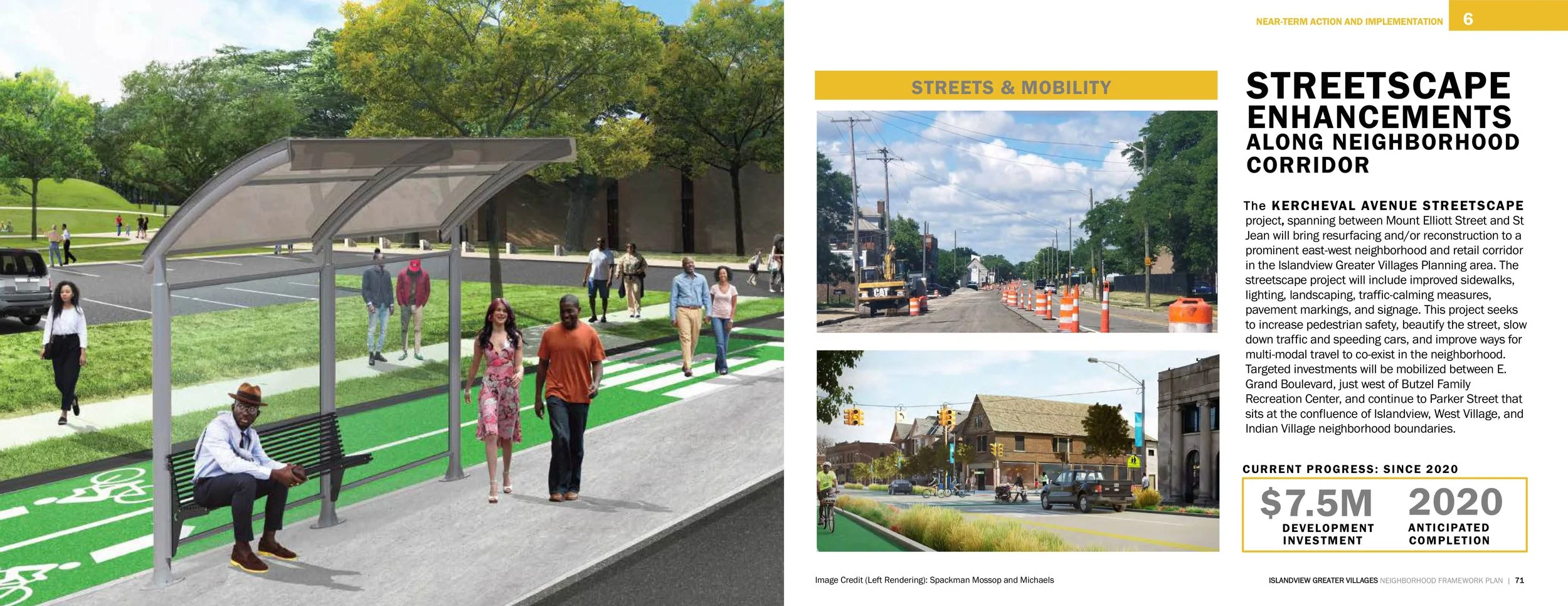
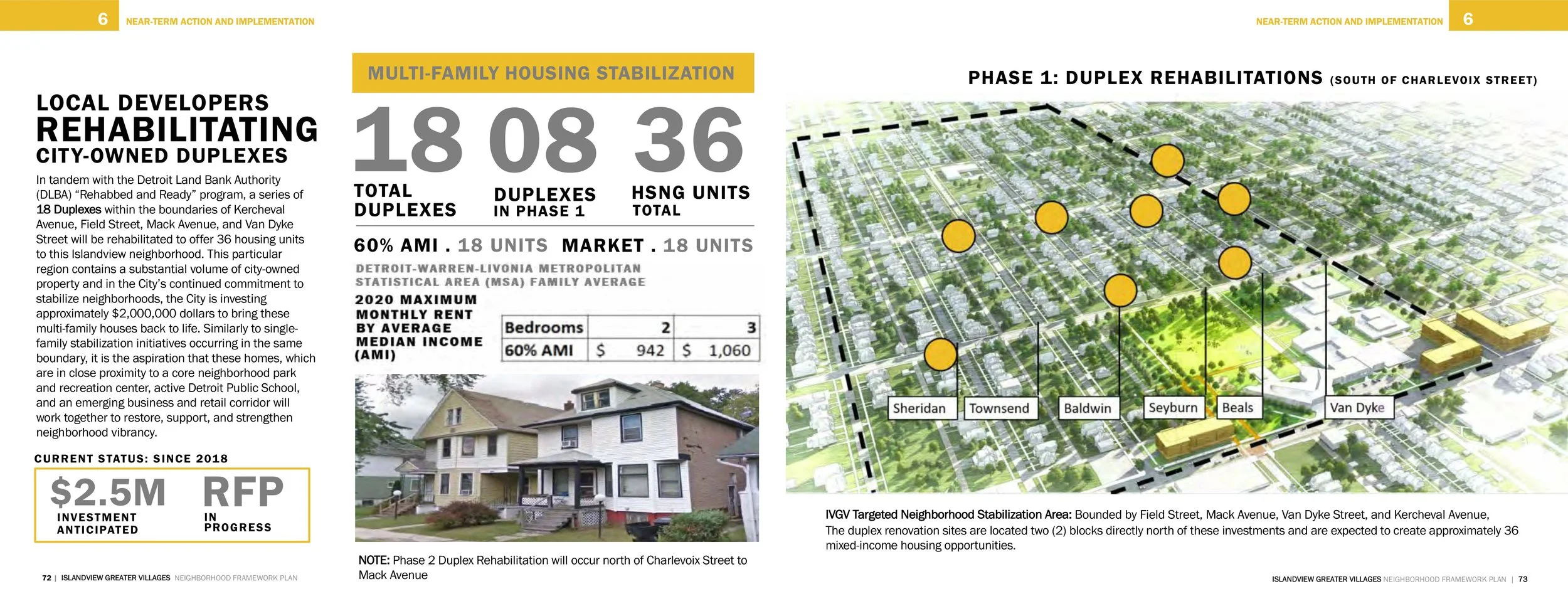
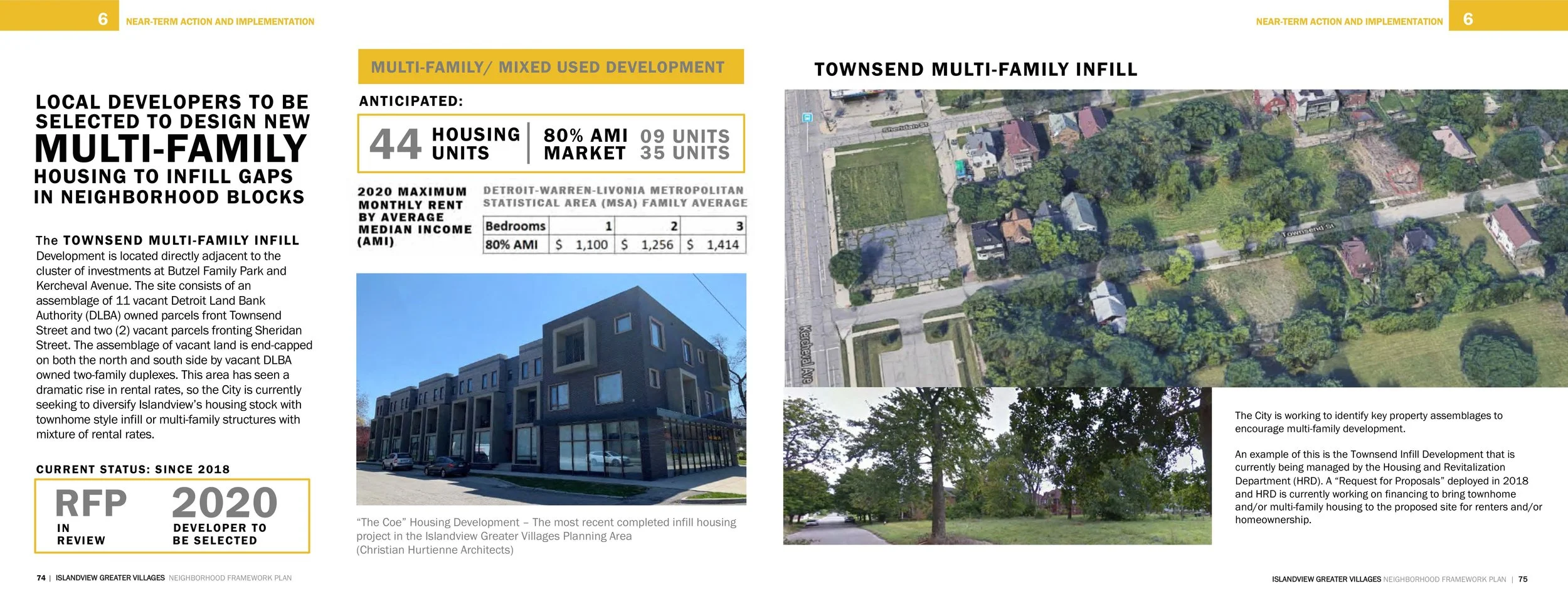
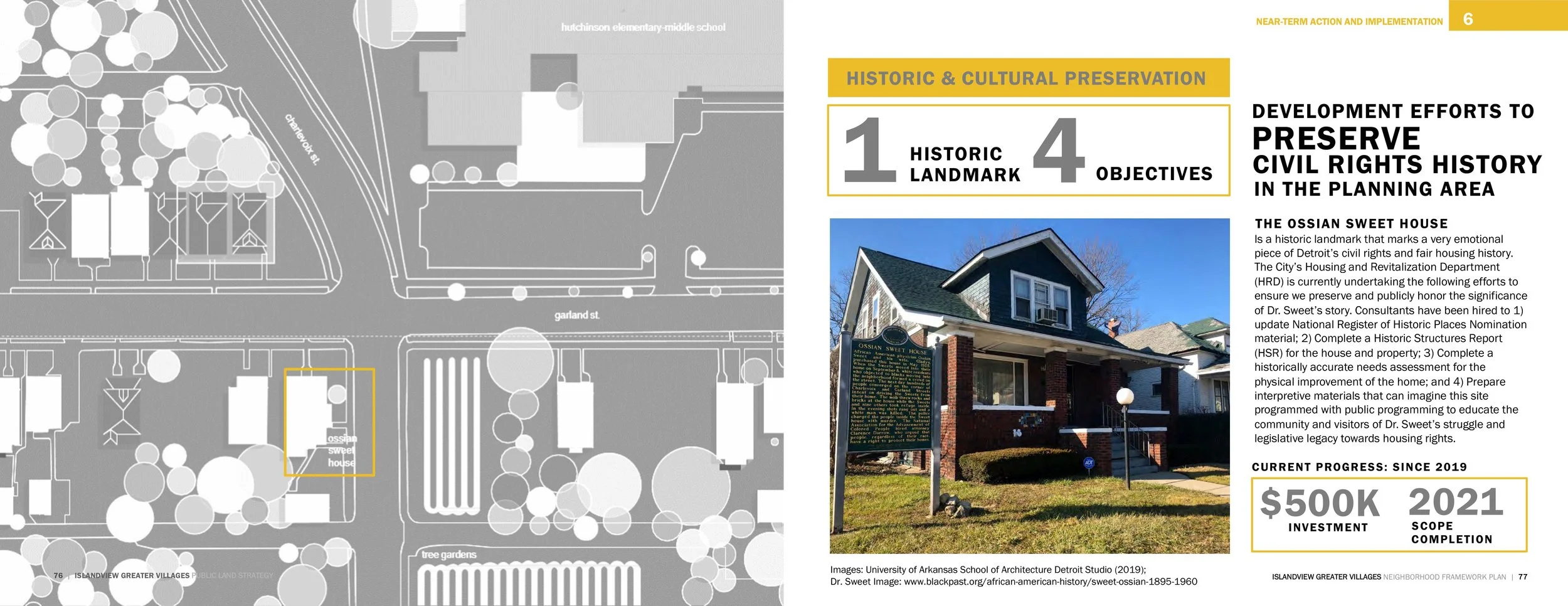
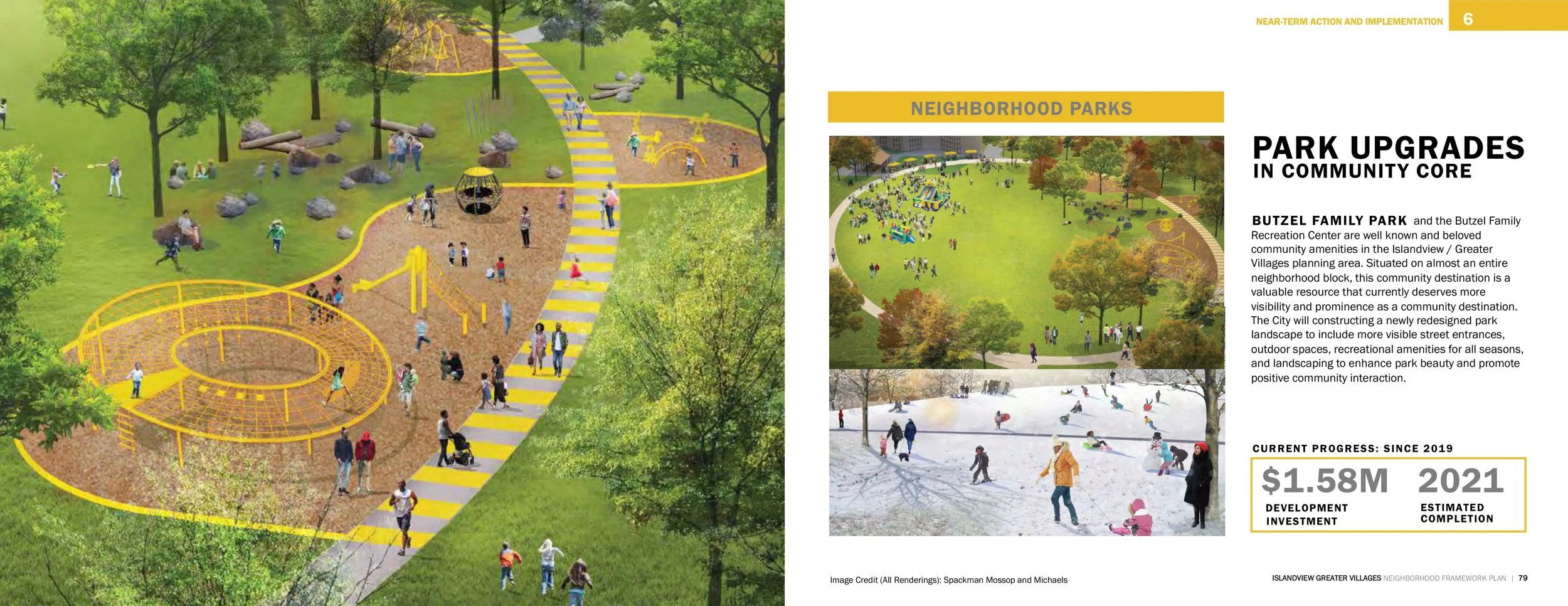
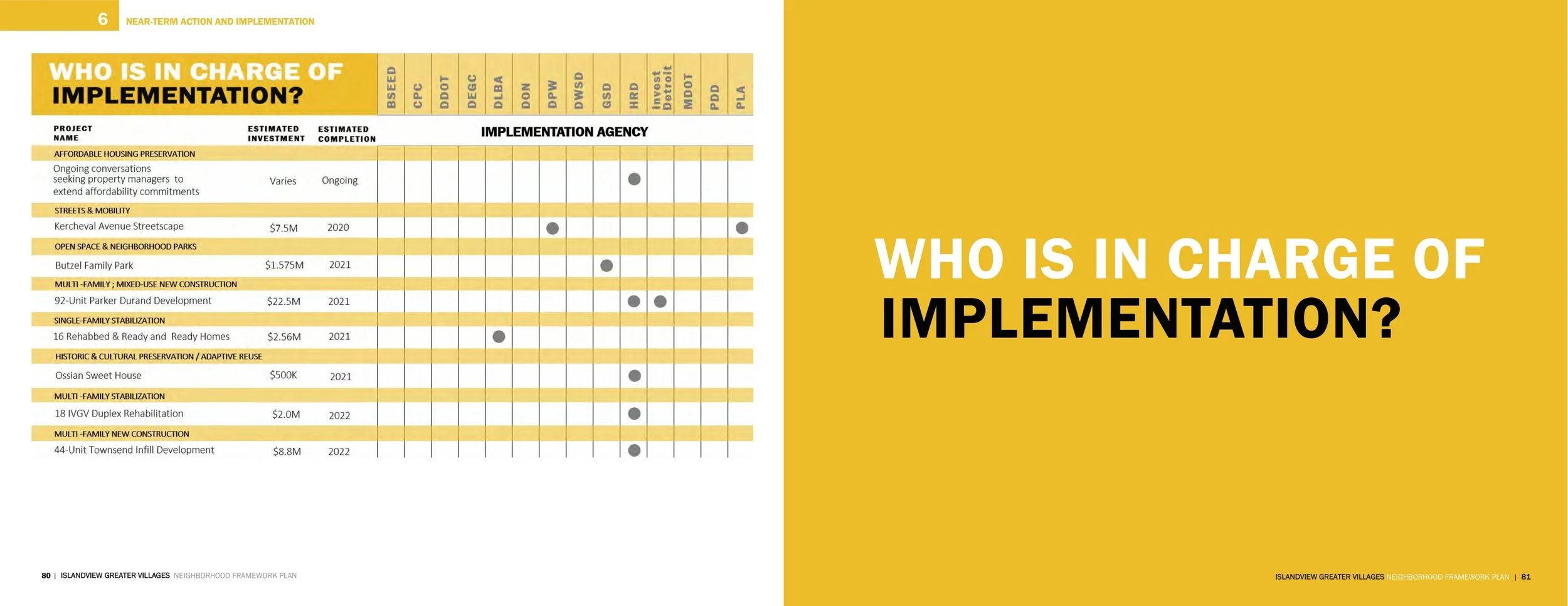
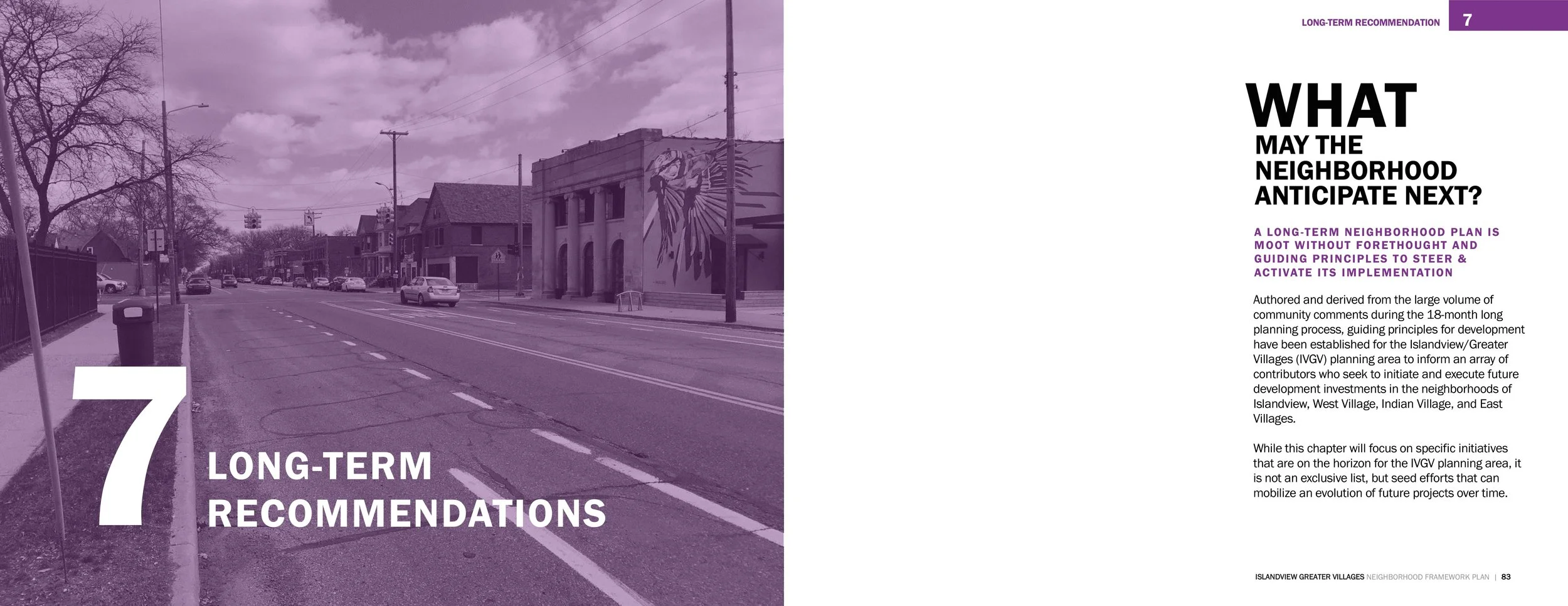
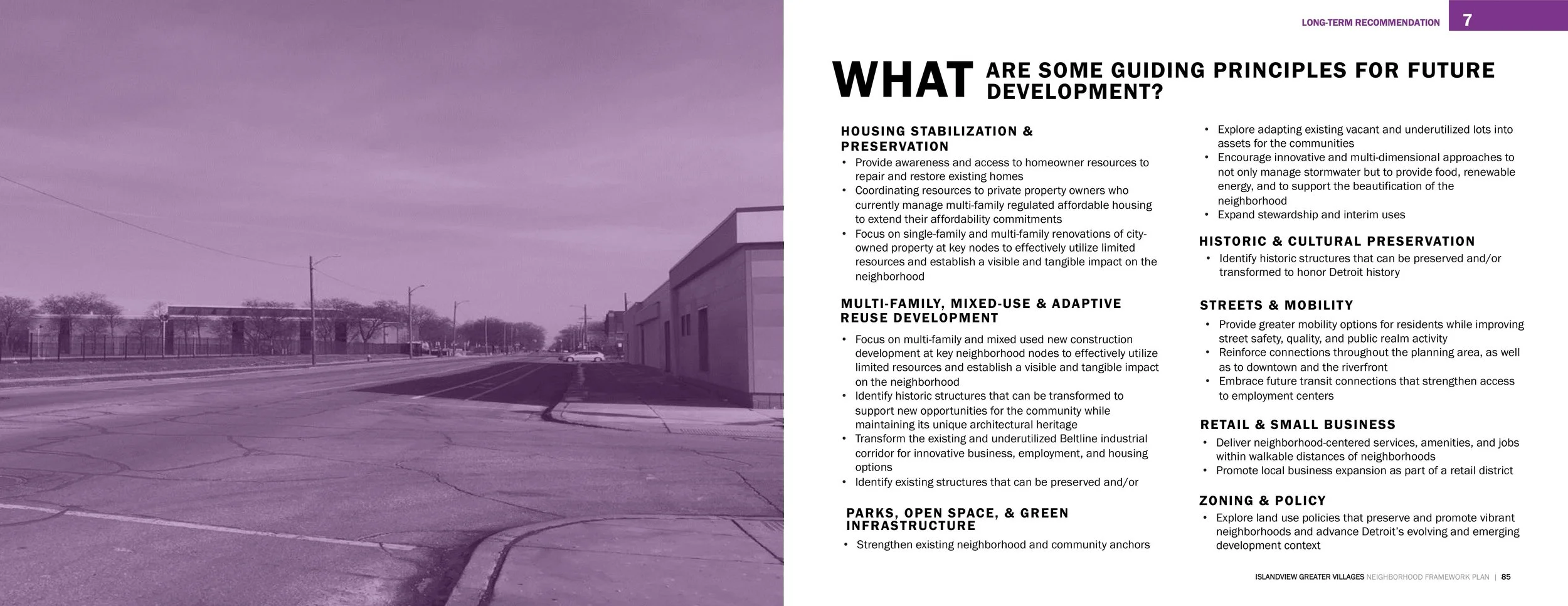
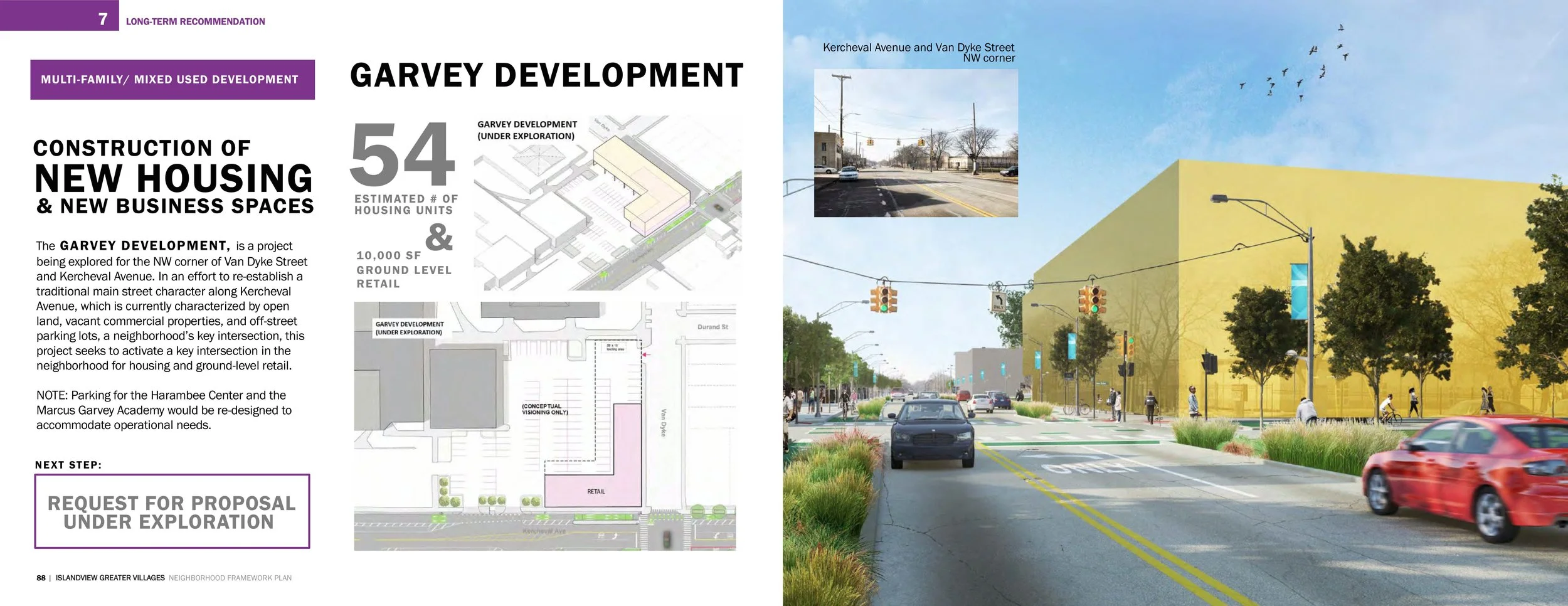
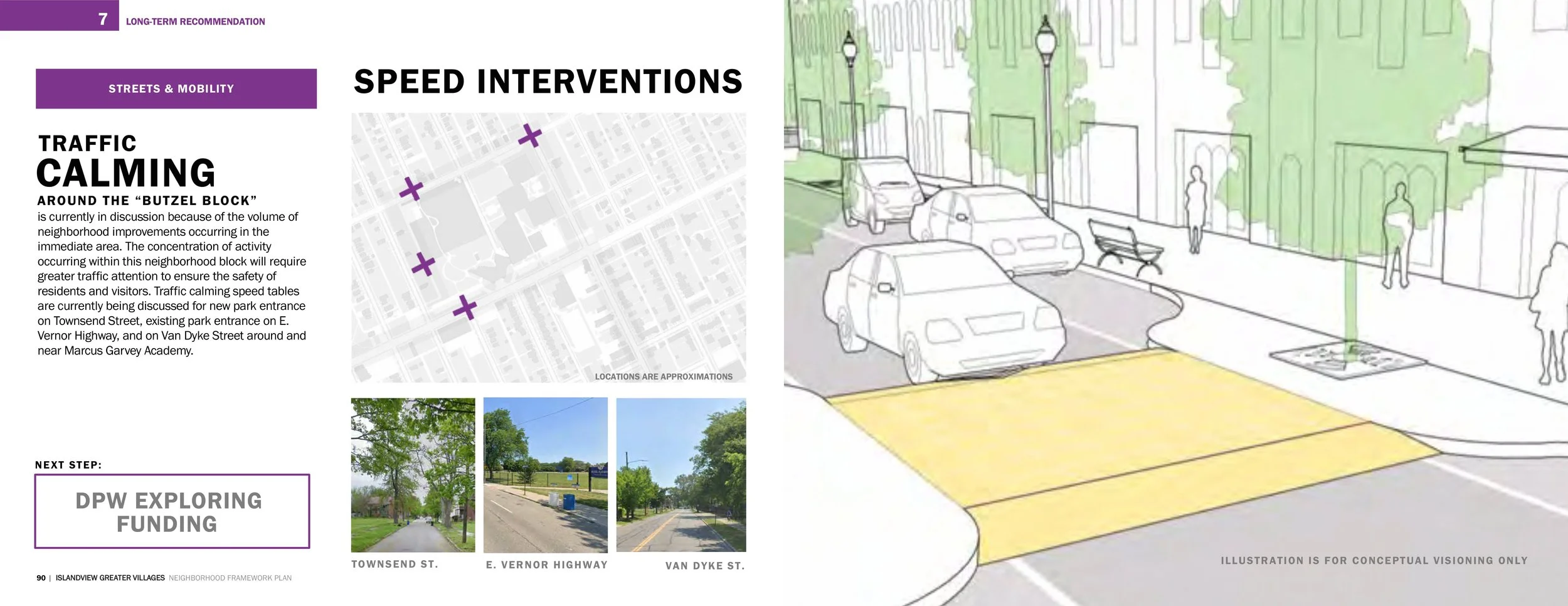
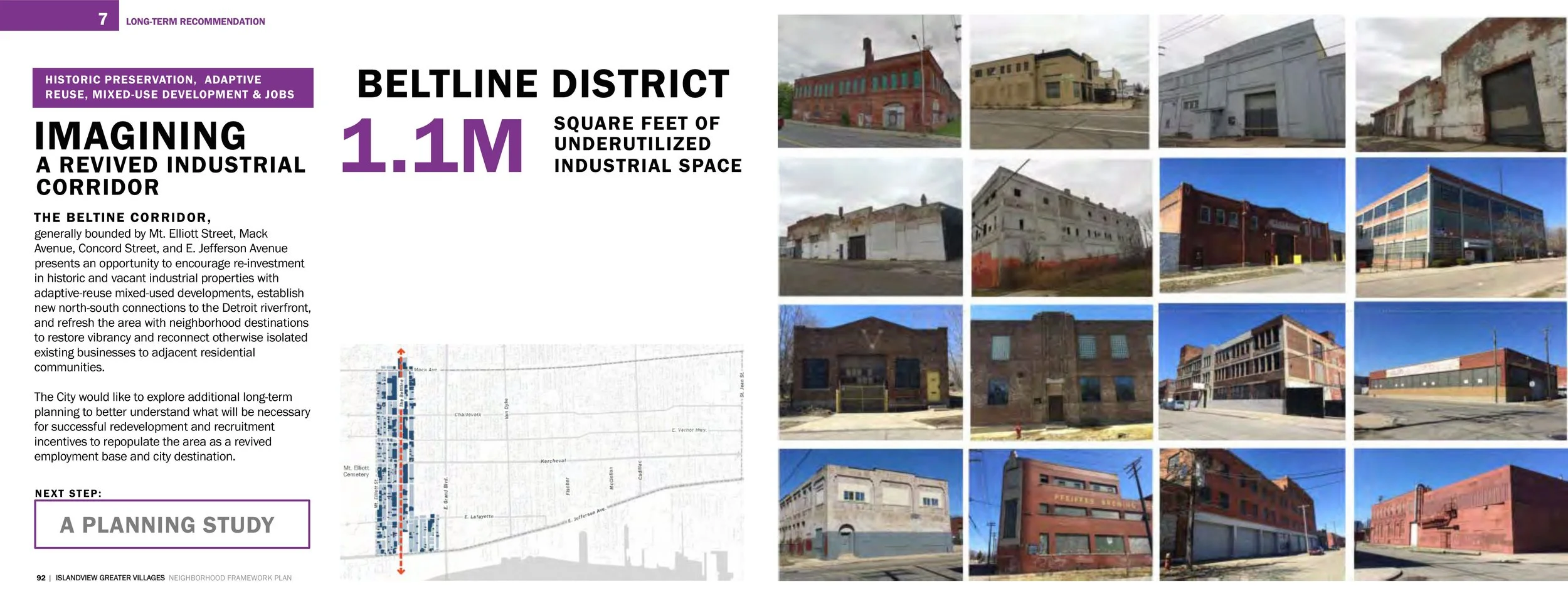
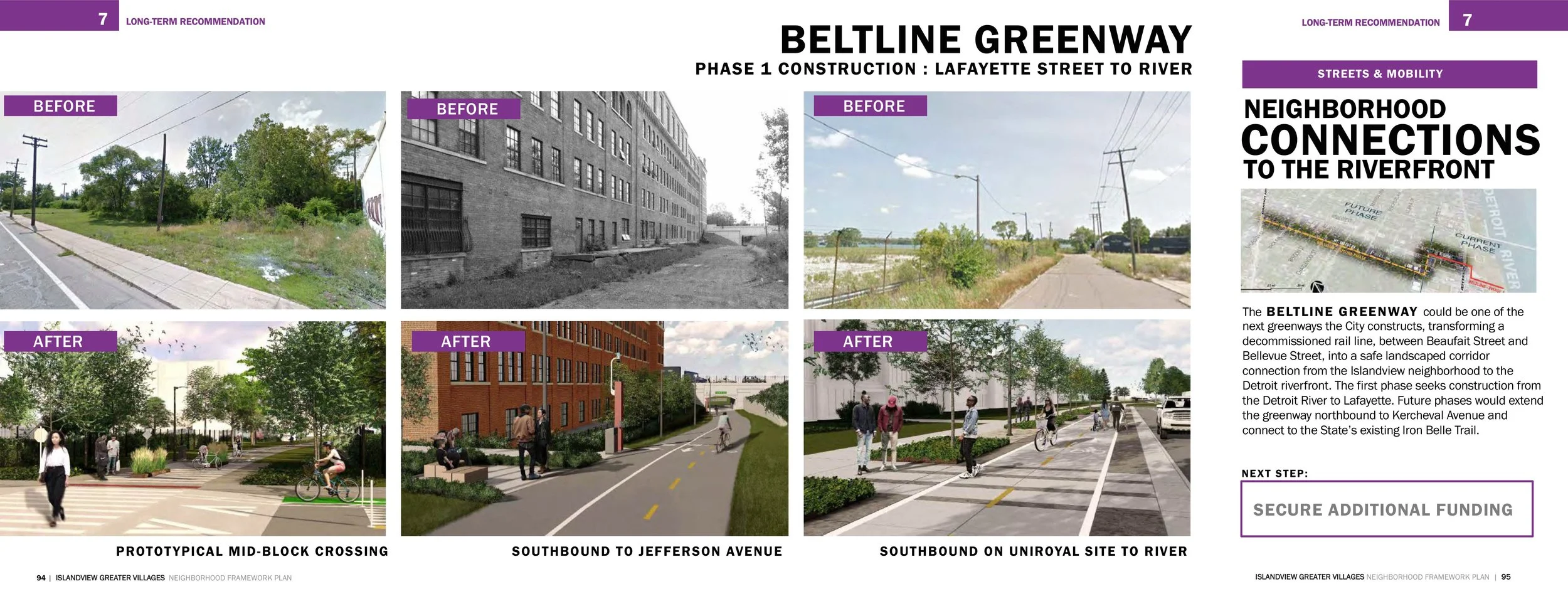
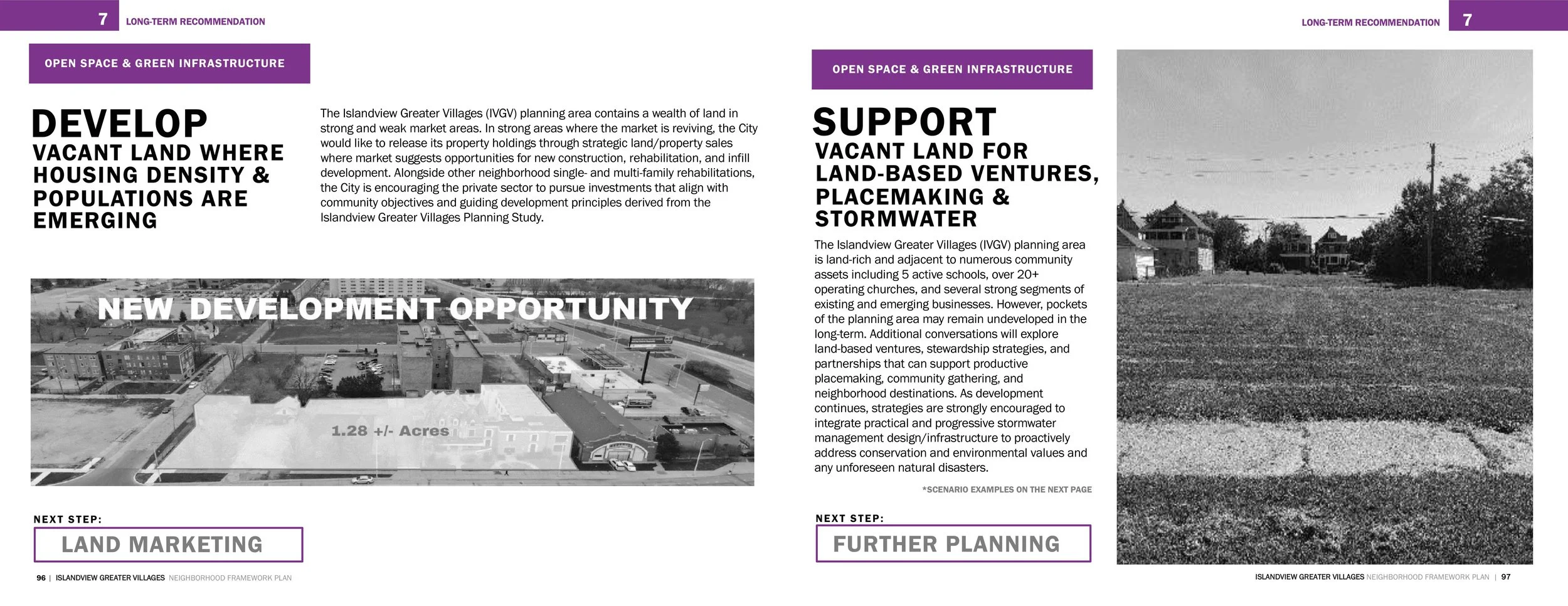
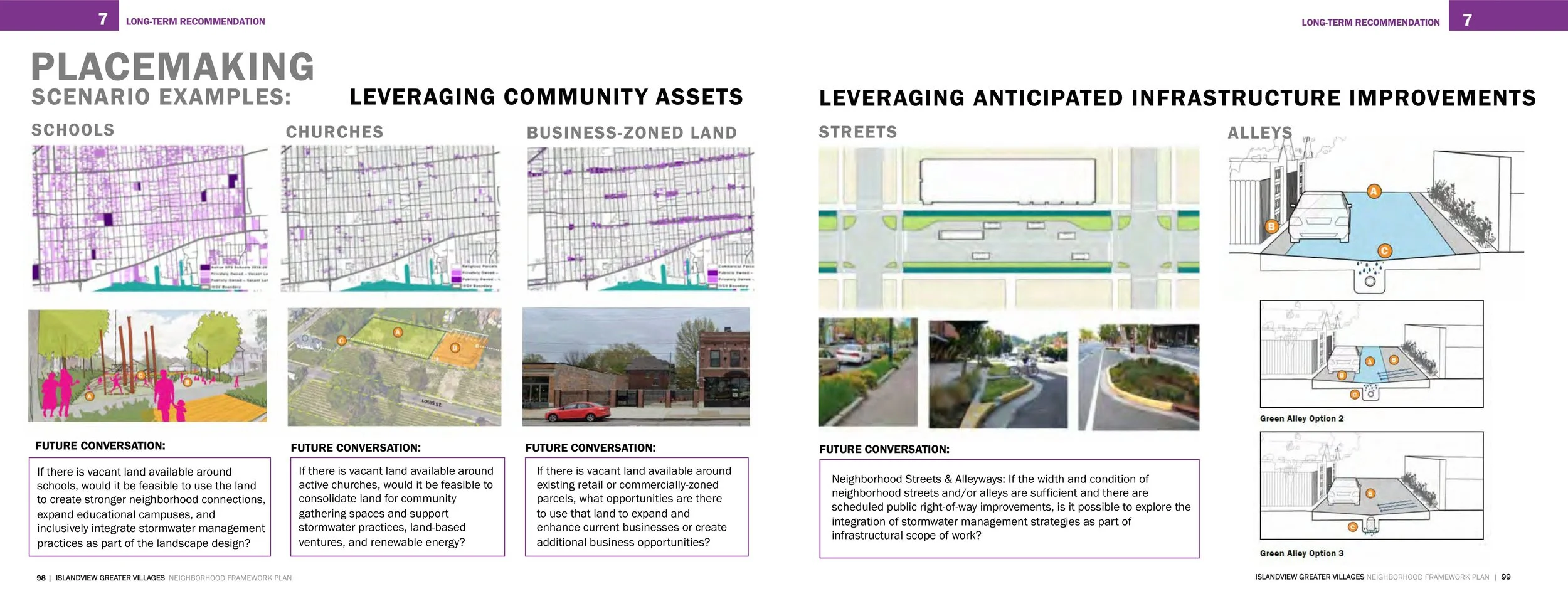
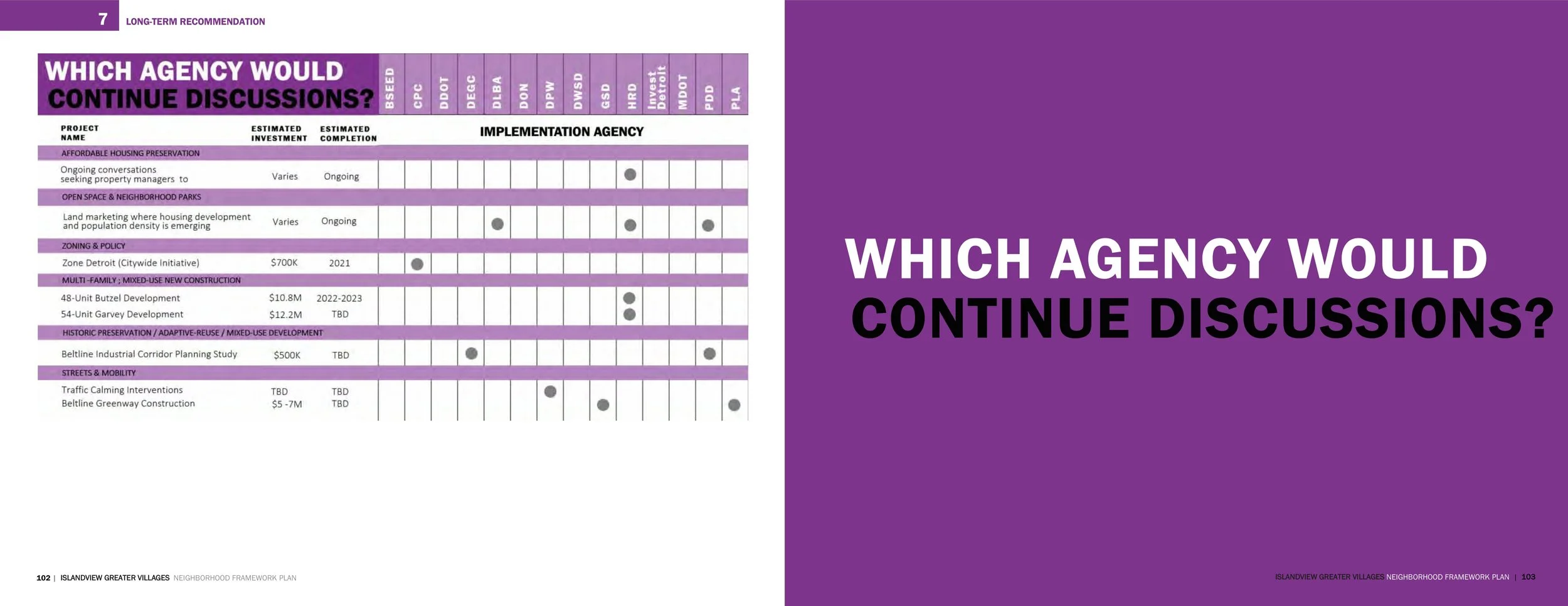
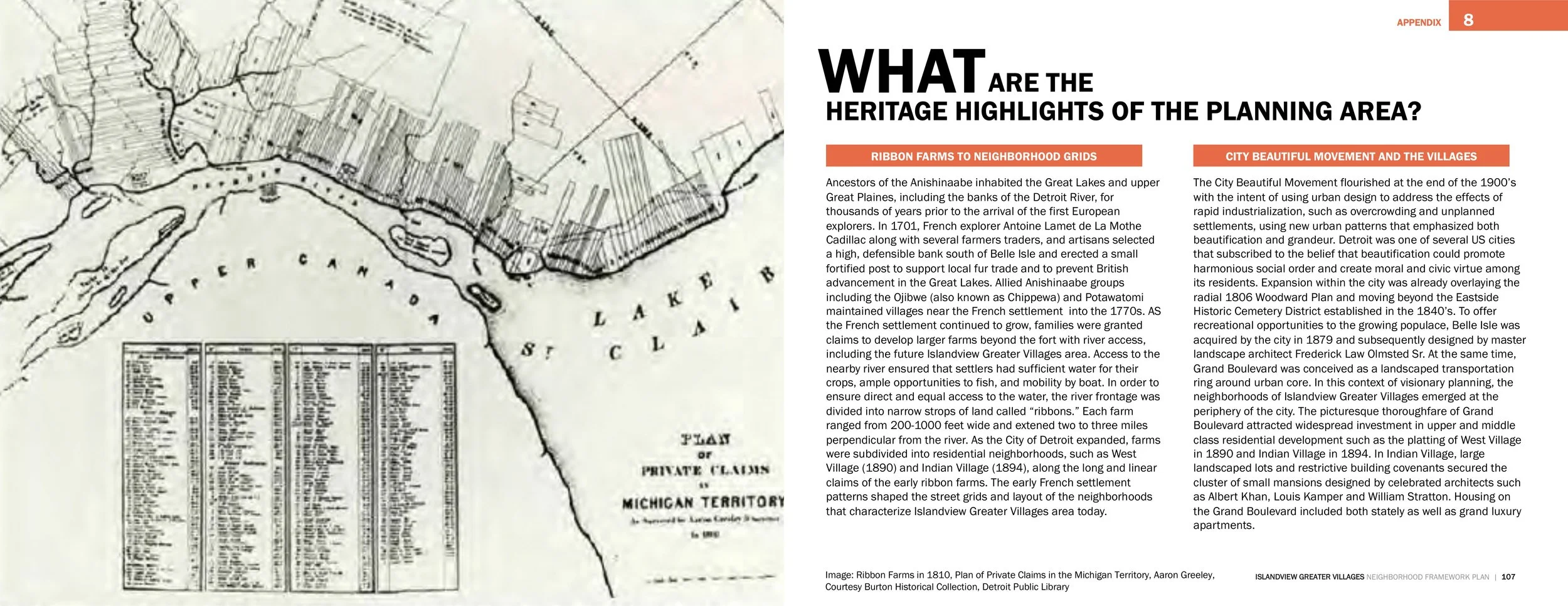
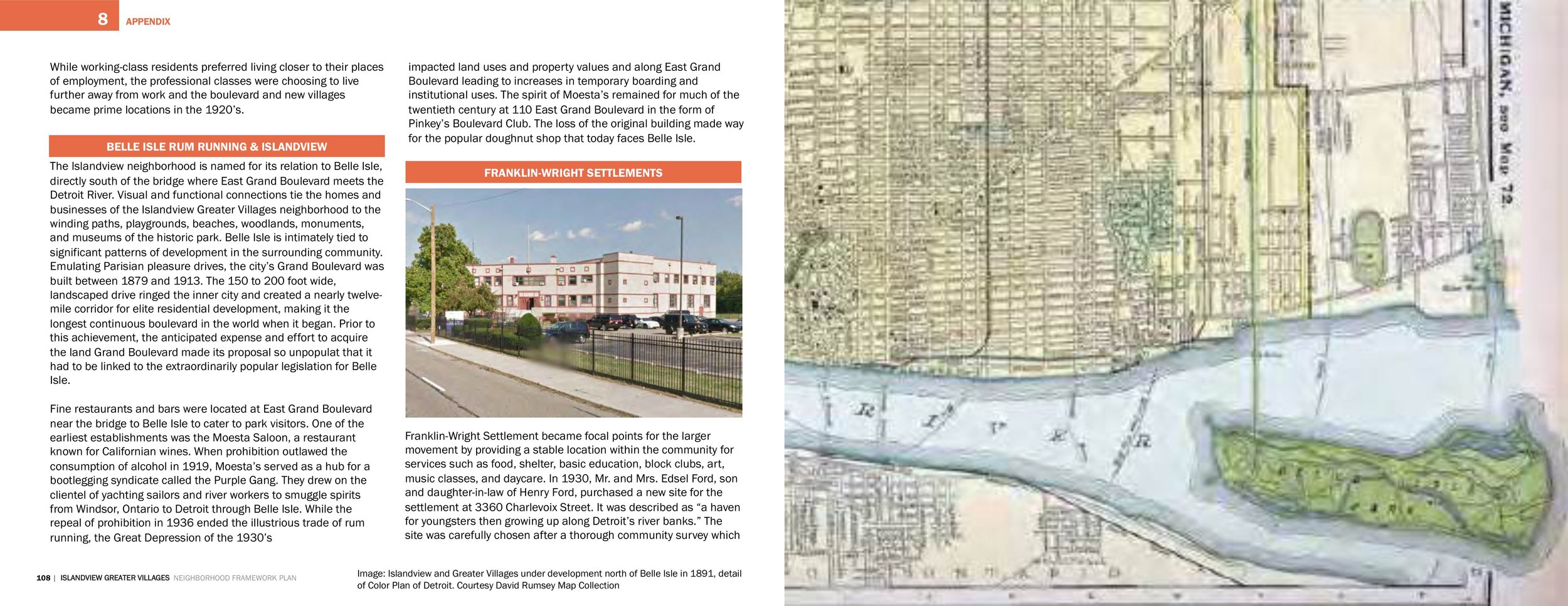
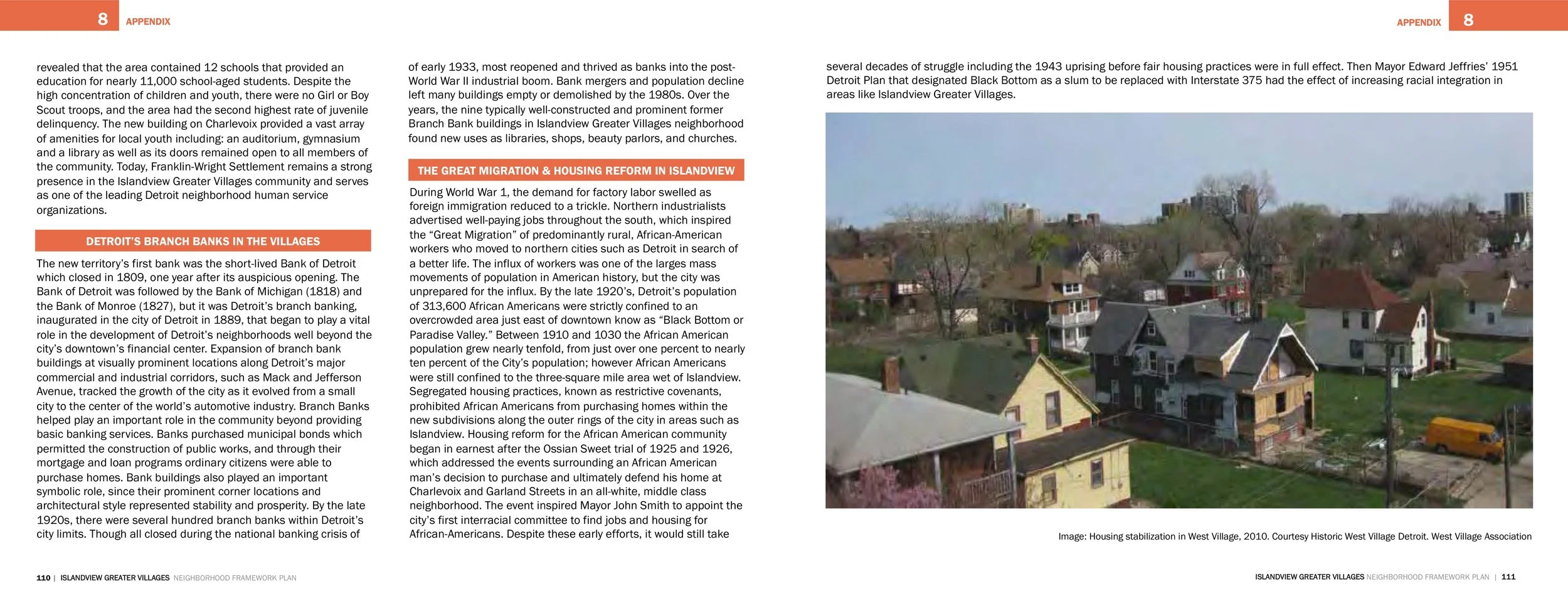
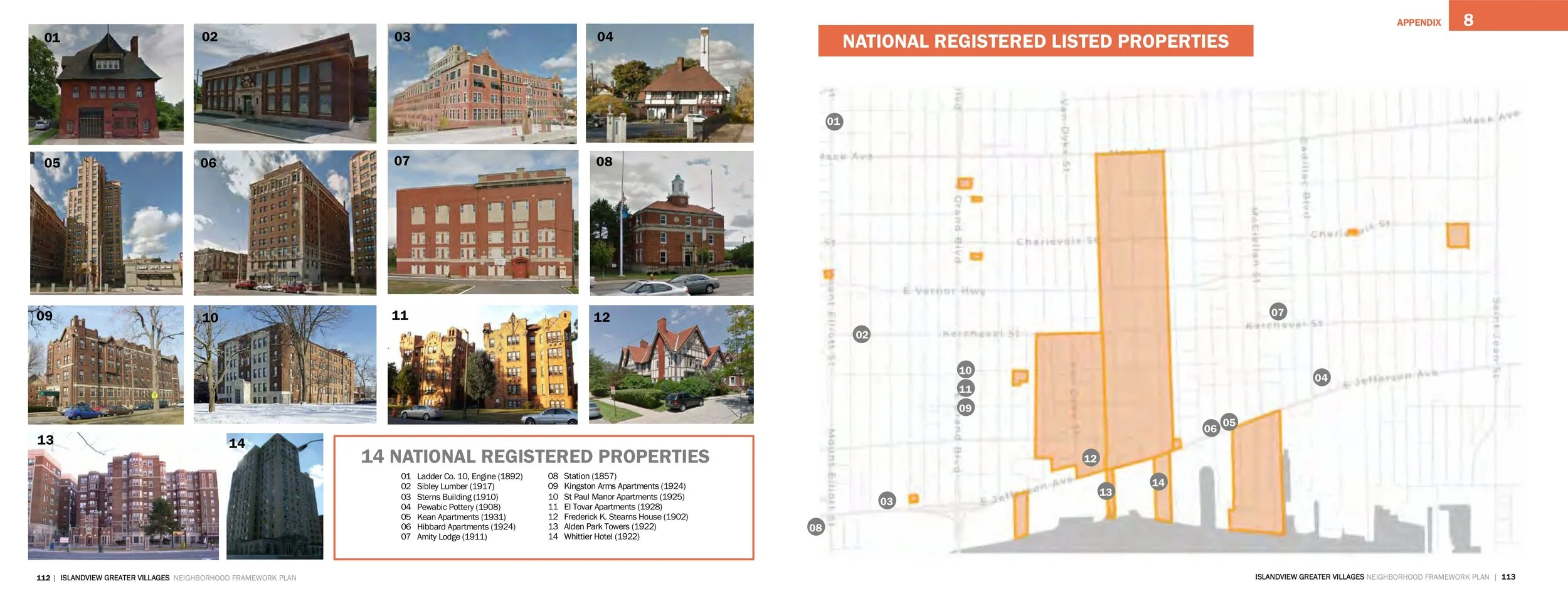
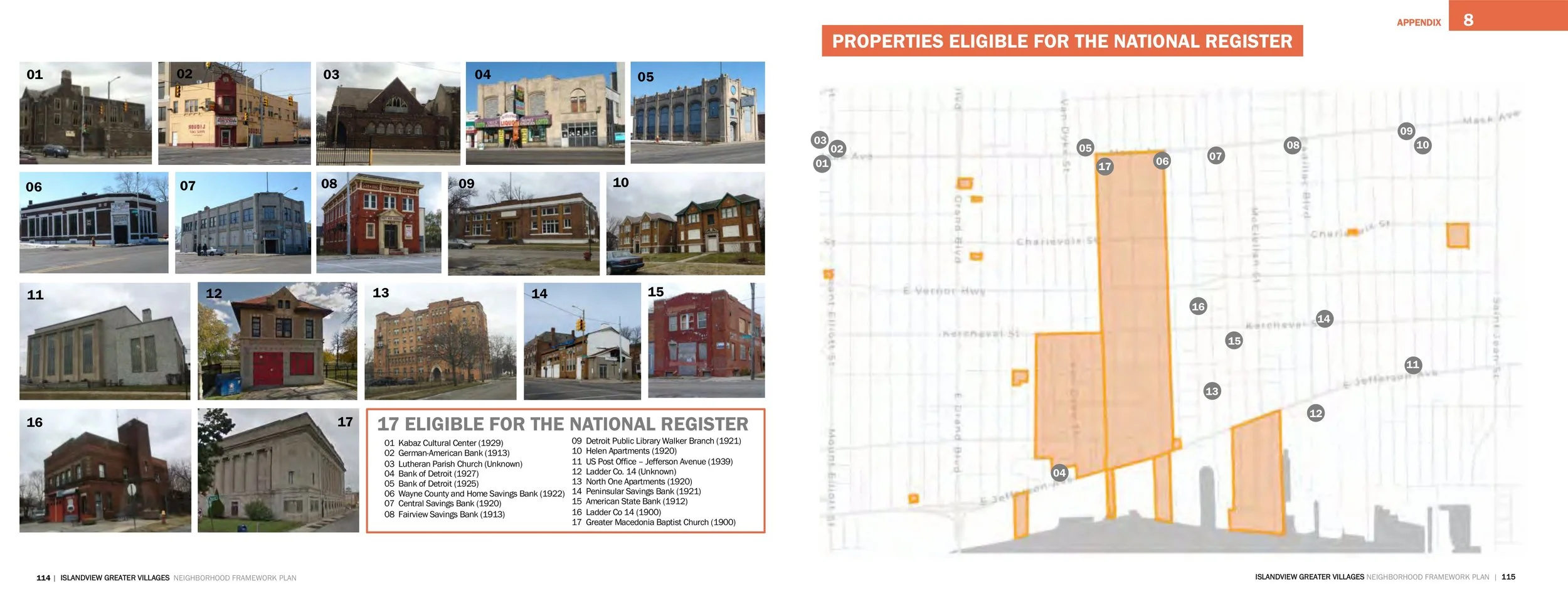
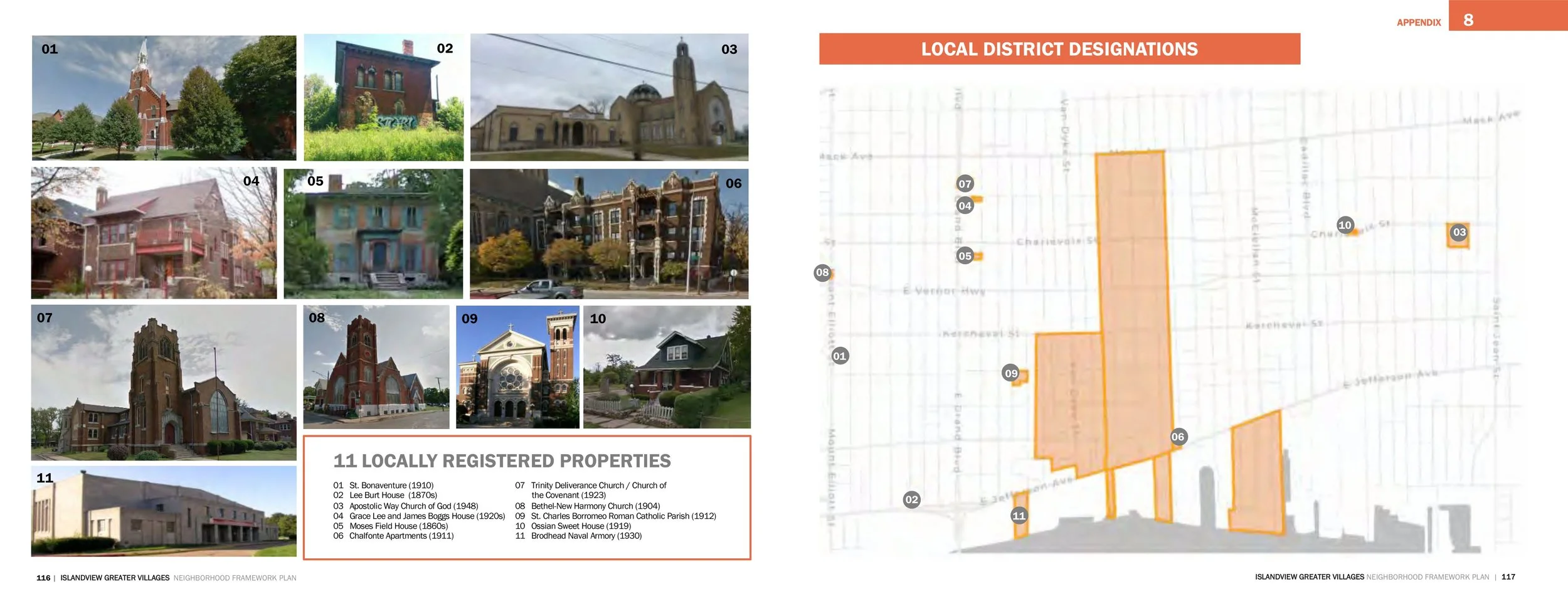
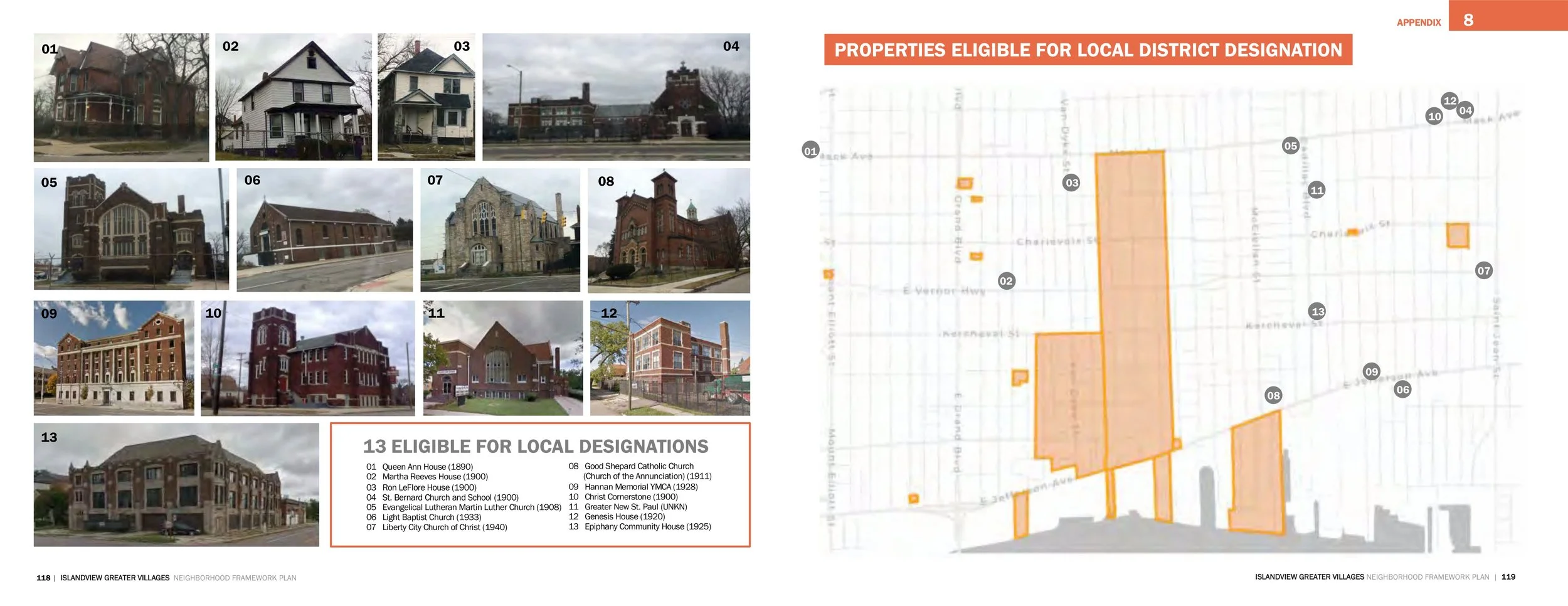
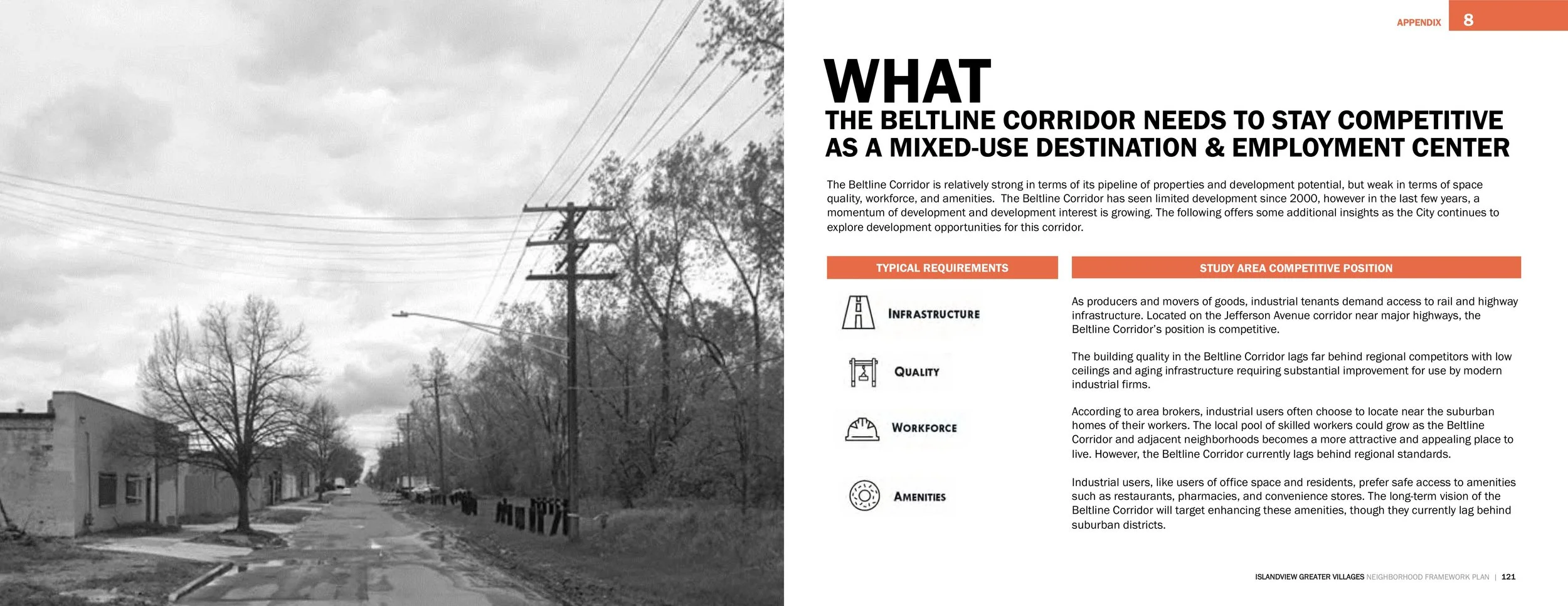
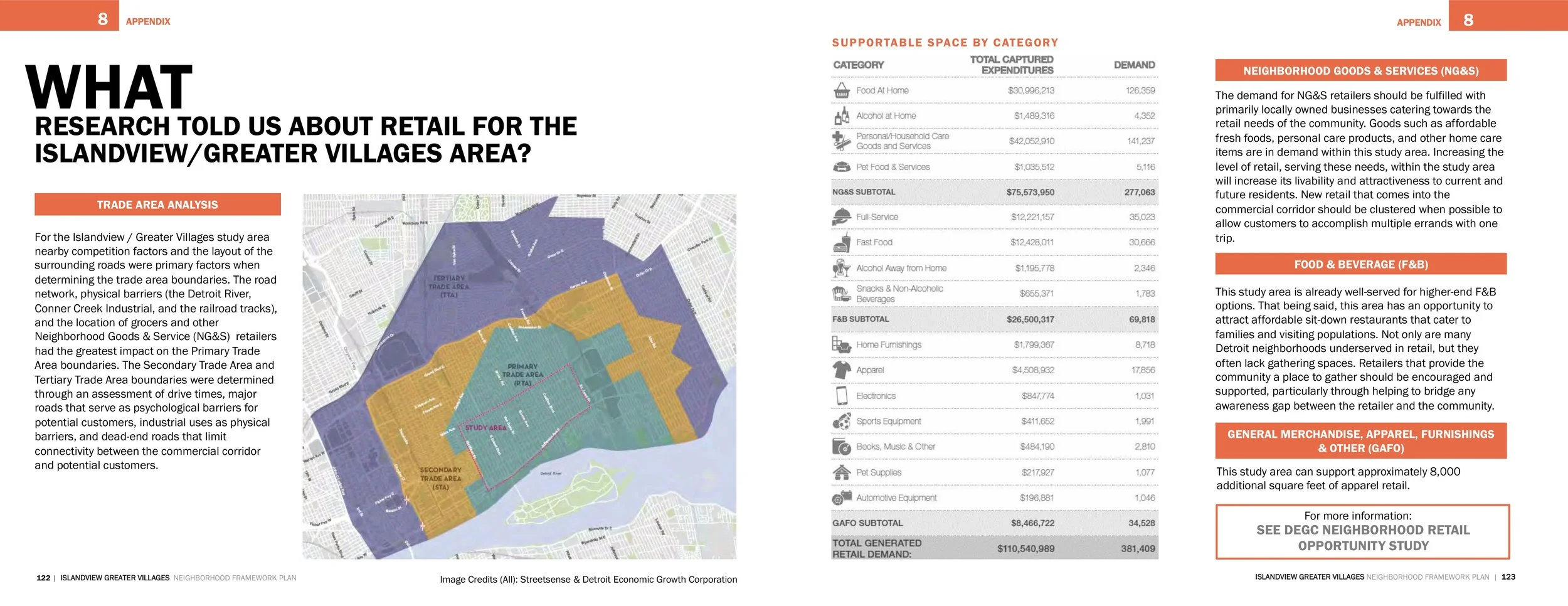
Islandview Greater Villages Neighborhood Framework Plan
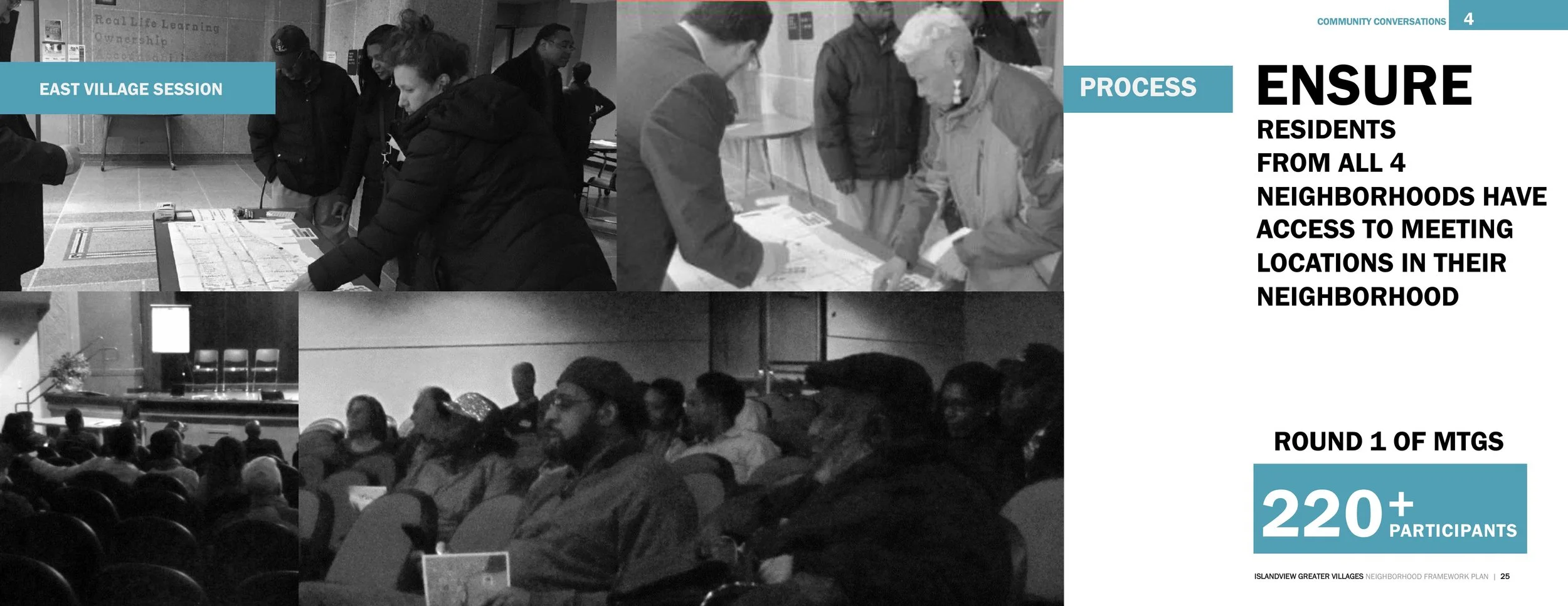
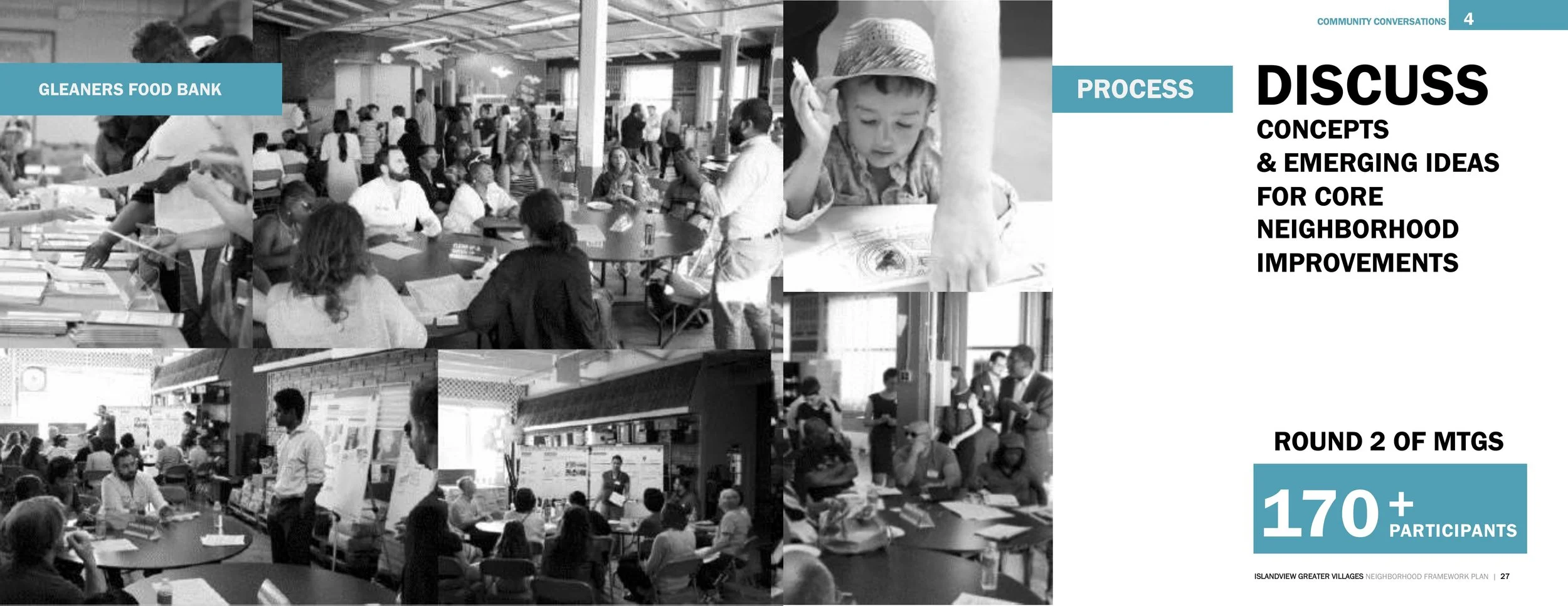
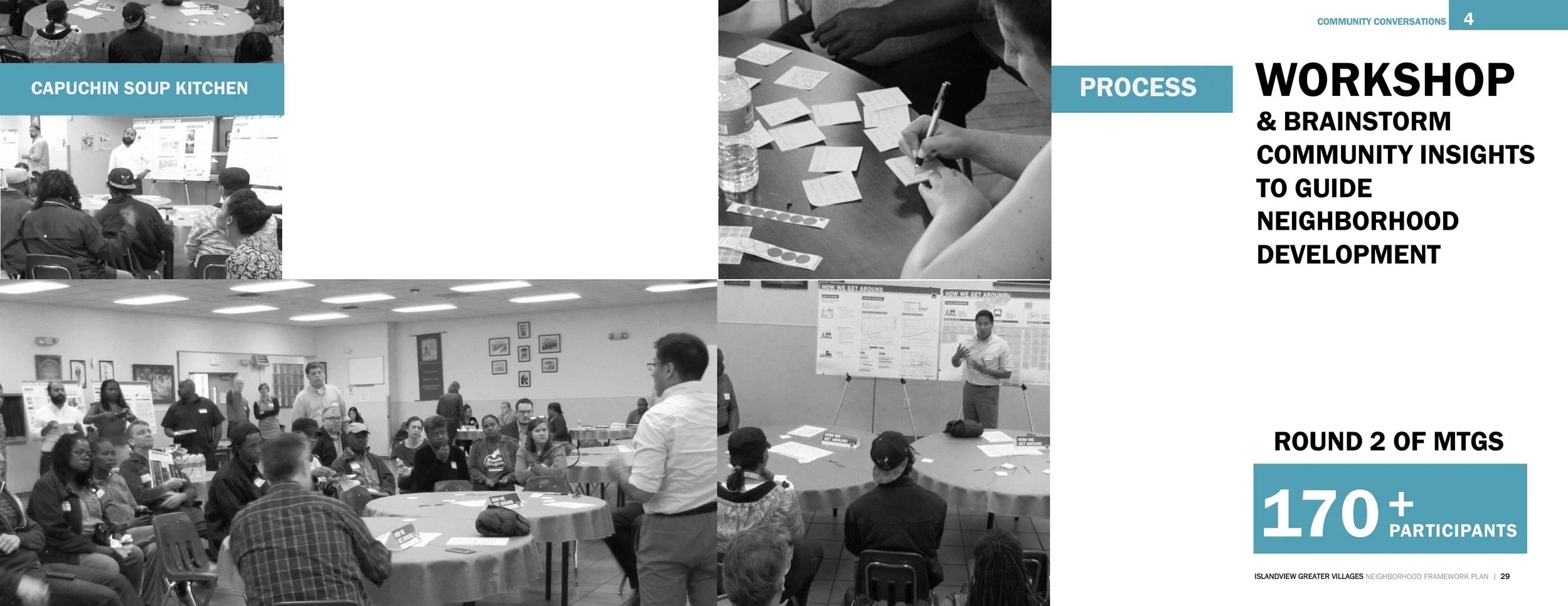
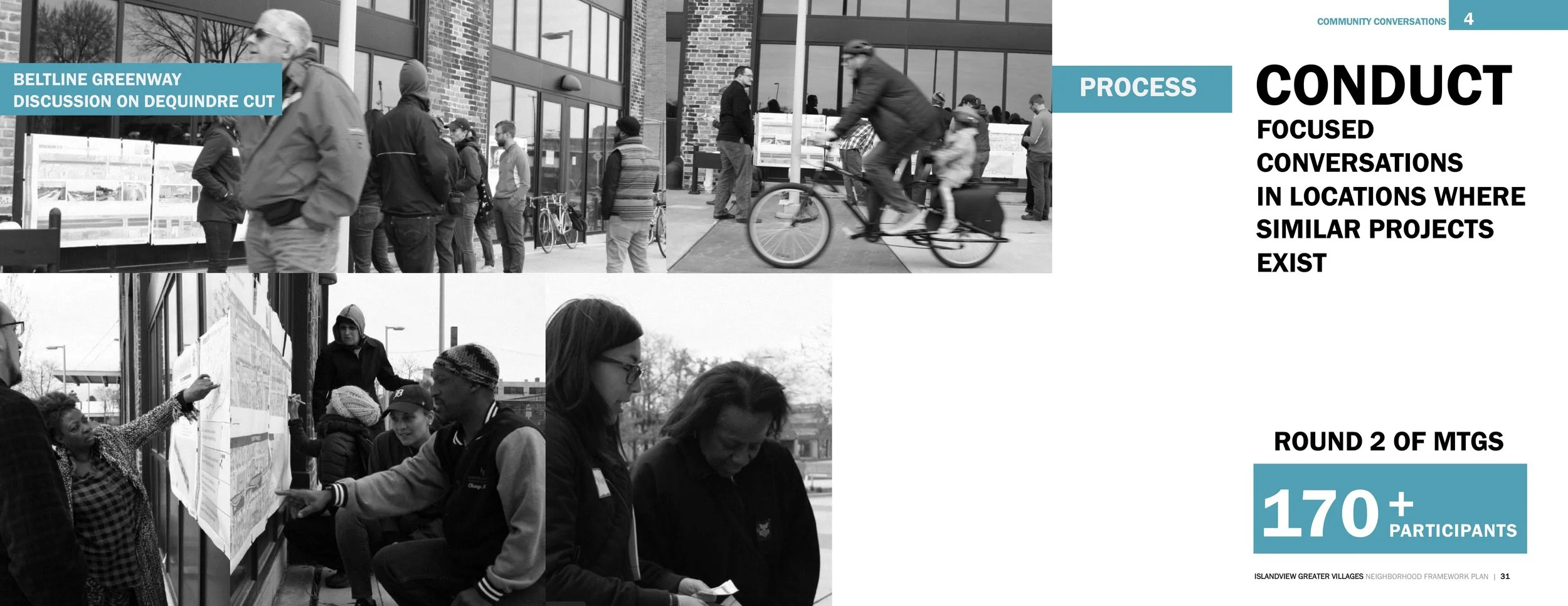
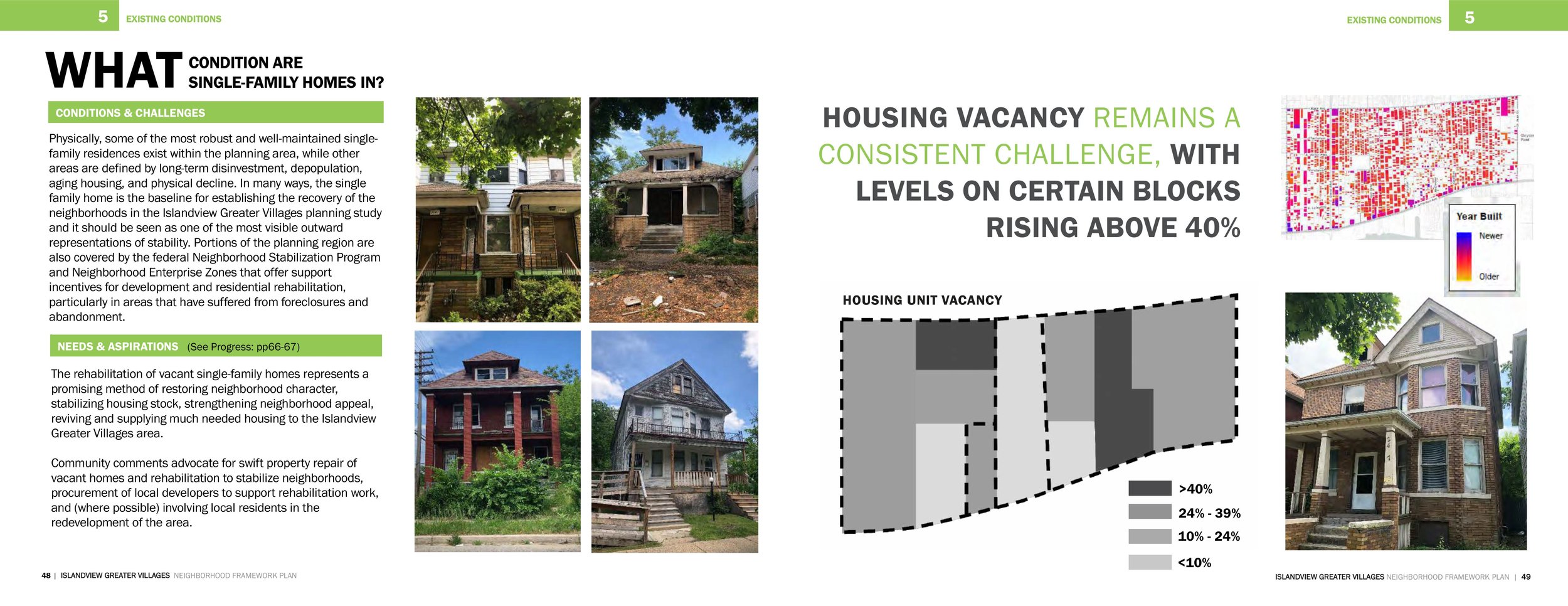
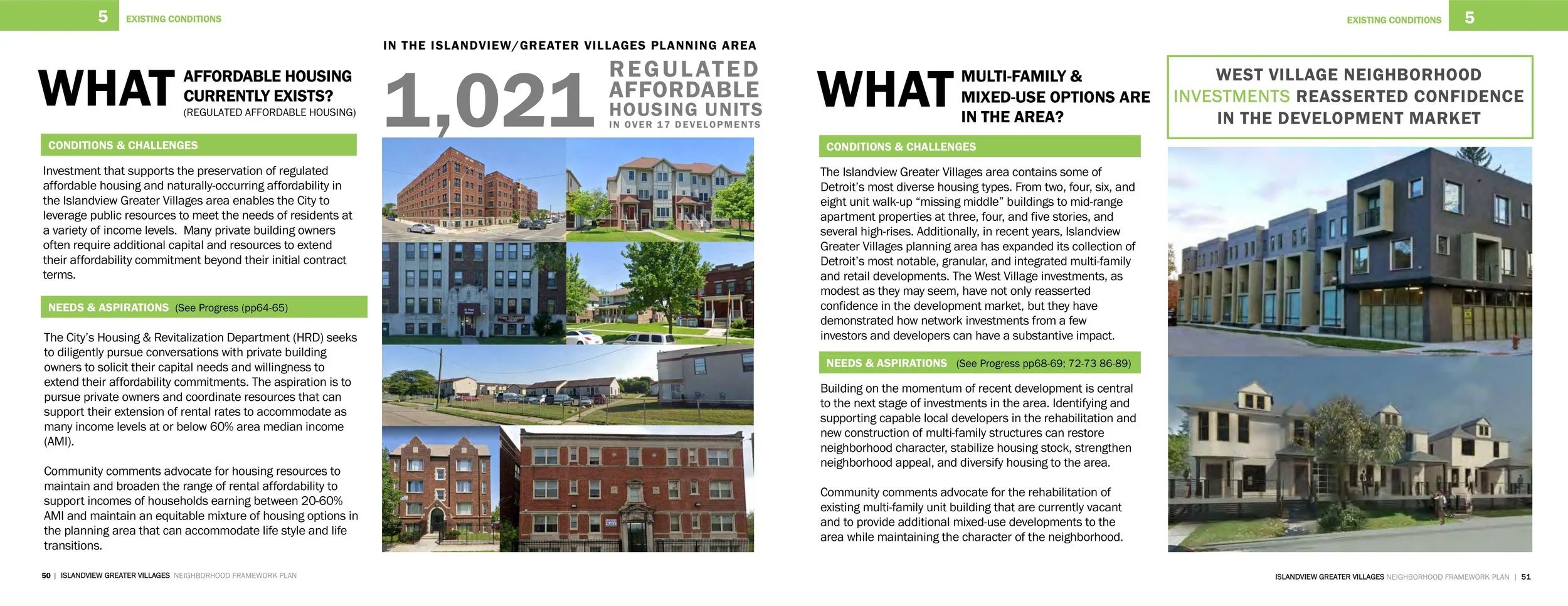
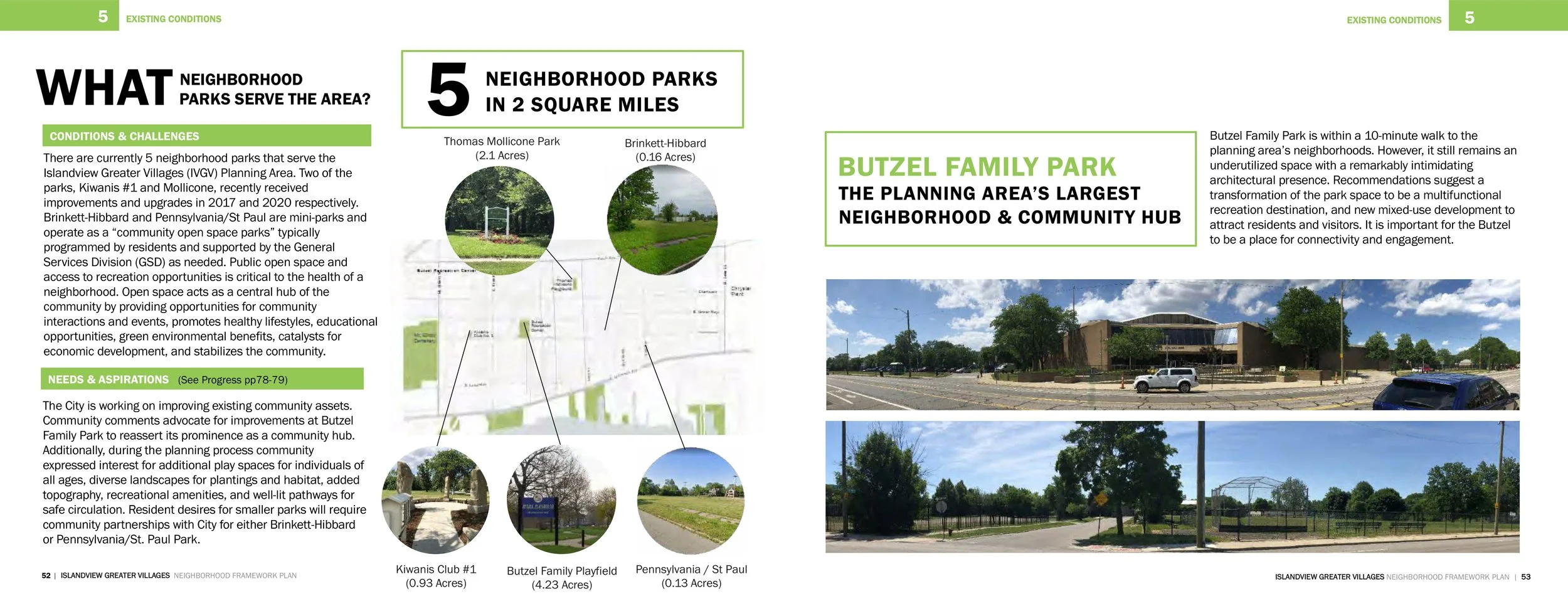
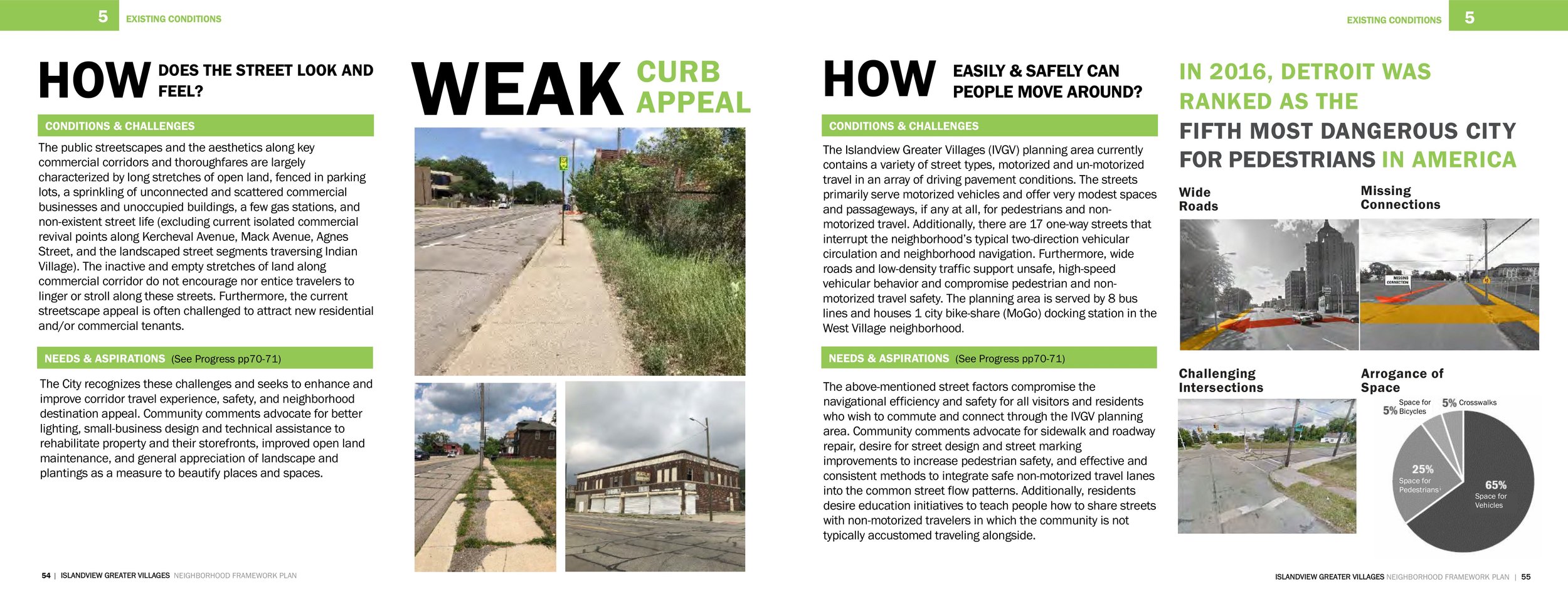
Created by the Planning and Development Department, with a multi-year engagement process from local organizations, including the Villages CDC. This expansive document guides development along our commercial corridors and provides a framework for neighborhood progress.
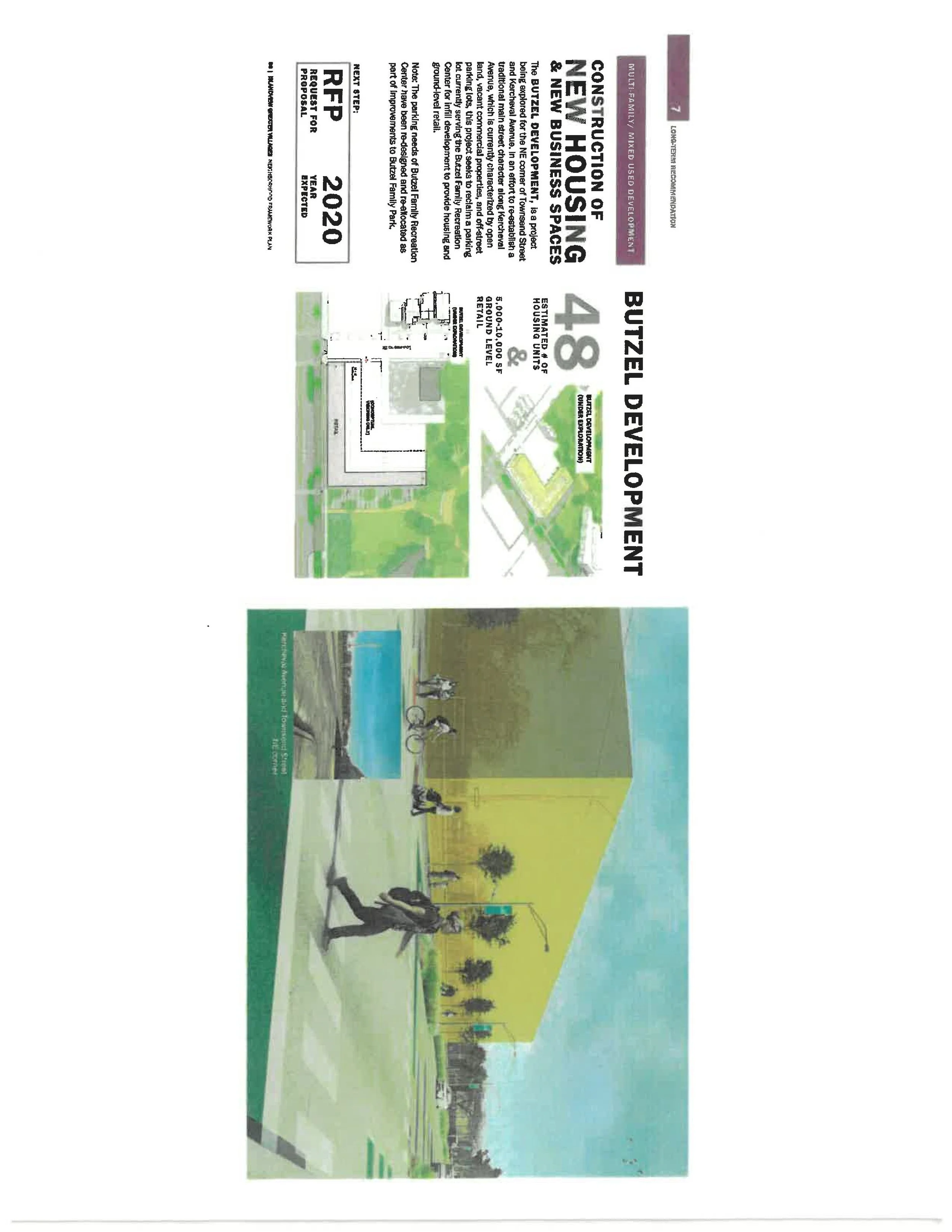
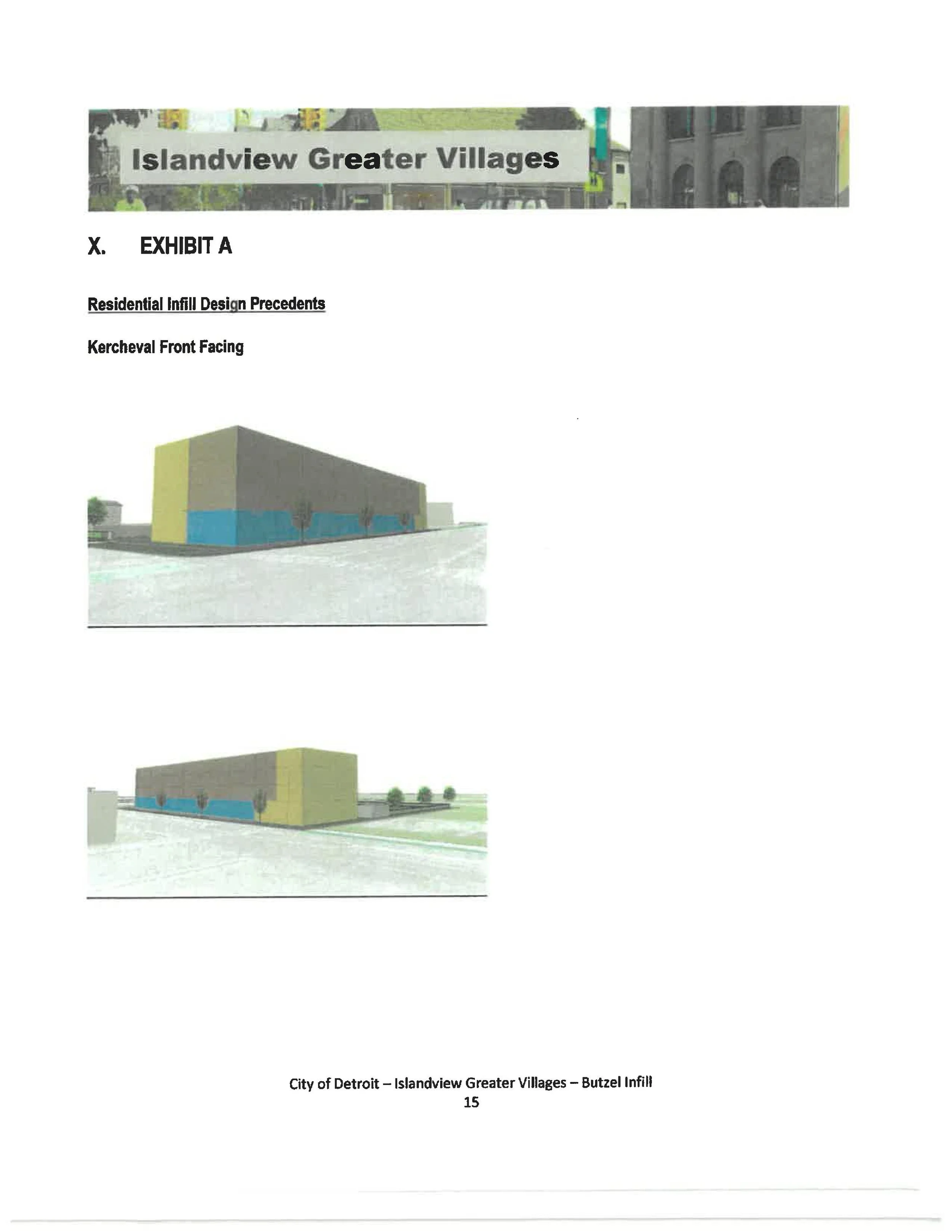
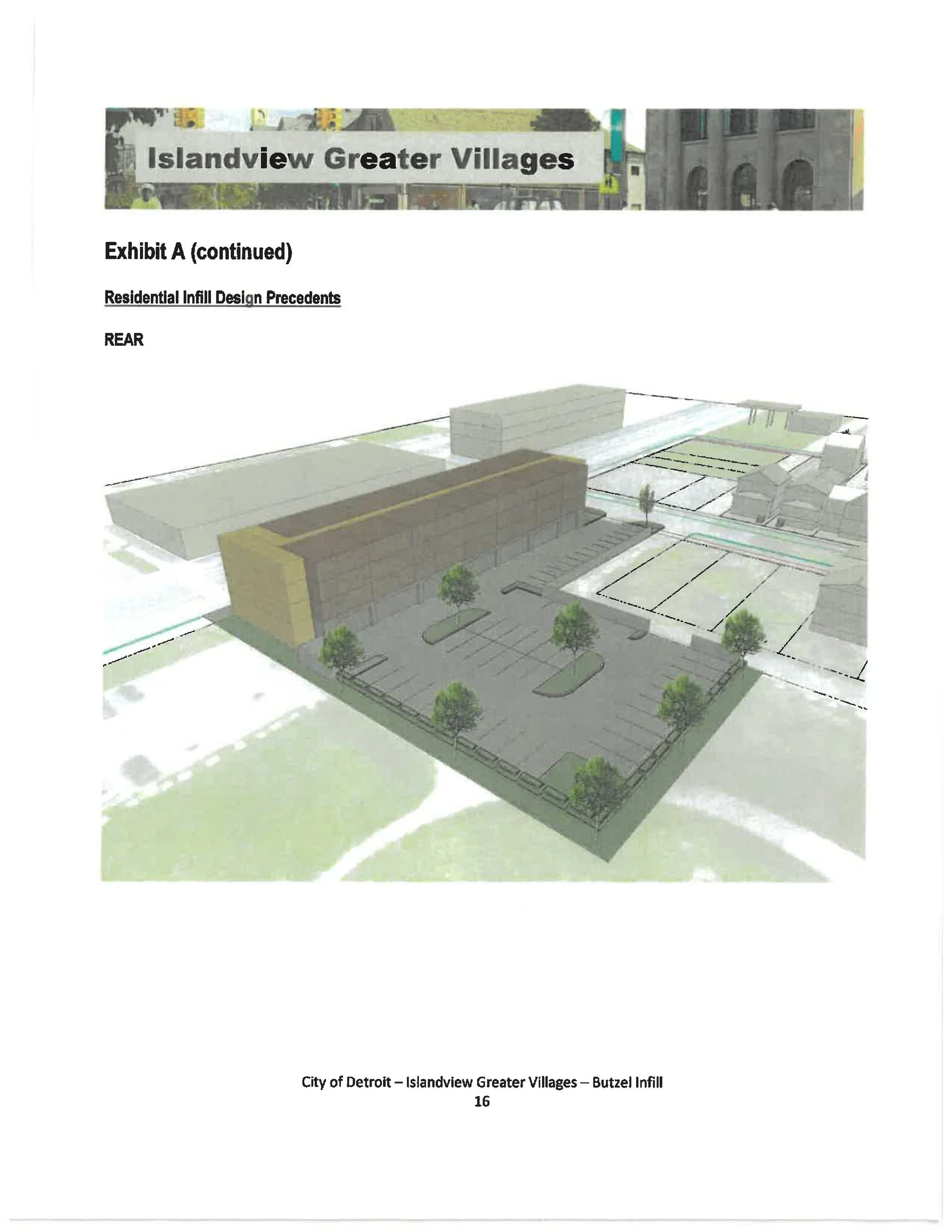
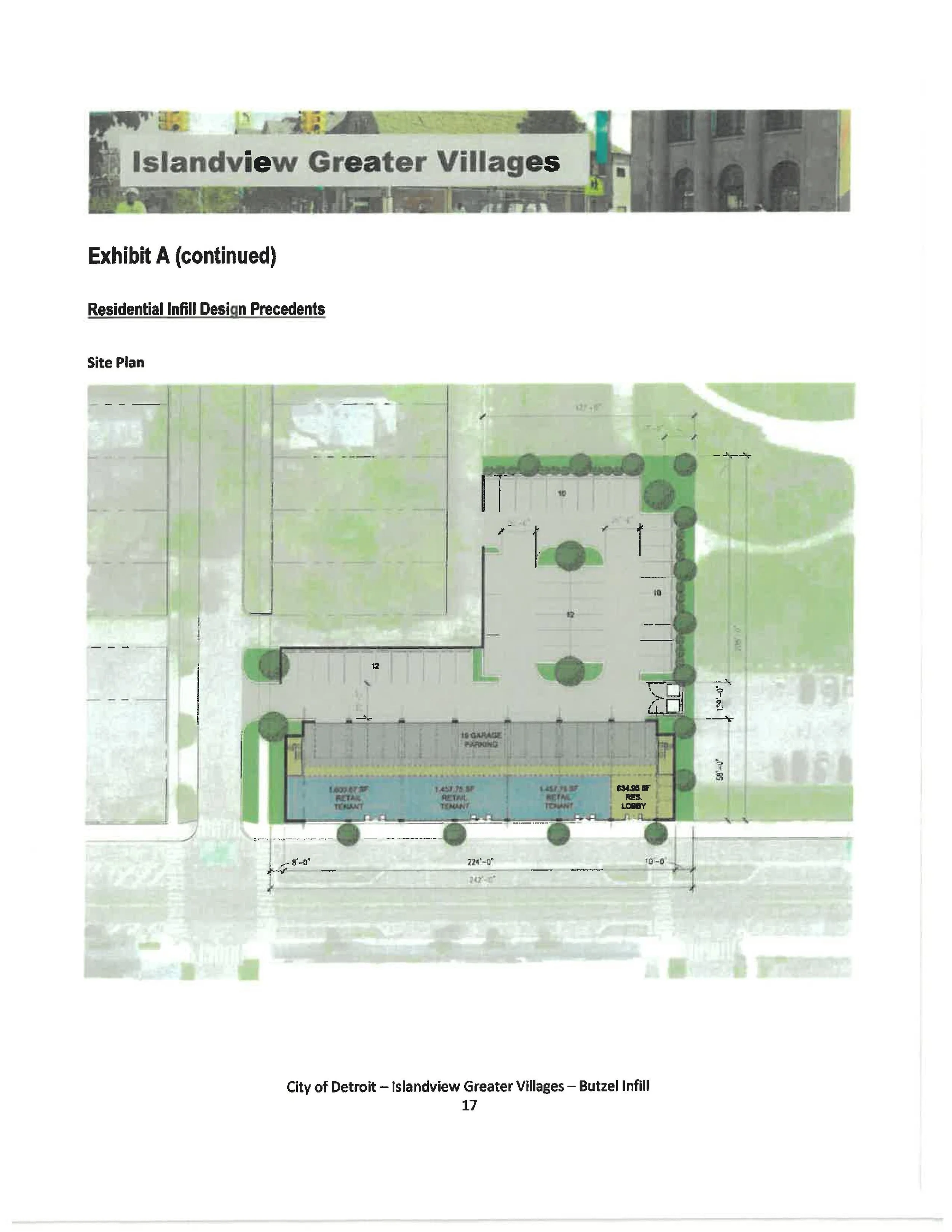
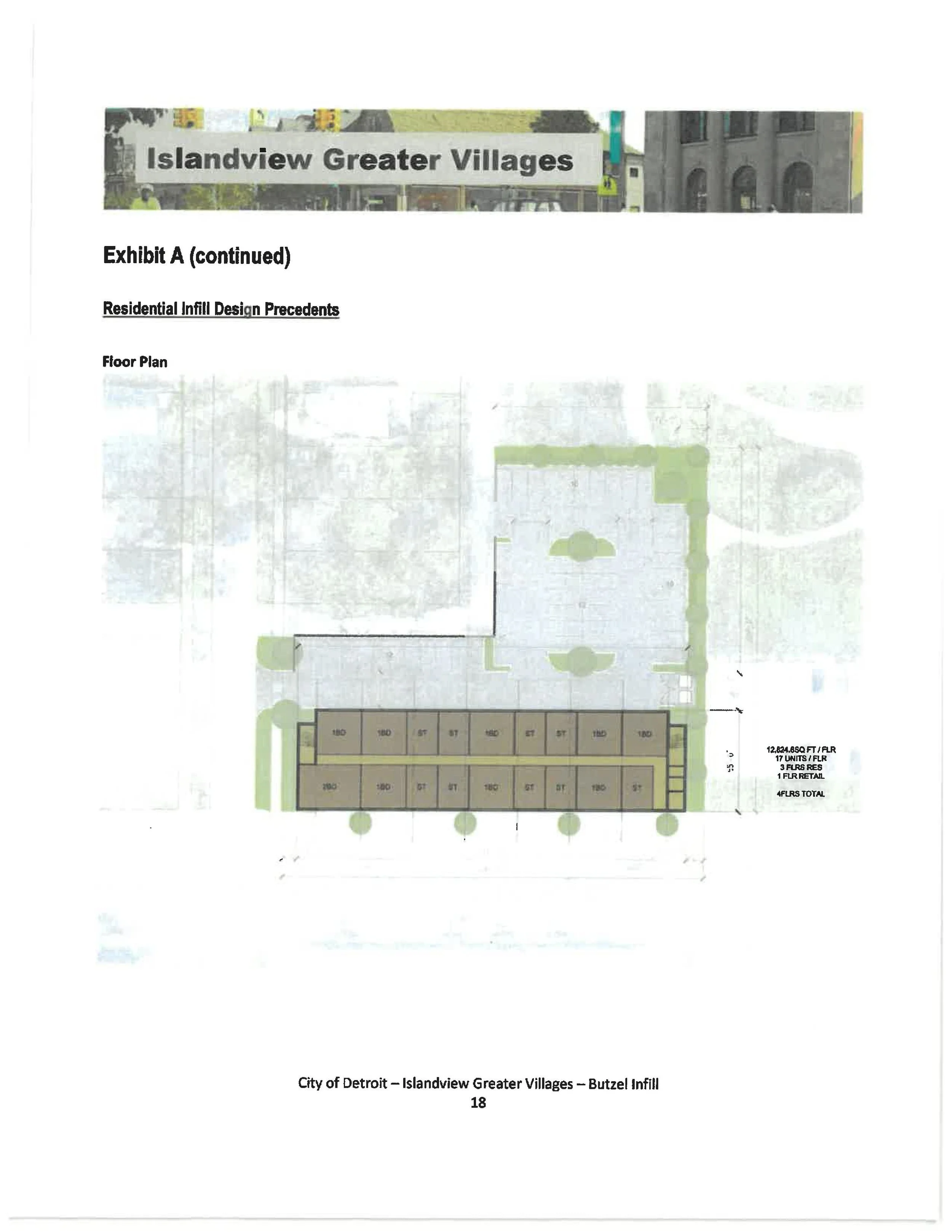
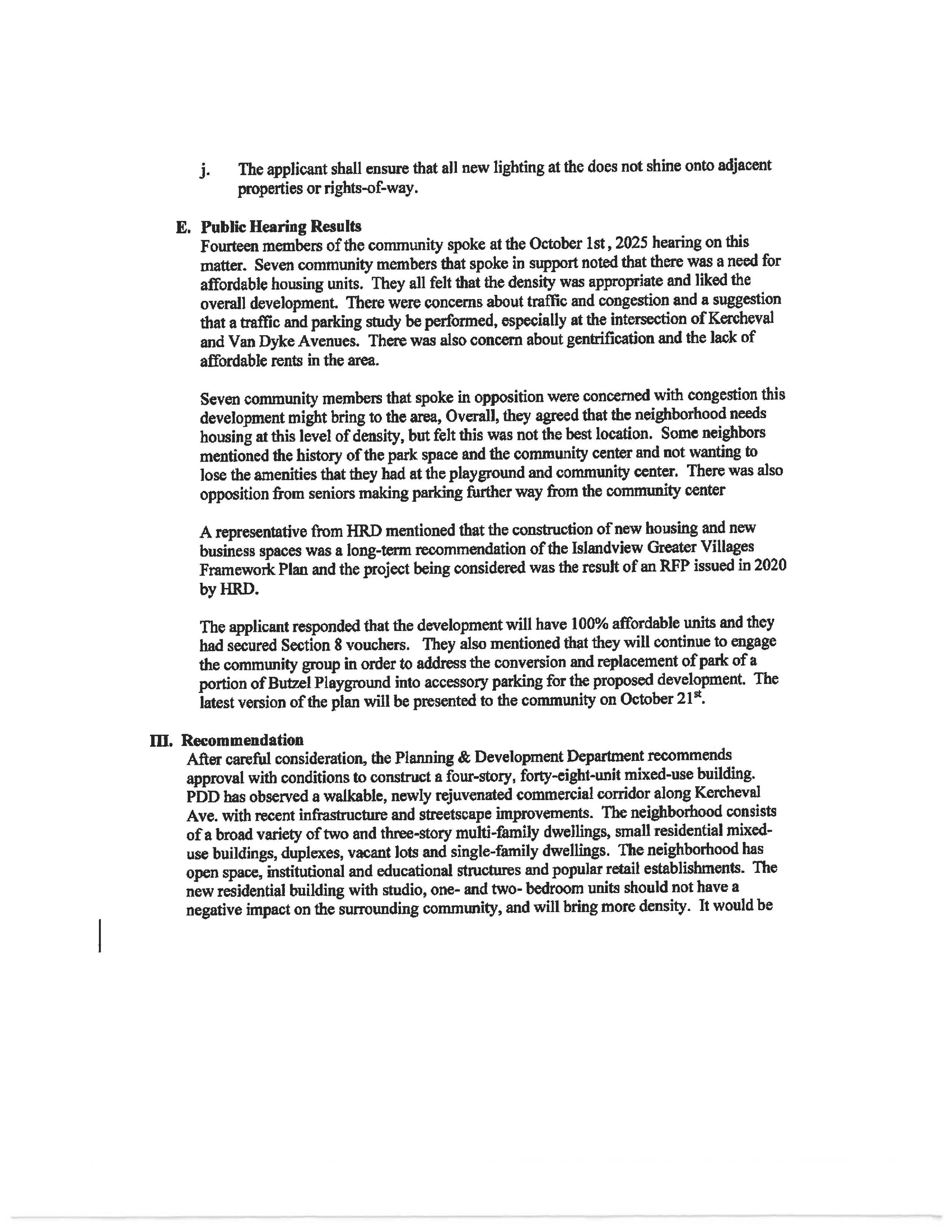
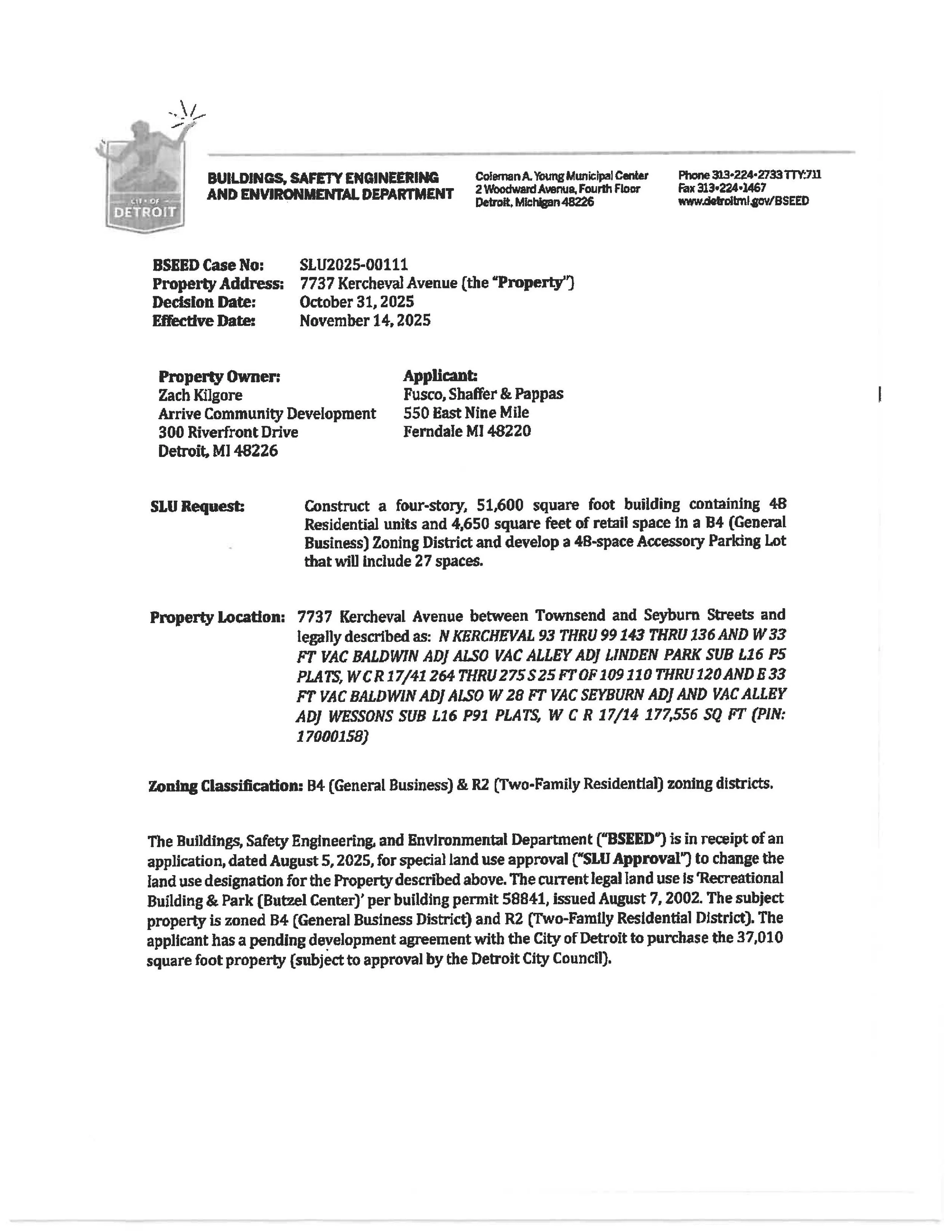
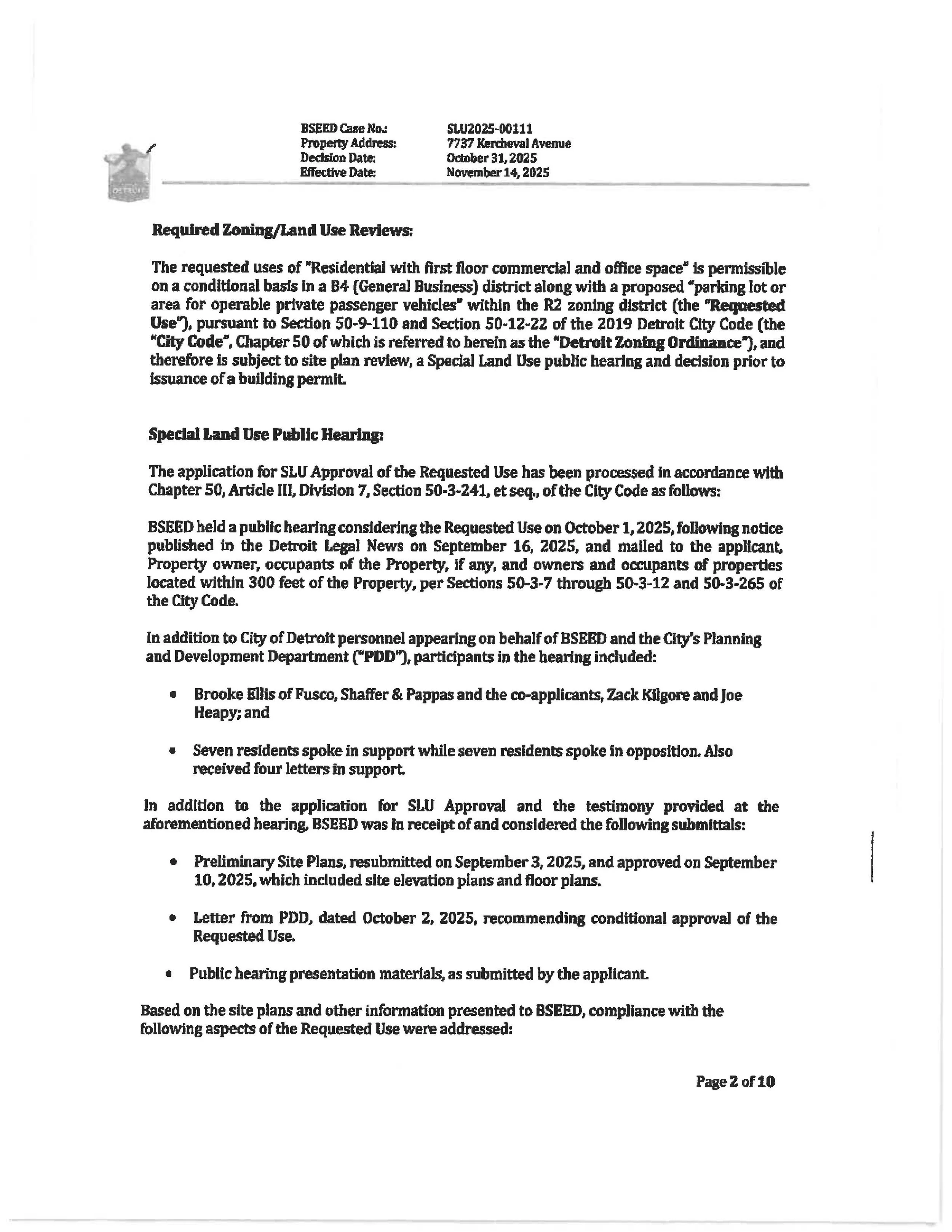
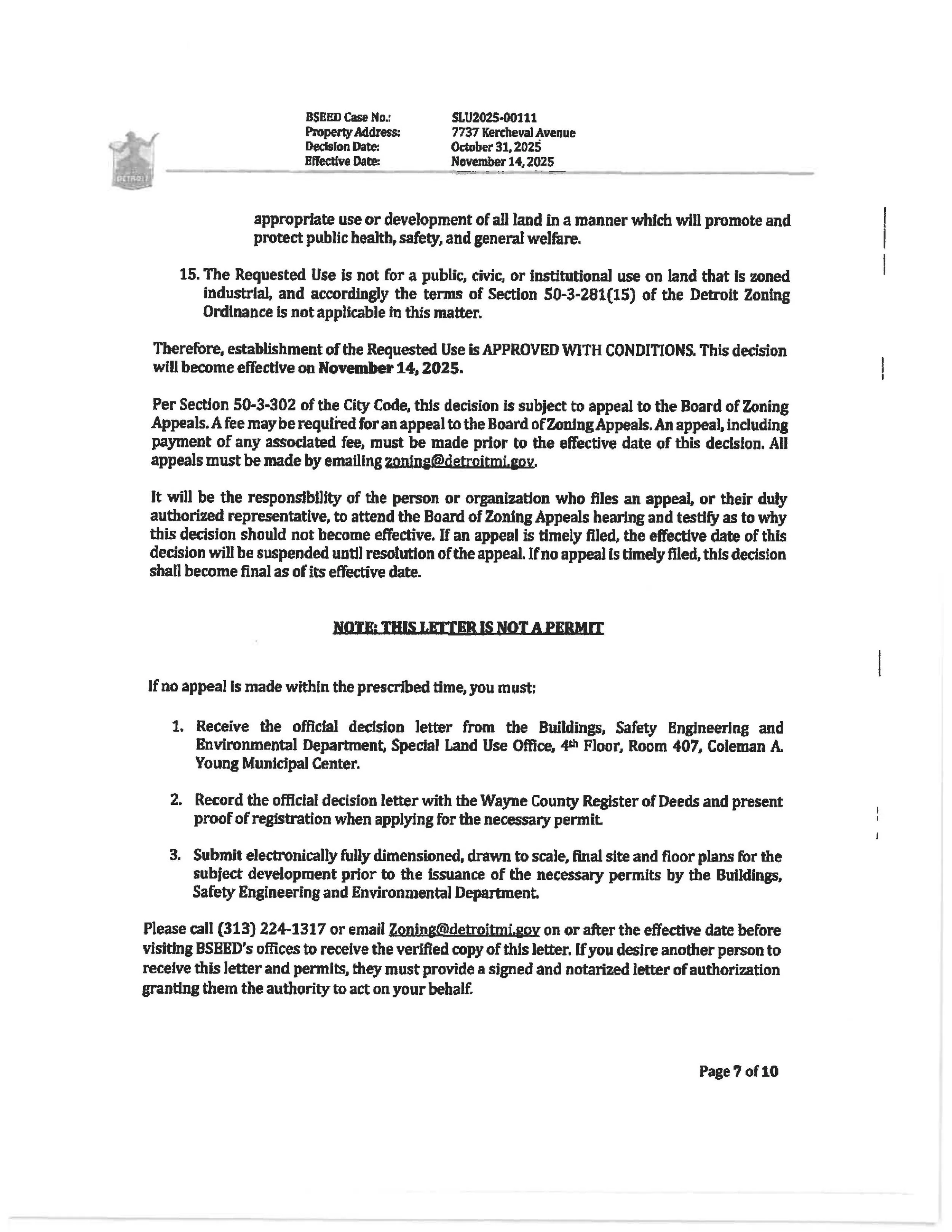
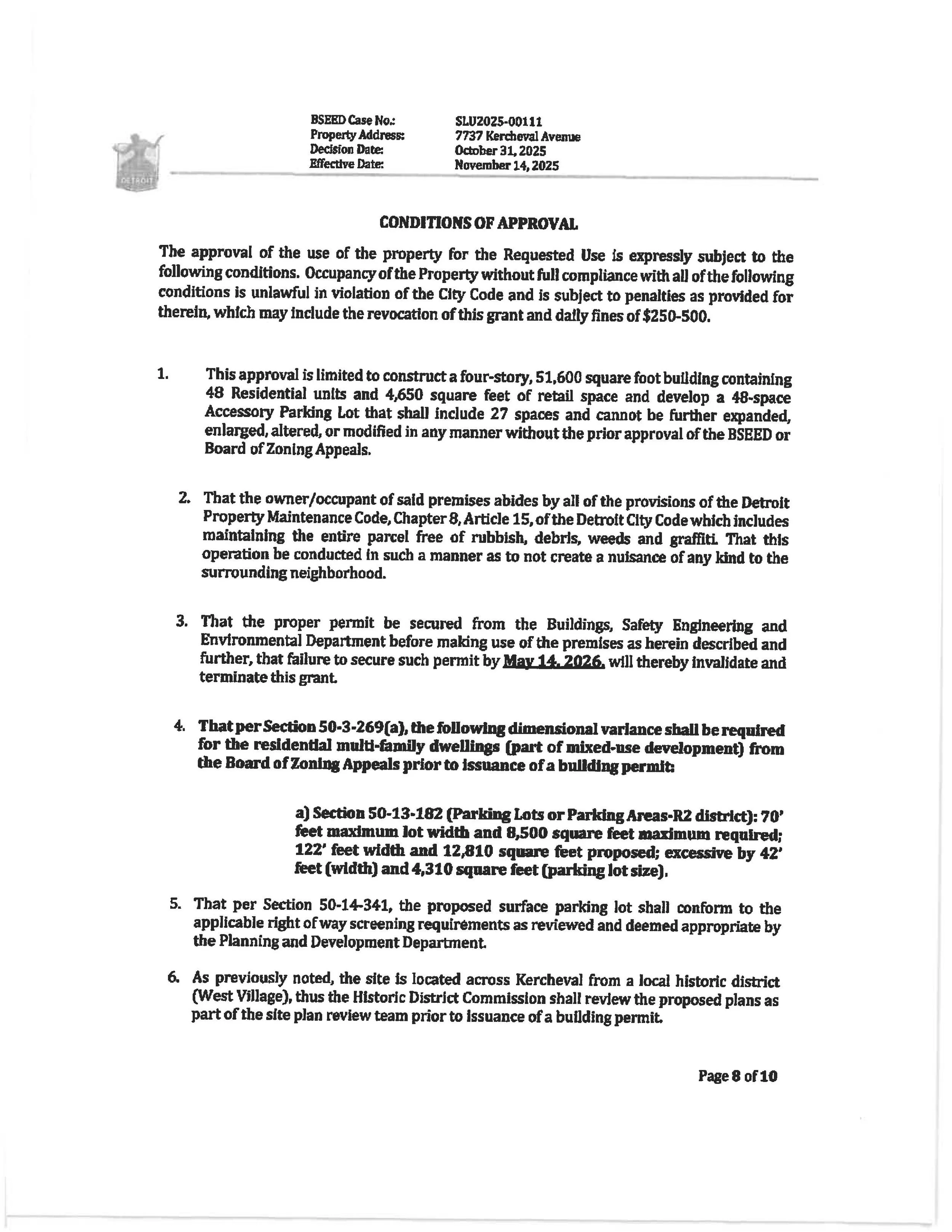
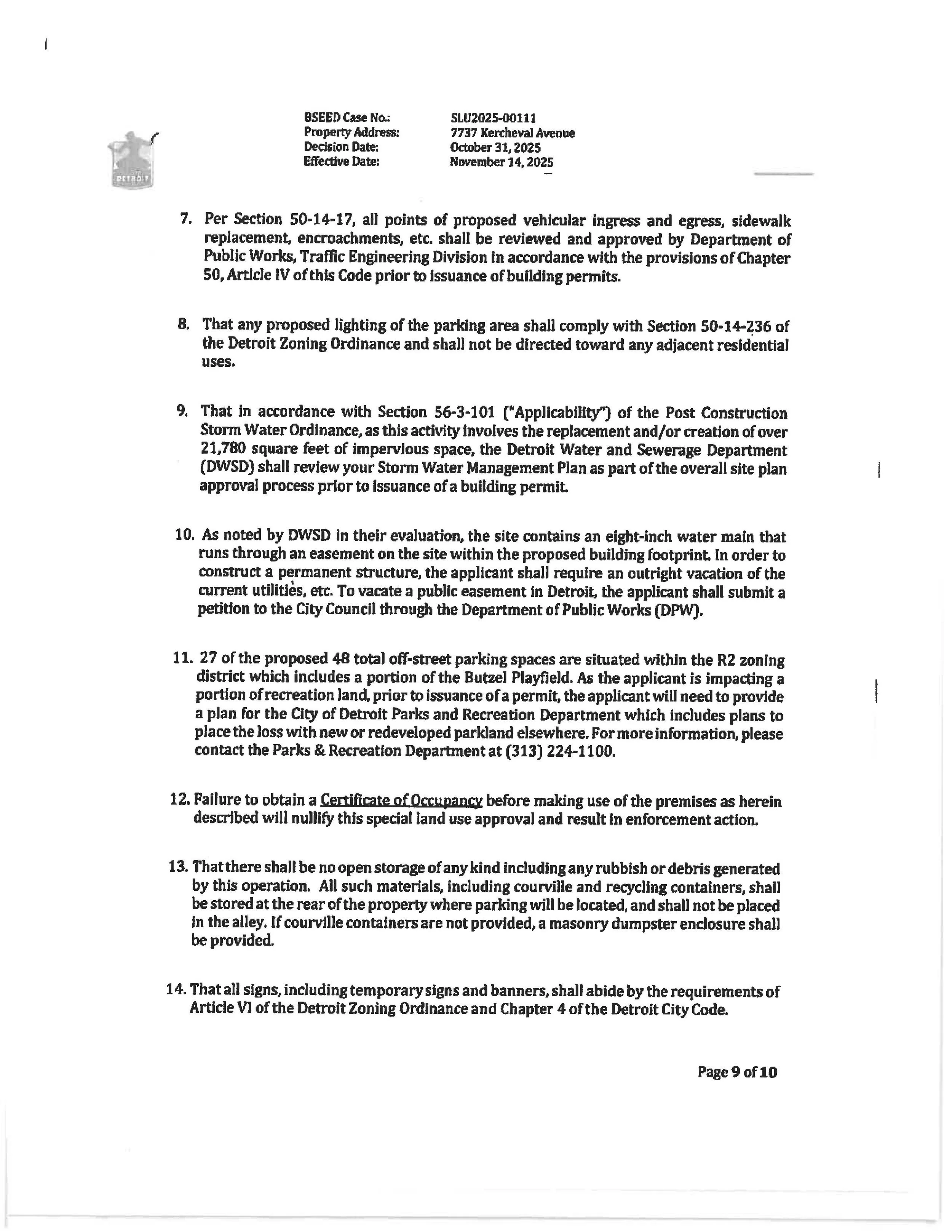
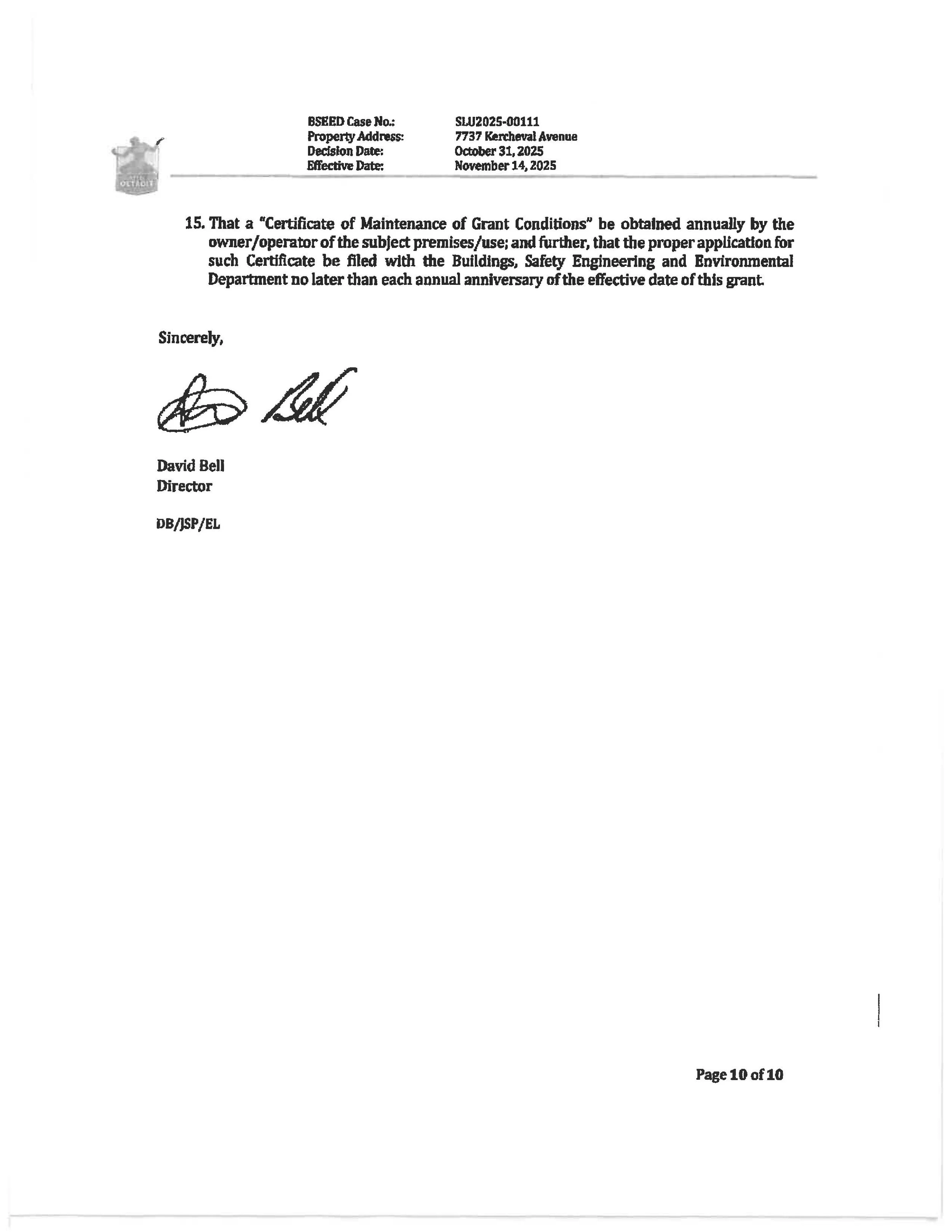
Butzel Affordable Housing Project
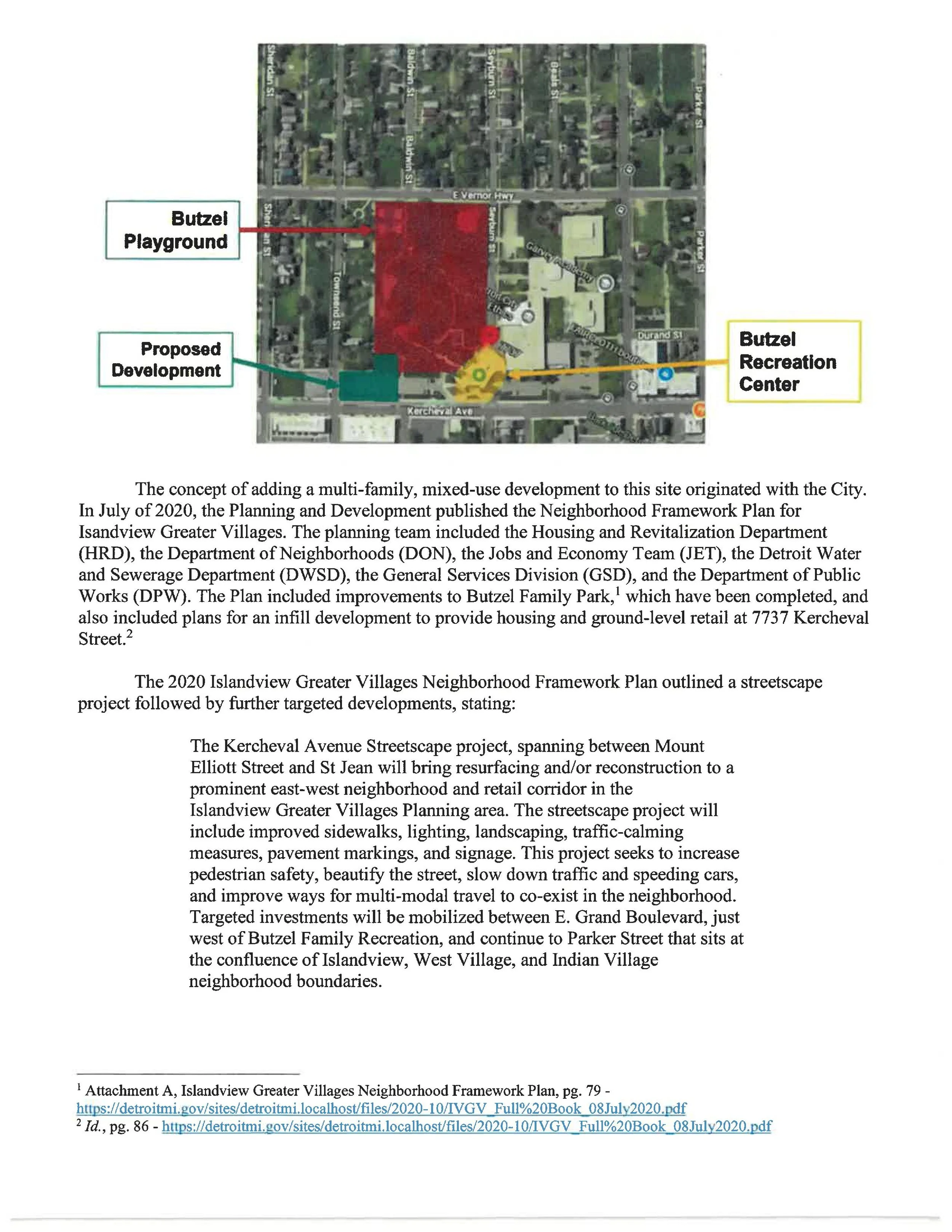
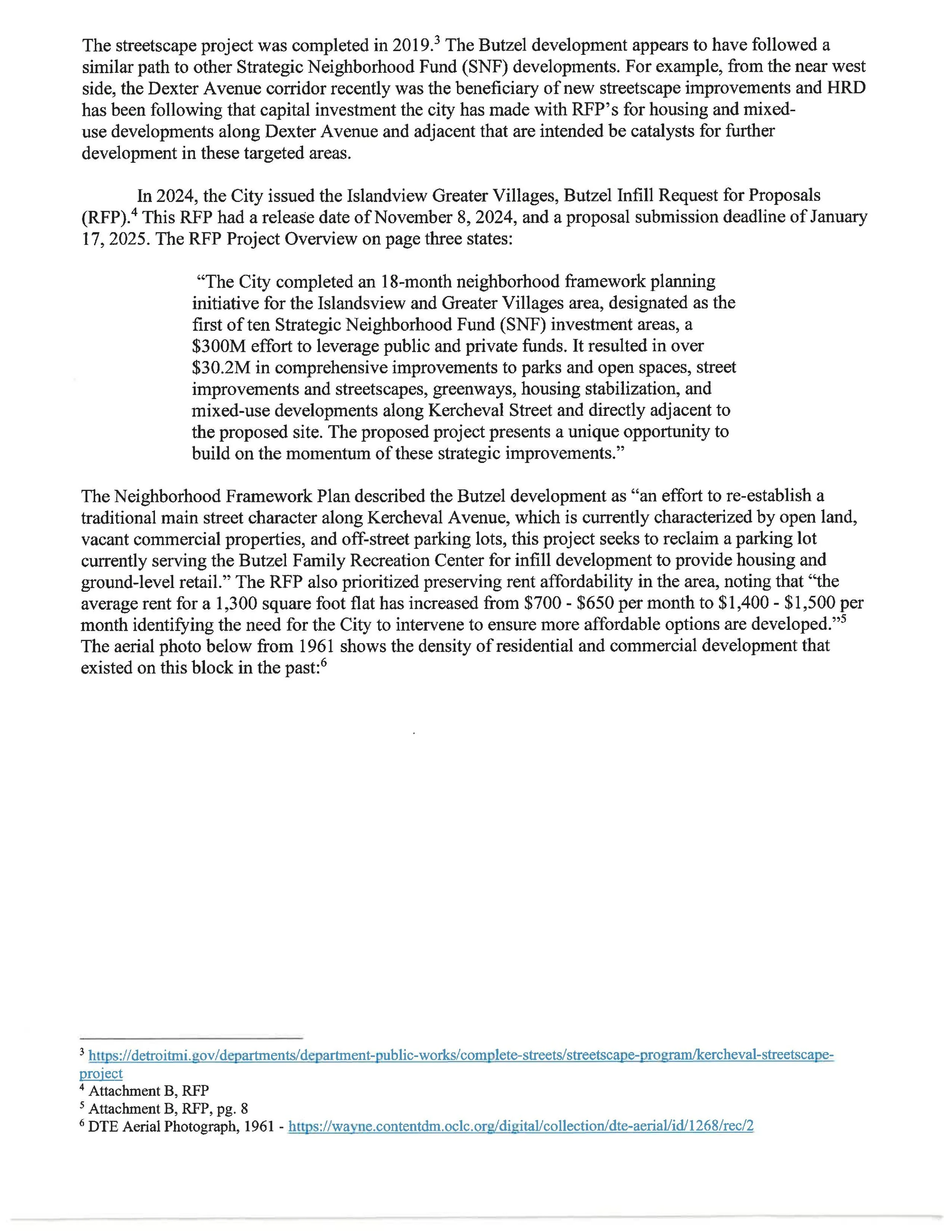
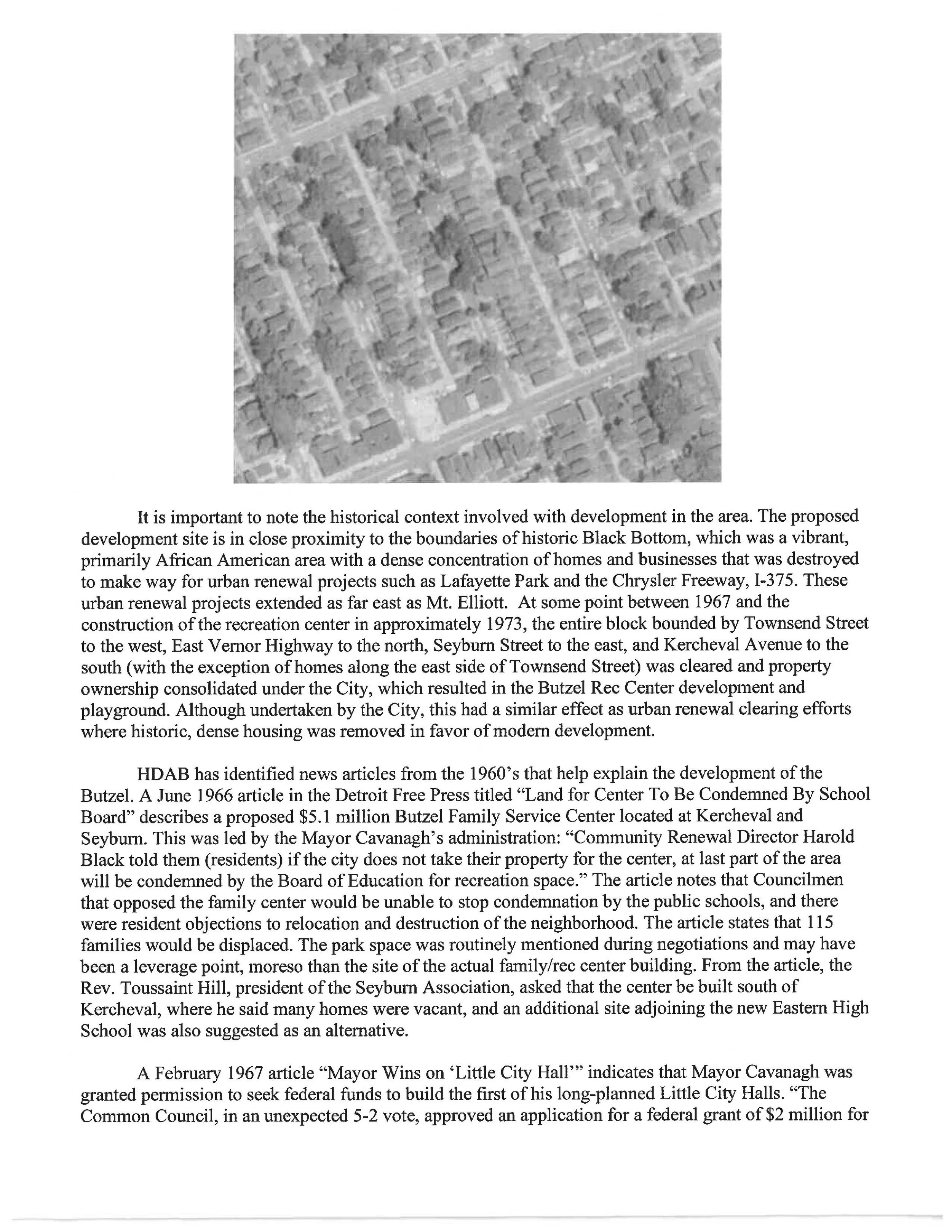
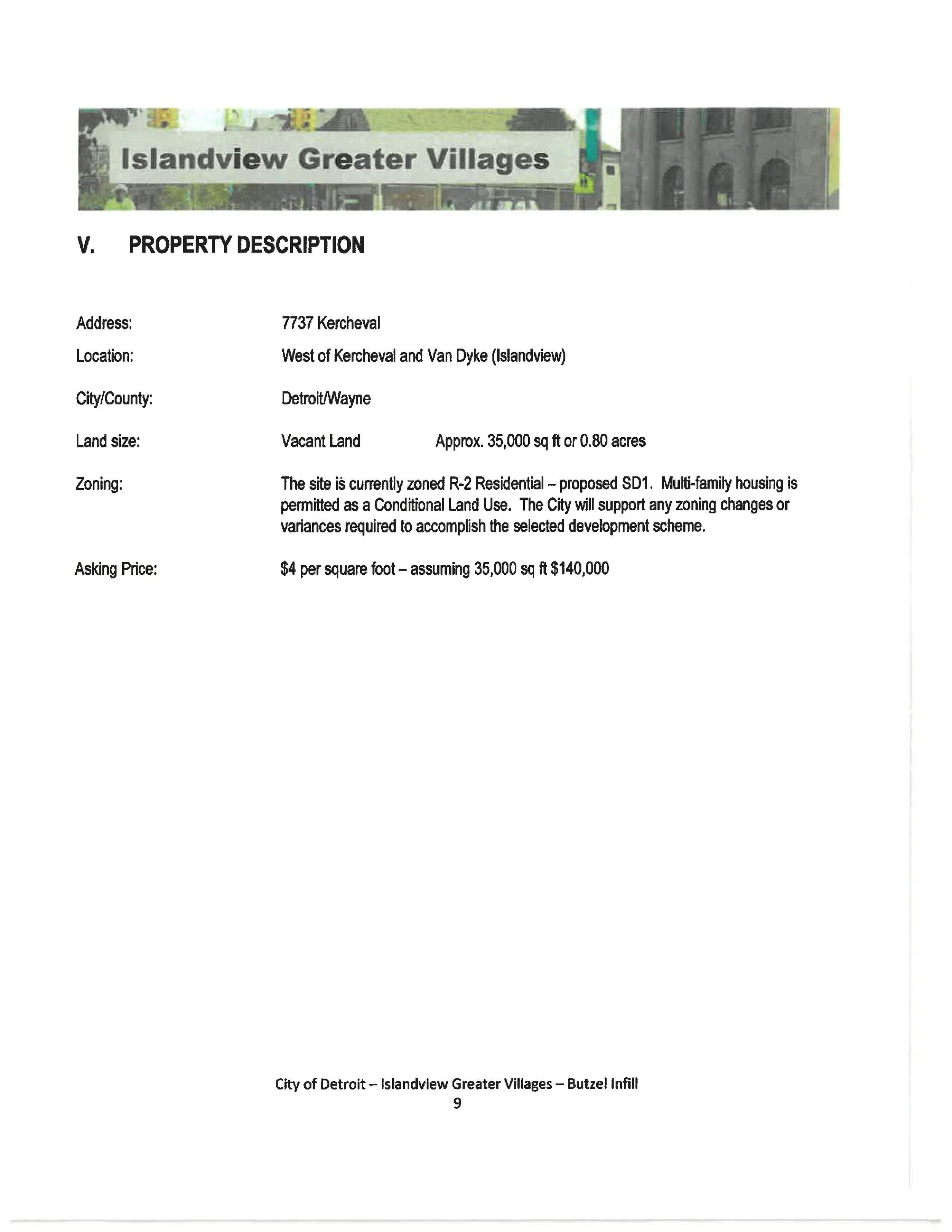
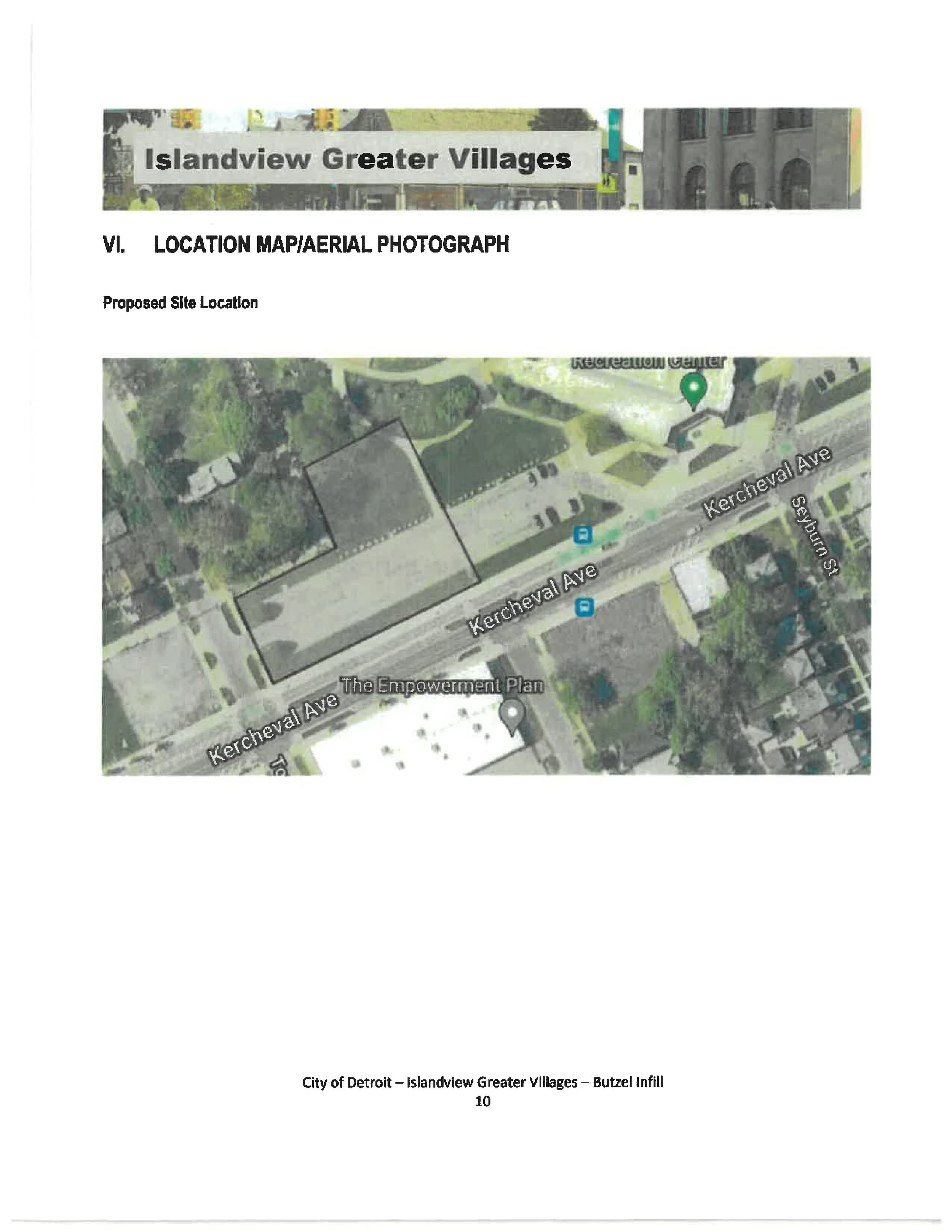
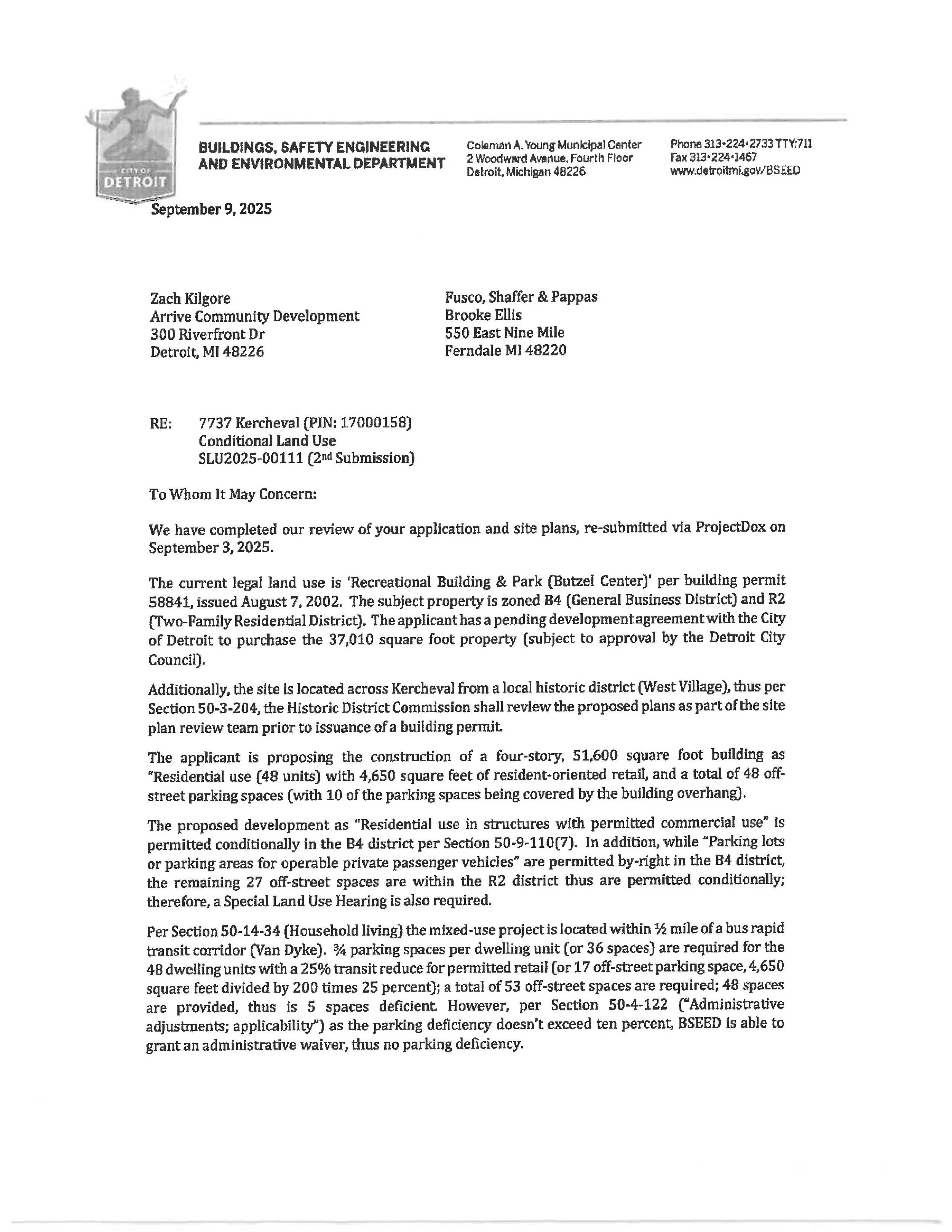
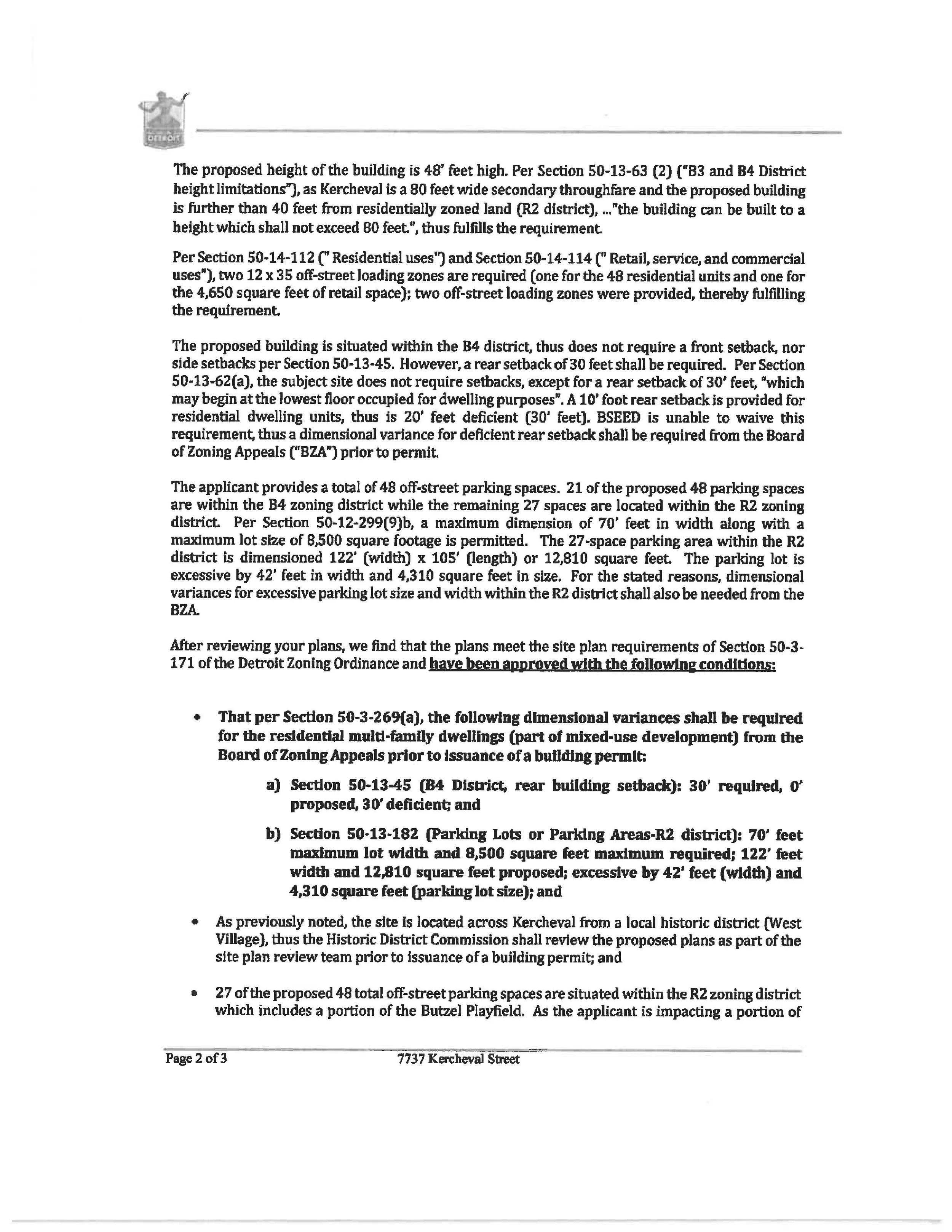
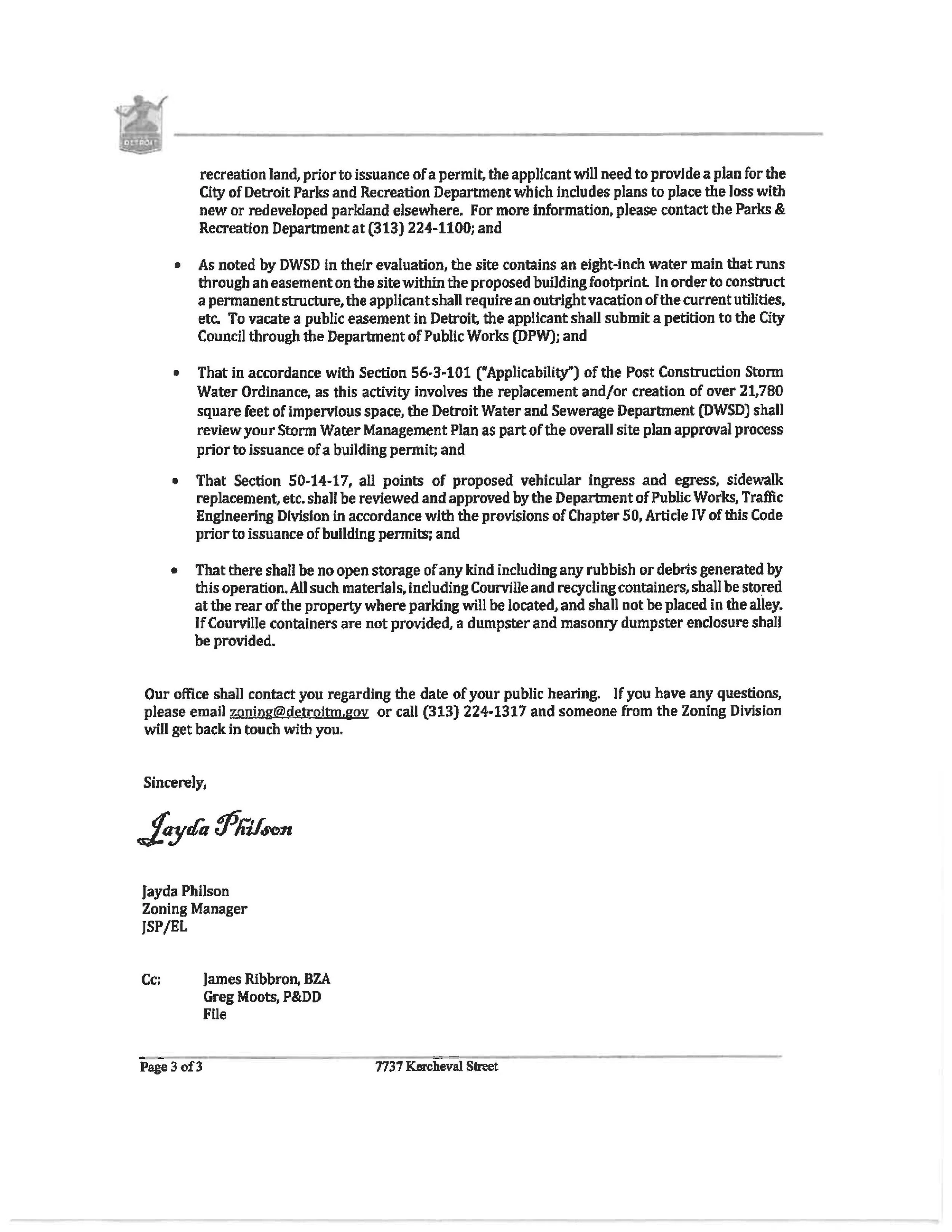
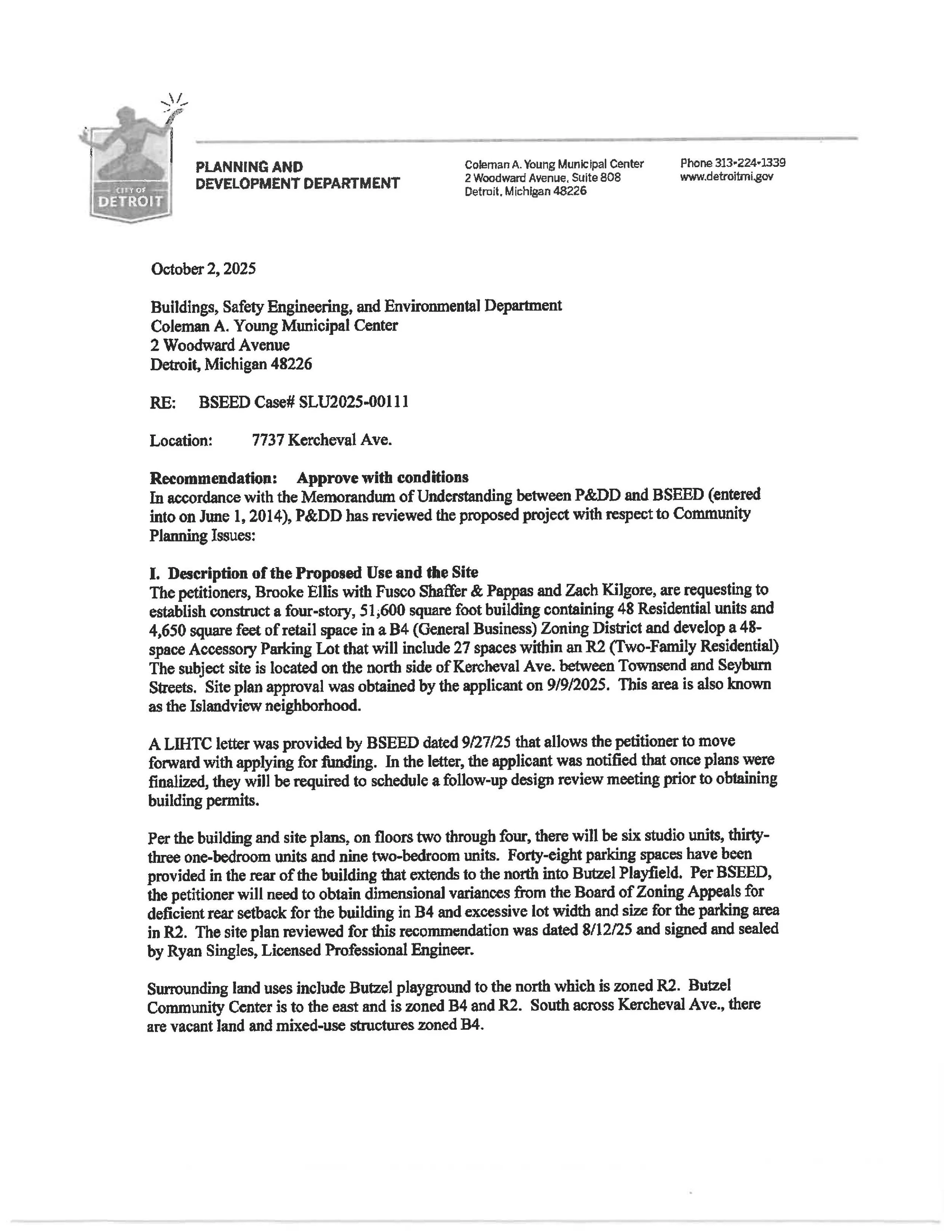
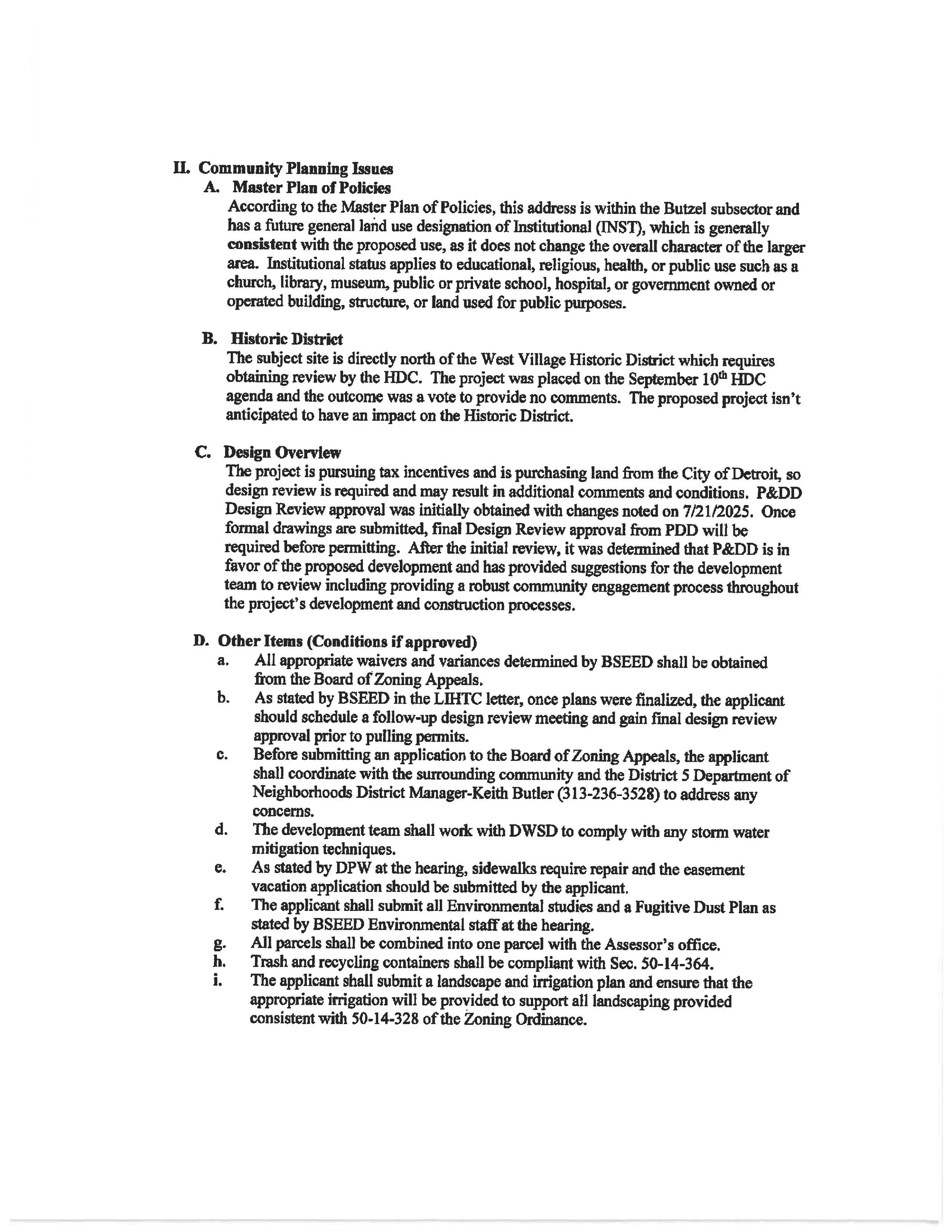
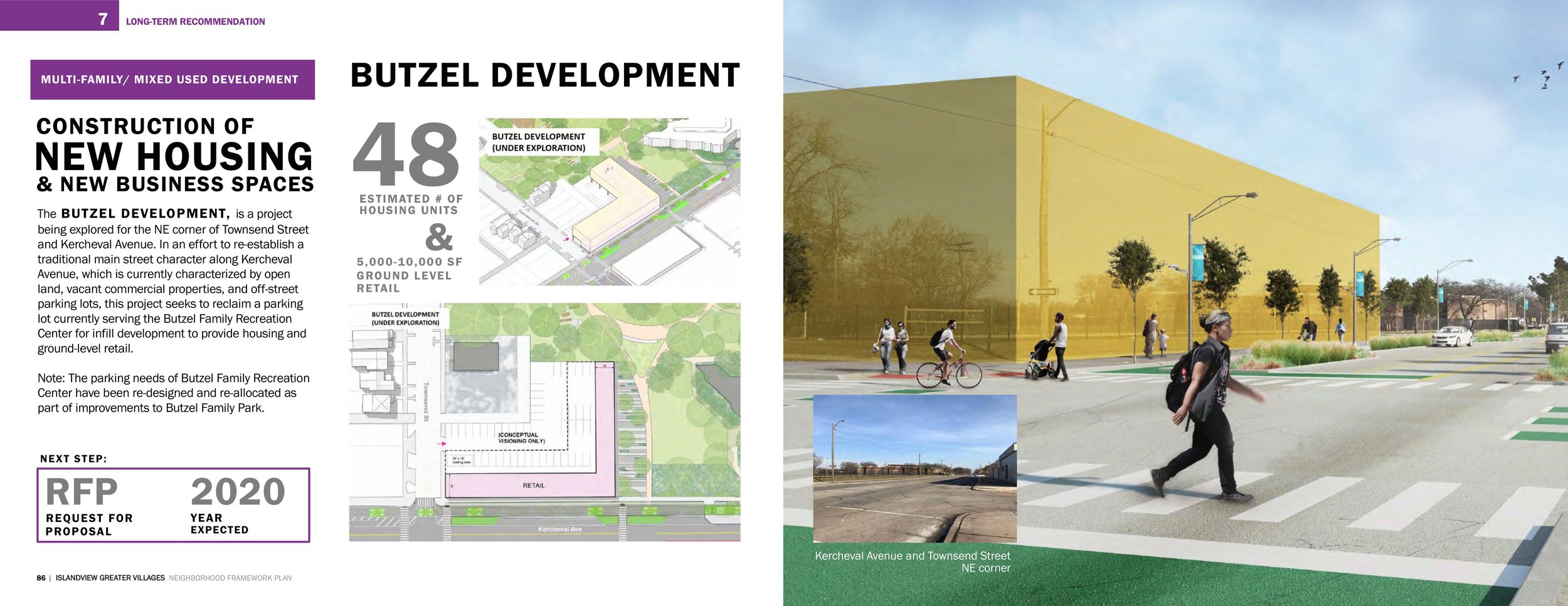
History of the Butzel site, City Redevelopment Efforts, and Fact Sheet about Zoning and Parking at the Site
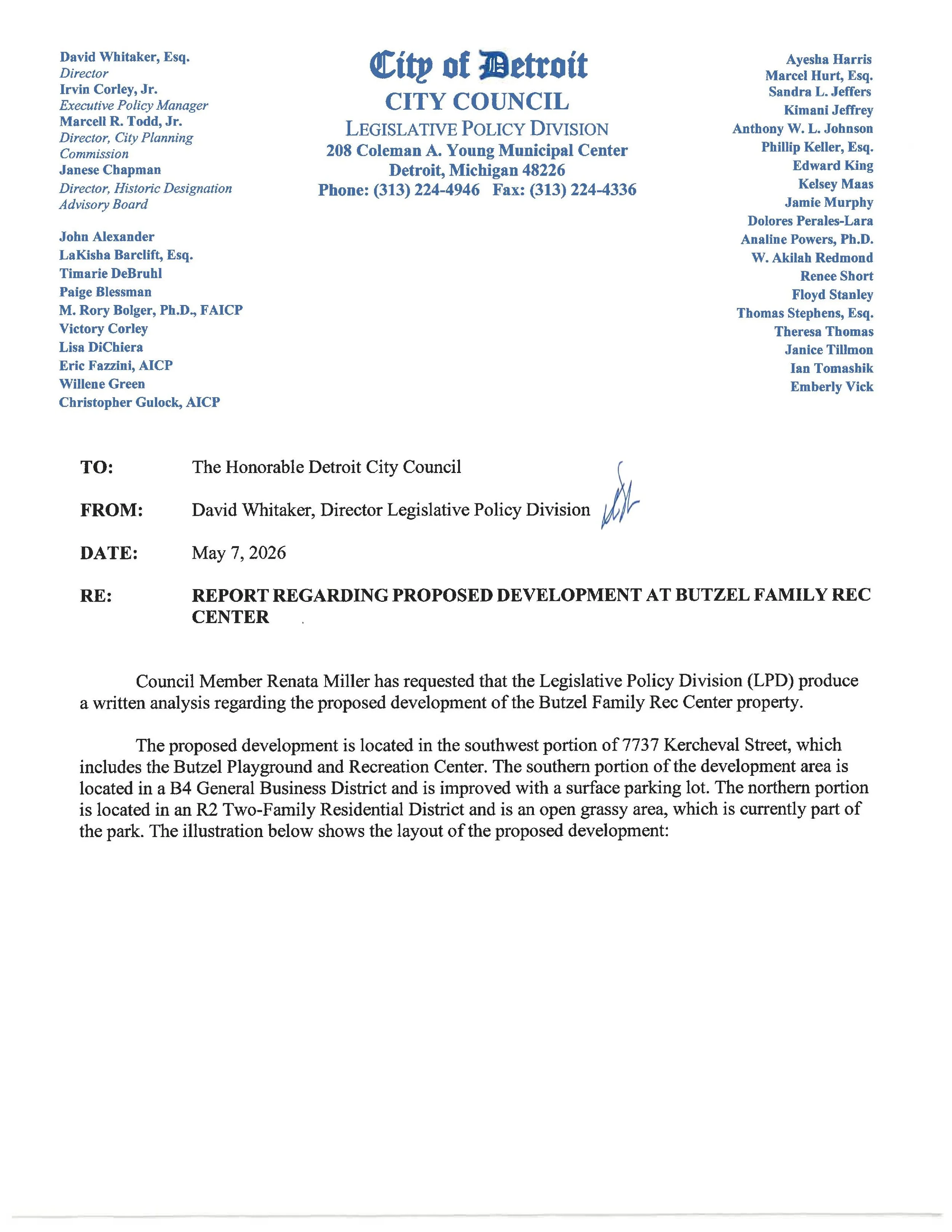
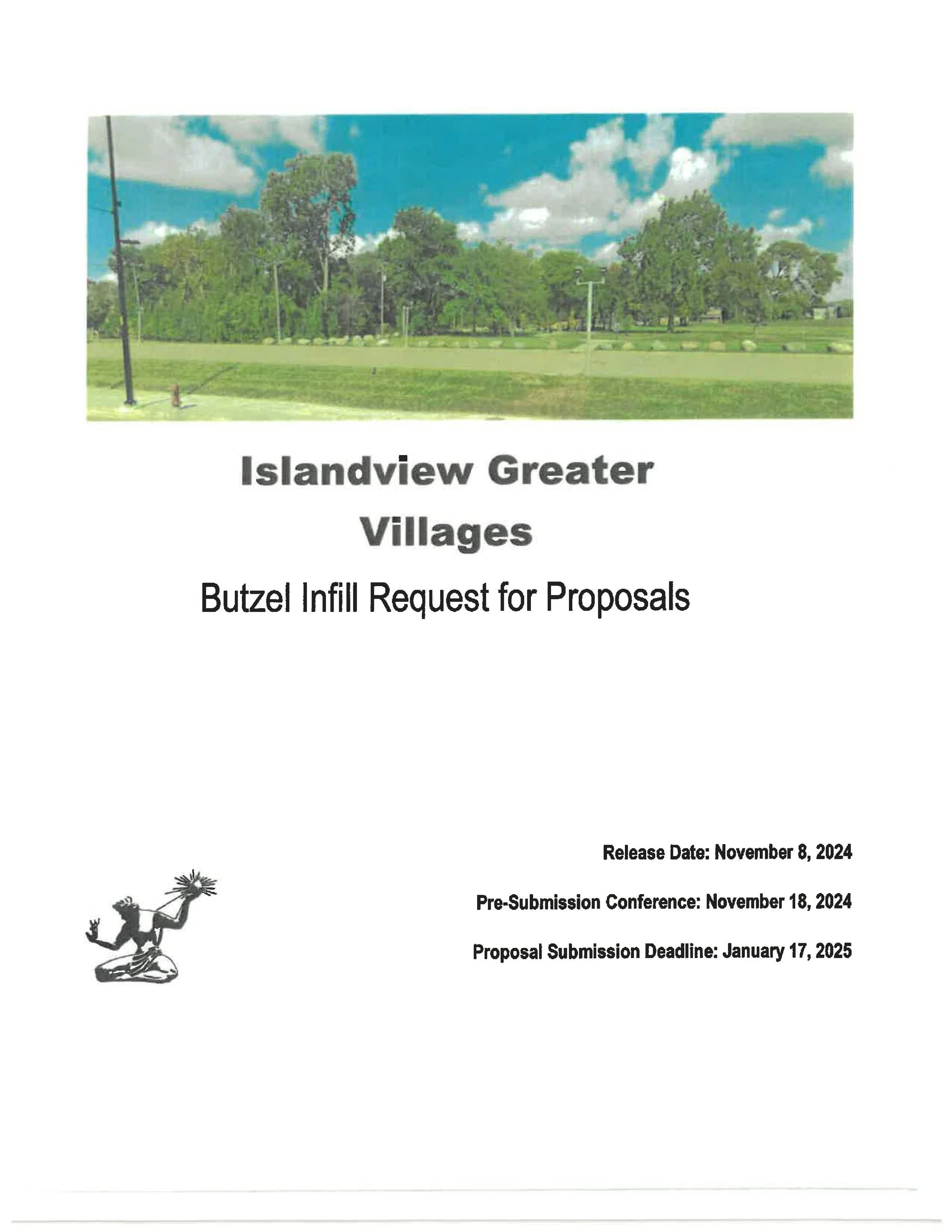
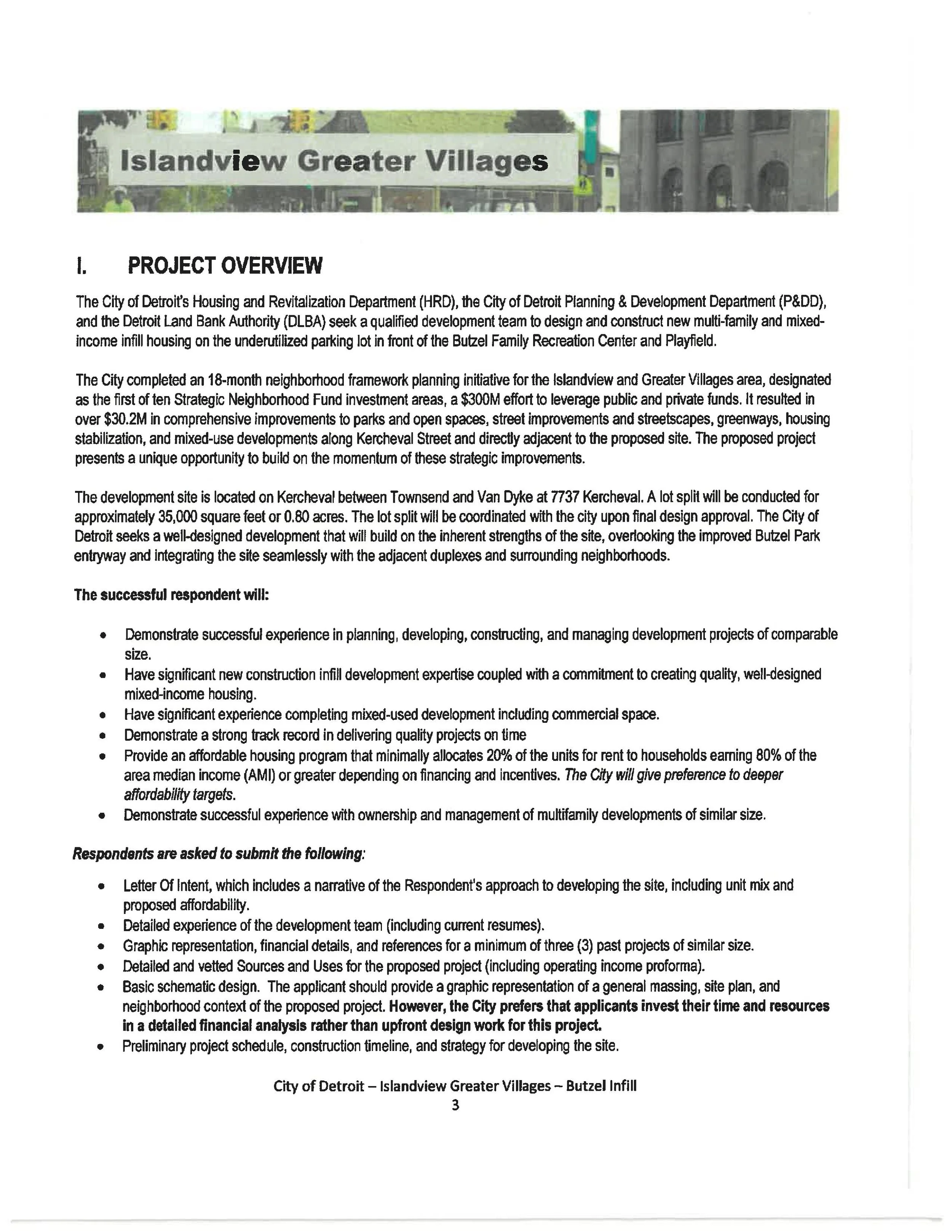
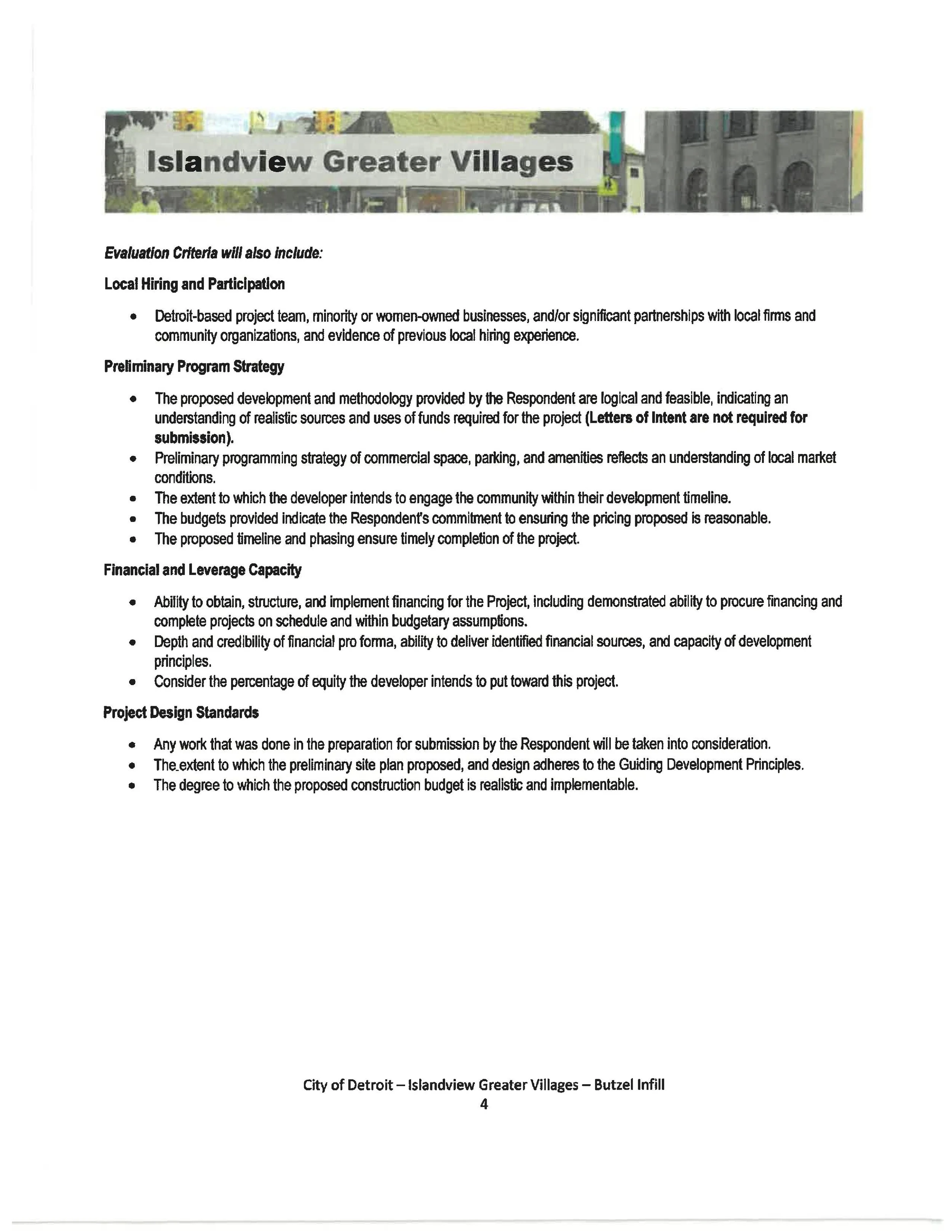
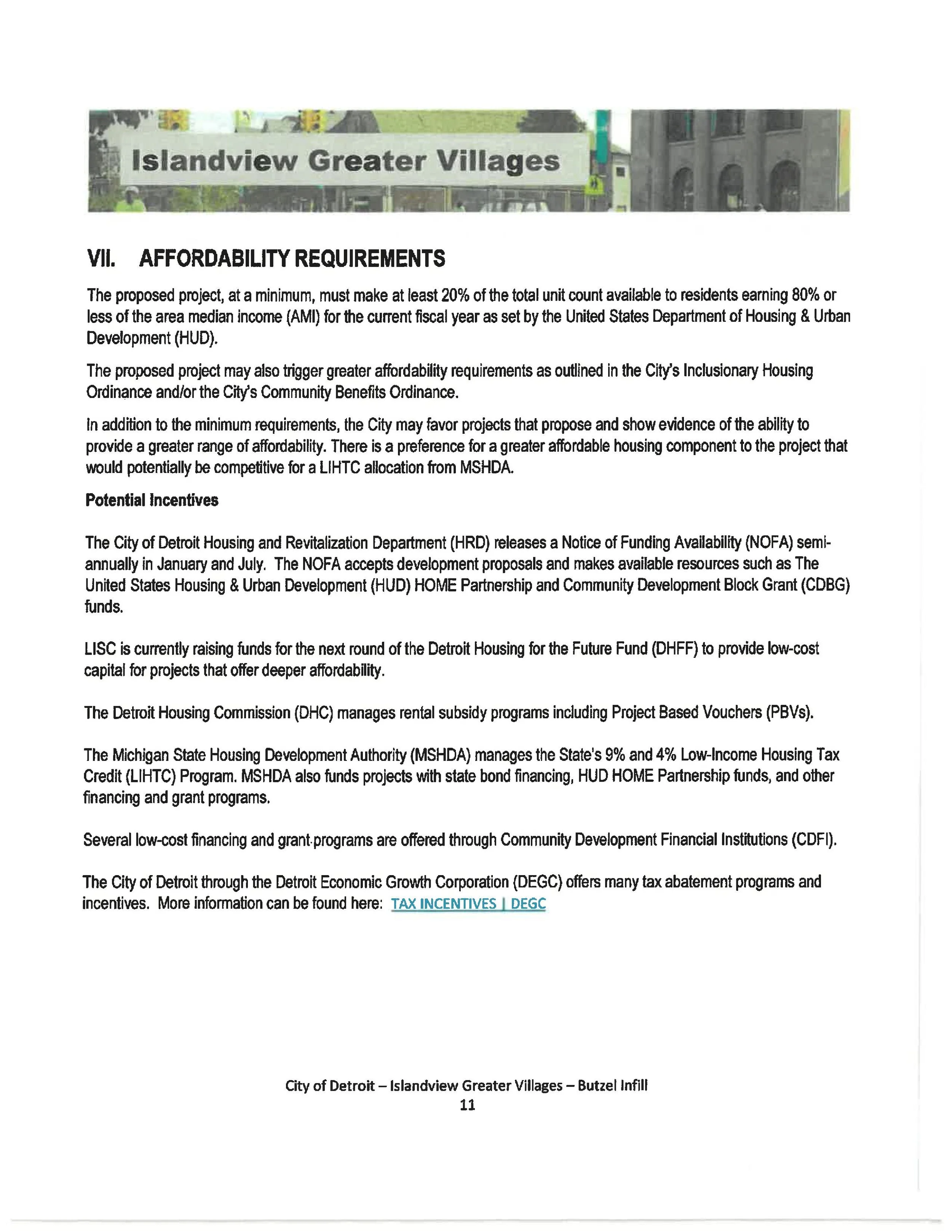
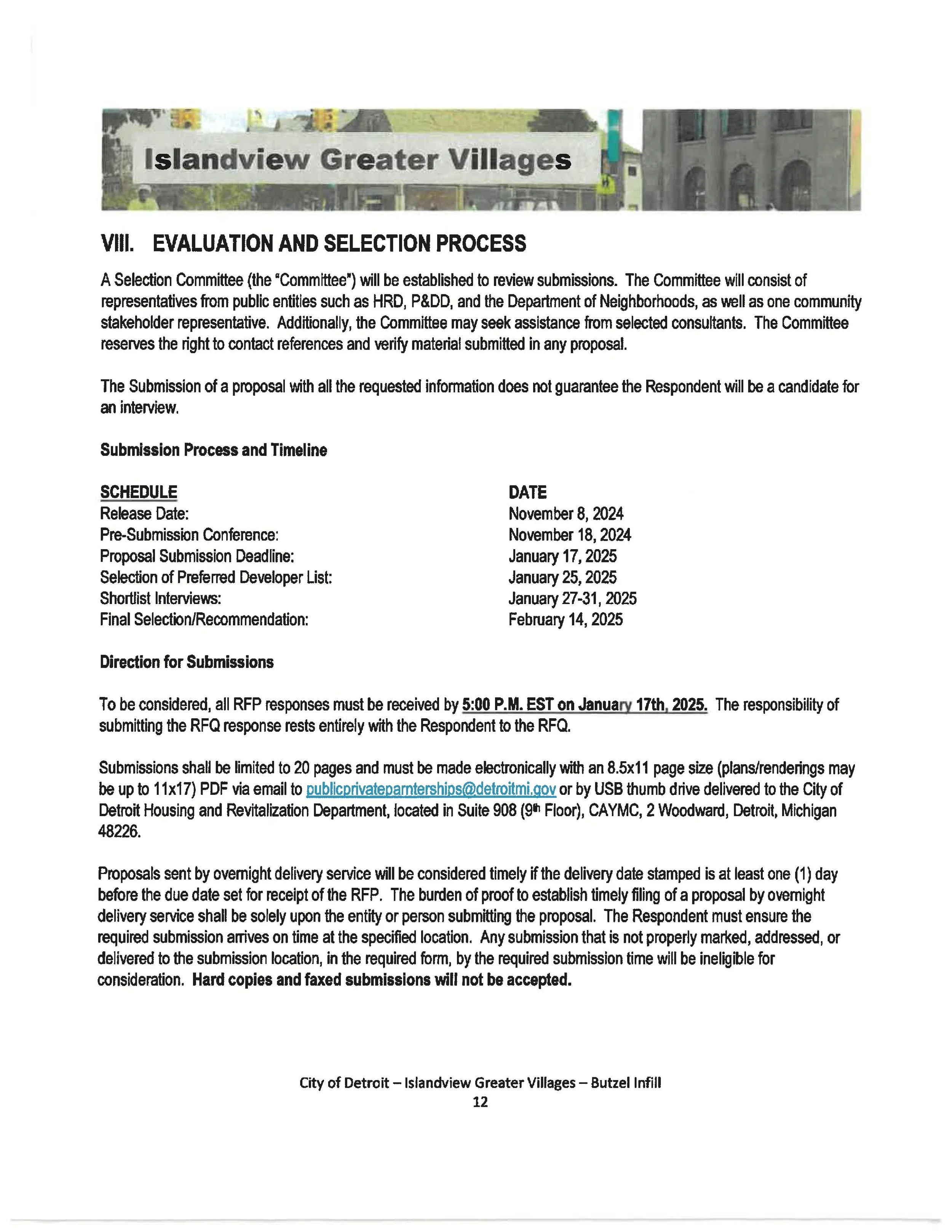
The proposed project at Butzel Recreation Center arose out of a city issued Request for Proposals for an affordable housing project.
While the project did not come to fruition, we do believe there is a need in the Villages for deeply affordable housing. Far too often we hear how seniors are unable to “age in place” and are forced to move out of the community they have spent their entire lives. This project was not only deeply affordable (rents in the 300-600 range for some units), but also included 5 available retail establishments that would have increased the number of services available to everyone in the Villages. The city should not have bowed out to pressure from resident-led efforts that did not reflect the wants of the entire community, just a vocal minority.
We are deeply upset with the cancellation of this project, and will do our part to continue advocating for affordable housing developments in the Villages.
You can view the document at the bottom of the page, or download a PDF at the button below.
You can download our latest Community Engagement Session presentation at the button below. Our latest session was centered around population loss and density in the Villages, and why we need to grow the population of our district.